


New NDIS plan: your first 30 days, in order
A new plan arrives and nothing tells you what to do first. Here is the order we work through with families in South West Sydney, and the two mistakes that cost the most.
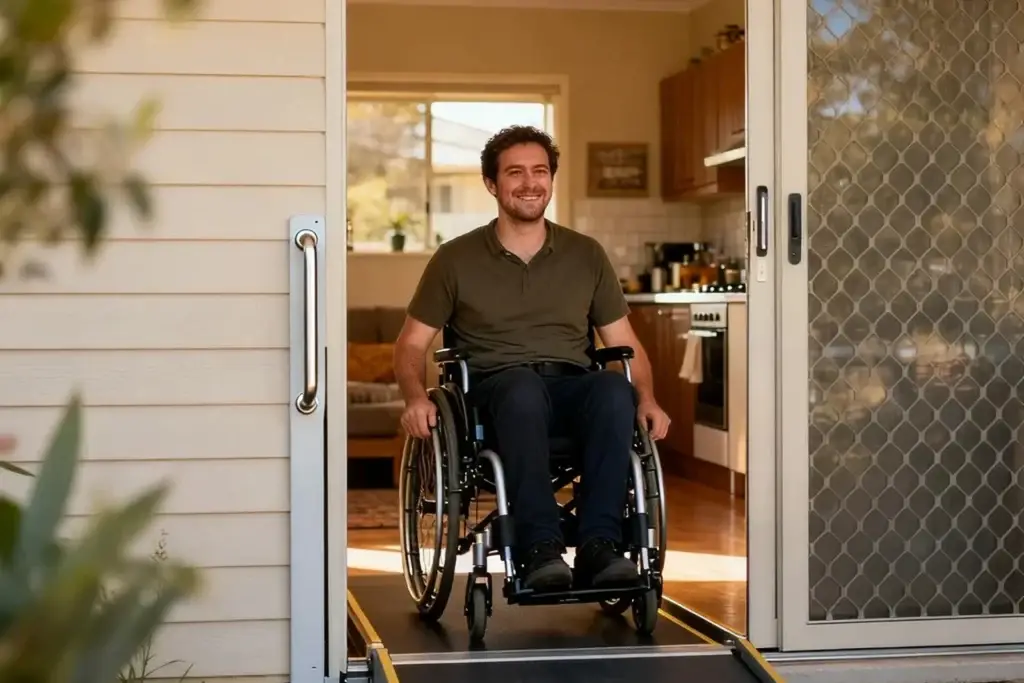
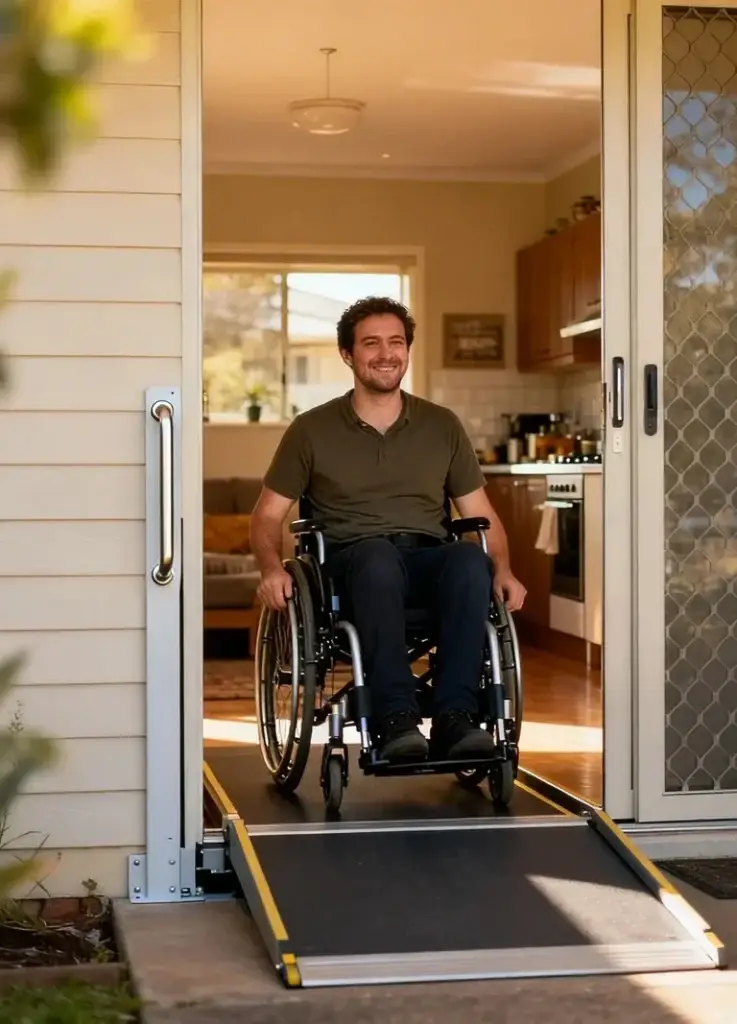
NDIS rental modifications sit in a gap most families don’t expect. Your family member needs the home to work for their body and their independence, but you’re renting — which means you can’t knock down walls or install permanent fixtures. The landlord won’t approve it. The NDIS funding is there, but the pathway feels unclear. What actually counts as a modification you can make, and who handles the conversations with the landlord to get permission.
Home modifications through the NDIS work because they’re planned with rental agreements in mind from the start. We assess what your family member needs — a ramp, grab rails, accessible bathroom adjustments, equipment storage — then work through the landlord approval process alongside you. We don’t push permanent solutions when removable ones work. The mechanism is simple: we coordinate between your family, the landlord, and the funding approval so nothing stalls halfway through.
In practice, that means one person from our team handles the back-and-forth with your landlord’s agent. You don’t manage two conversations at once. We show up when we say we will, bring the right paperwork, and follow through until the modification is installed and tested. That consistency — knowing someone reliable is managing the details — is what families tell us matters most when they’re already stretched thin.
NDIS rental modifications can feel like a puzzle when you’re trying to work out what’s actually possible in a home you don’t own. You might be wondering: can we get funding approved for changes the landlord won’t allow; how do we make the space work without losing the bond? Who handles the paperwork and the conversations with the real estate agent?
Here’s what matters most. Your NDIS plan can fund modifications to a rental property, but they need to be removable or reversible — think grab rails, ramps, accessible showers, or equipment that doesn’t permanently alter the structure. The key is planning ahead so the modifications are installed properly and documented clearly for when your family member moves.
What we hear from families is that the uncertainty stops them from even asking. They assume rentals are off-limits, or they worry about the landlord’s reaction. In reality, most landlords are willing to work with you when the changes are safe, sensible, and won’t damage the property. The trick is having someone who knows how to frame the conversation and handle the logistics on your behalf.
That’s where it gets practical. You’ll need a clear plan: which modifications actually matter for daily life, how they’ll be installed and removed, what the costs are, and how to present it all to the landlord and the NDIS in a way that makes sense. It’s not complicated, but it does need someone who understands both the rental rules and the NDIS funding side.
If you’re sitting with a participant who needs better access at home but you’re renting, that’s exactly the kind of support we help families navigate. When you’re ready to talk through what’s possible, we’re here to walk you through it.
Getting landlord consent for NDIS rental modifications starts with a conversation. Your support worker helps you gather the right paperwork—your NDIS plan extract, the modification quote, and a clear explanation of why the change matters to your daily life. Many landlords in South West Sydney respond well when they see the modification is reversible and adds value to the property.
Here’s what that looks like in practice. On a Tuesday afternoon, your Guia support worker sits down with you and reviews the modification plan together. They help you draft a letter to your landlord that’s straightforward and respectful. If it’s a bathroom grab rail, a ramp, or accessible flooring, the letter explains what’s being installed, why it helps you stay safe and independent, and how it can be removed without damage when you move. Your support worker knows which modifications landlords typically approve and which ones need extra negotiation.
Once the letter goes out, your support worker stays in the loop. They’re the point of contact if your landlord has questions about timelines, costs, or how the work will happen. This takes the pressure off you to manage back-and-forth conversations while you’re also organising the actual modification. If consent takes longer than expected, your support worker helps you problem-solve—sometimes a site visit from the installer reassures a landlord, sometimes a small adjustment to the plan makes all the difference.
The goal is simple: you get the modification you need, your landlord feels heard and respected, and the process doesn’t drain your energy. That’s how NDIS rental modifications work best—with someone steady in your corner who knows the system and treats your home like it matters.
If you’re ready to explore what modifications might work for you and your rental, enquire about support with Guia. We’ll walk you through the landlord conversation and handle the coordination from there.
Many families think NDIS rental modifications mean permanent, expensive building work that landlords will never approve. That misconception often stops people from even asking the question—and it costs them months or years of living in a home that doesn’t work for their family member’s body or routine.
Here’s what’s actually true. Rental modifications under the NDIS cover a much wider range of solutions than most people realise. Yes, that includes some permanent changes—a ramp, a handrail, accessible flooring—but only where the landlord agrees and the NDIS funds it. More often, it’s the practical stuff that makes real difference day-to-day: grab rails you can install and remove, portable ramps, accessible shower chairs, lever-handle taps, or repositioned light switches.
The NDIS recognises that people with disability rent homes across South West Sydney just like everyone else. The scheme is designed to fund modifications that help you live safely and independently in the place you’re actually living—whether that’s a unit in Fairfield, a house in Cabramatta, or a share house in Bankstown. Your support coordinator can work with your landlord to figure out what’s possible, and what the NDIS will cover.
What we hear from families is relief once they understand this. You’re not locked into permanent solutions. You’re not asking your landlord for something unreasonable. You’re asking for the equipment and adjustments that let your family member shower safely, move around their own home, or reach the kitchen without pain. That’s the actual conversation—and it’s one worth having.
If you’re unsure whether a modification or piece of equipment fits your NDIS plan, or you want to explore what’s possible in your rental, that’s exactly what we help with. When you’re ready, reach out and we’ll walk you through the options.
Home & Mobility Solutions is practical support that makes your home work better for you. It includes modifications to your rental property, equipment like wheelchairs or walking aids, and assistive technology that helps you move around safely and independently.
When you’re renting in South West Sydney, NDIS rental modifications can feel complicated. Your landlord has to agree to changes. Your NDIS plan needs to fund them. And you need a provider who understands both sides. Here’s what that looks like in practice: a grab rail in the bathroom, a ramp at the front door, widened doorways for a wheelchair, or a stairlift. These aren’t cosmetic. They’re the difference between needing help every time you shower and managing it yourself.
Make-good agreements sit at the centre of rental modifications. A make-good clause is a contract promise to return the property to its original condition when you move out. If you install a permanent ramp, your landlord might ask you to remove it and repair the damage. The NDIS can fund the modification itself, but not always the make-good cost. This is where planning matters. A good provider works with you and your landlord upfront to agree what stays, what goes, and who pays for what. It saves stress later.
What Home & Mobility Solutions does NOT include: medical advice about what modifications you need, or negotiation with your landlord on your behalf. Those are your decisions and conversations. What we do is listen to what you want to achieve, help you understand your NDIS funding options, and then plan and deliver modifications that respect your home and your routine.
If you’re unsure whether a modification is funded under your NDIS plan, or you’re worried about make-good costs, that’s exactly when to reach out. When you’re ready, enquire about support and we’ll walk you through it in plain language.
NDIS funding for home and mobility solutions sits within your participant’s plan under different support categories, depending on what they need. Understanding how this works helps you make confident decisions about what modifications and equipment are actually available to fund.
Most home modifications and assistive technology fall under Core Supports — the everyday help that keeps your family member safe, independent, and connected at home. This might include ramps, handrails, accessible bathroom modifications, or personal mobility equipment like wheelchairs and walking aids. Your NDIS plan sets aside funding specifically for these items. The NDIS rules allow participants to choose which registered providers deliver this support, so you’re not locked into one option.
For rental properties, modifications work differently than owner-occupied homes. Your landlord’s permission is required, and the NDIS expects modifications to be reversible where possible — think removable ramps, grab rails that don’t permanently damage walls, or portable shower chairs. This protects your family member’s tenancy while still making the home work for them. It’s worth knowing that some modifications may need landlord sign-off before funding is approved, so planning ahead saves time and stress.
Capacity building supports can also fund training — for example, learning to use new equipment safely or understanding how to maintain mobility aids. This sits alongside the equipment itself, not instead of it. Your participant controls how their plan is spent within these categories, and a good support provider helps you understand what’s realistic within your plan limits without pressure to spend in any particular way.
If you’re unsure whether a specific modification or piece of equipment fits your plan, that’s a conversation worth having early. When you’re ready to explore what’s possible for your family member’s home, we’re here to talk through the options and next steps.
When you’re thinking about NDIS rental modifications like ramps, the big question is: what can you actually decide? Here’s the honest answer — you have real control over the shape of your support, and it’s worth understanding exactly where that control sits.
Your decisions shape everything. You choose whether you want a portable ramp you can take with you, or a fixed installation suited to your current place. You pick the support worker who’ll help plan and coordinate the work. You set how often they visit — whether that’s a single planning session or ongoing check-ins as the project moves forward. You decide what time works for your household and what the ramp needs to do for your life. That’s genuine choice, and it matters.
What sits outside your control is different, and it’s worth knowing upfront. Guia doesn’t make NDIS funding decisions — the NDIA does that through your plan. We don’t provide clinical assessments or medical advice about your mobility needs. We also can’t manage your NDIS plan itself or lodge requests to the NDIA on your behalf. Those are NDIS scheme decisions that belong with you, your family, and your support coordinator if you have one.
Here’s what we do: we listen to what you’ve told us you need, we work with registered installers and equipment suppliers, and we make sure the ramp actually gets built in a way that fits your routine and your home. We show up when we say we will. We explain what’s happening at each step. We respect that this is your home and your choice.
If you’re ready to talk through what NDIS rental modifications could look like for you, enquire about support. No pressure, no timeline — just a conversation about what you actually need.
Home and Mobility Solutions sit in your NDIS plan under “Assistance with Accommodation and Tenancy. ” If you’re renting, this is where rental modifications and equipment sit. The question is whether your current plan already has funding set aside for this, or whether a plan review might reveal it.
Here’s what to look for. If your family member struggles with access—getting in and out of the front door, reaching the shower, moving safely between rooms—that’s a signal. A ramp, grab rails, or a raised toilet seat aren’t luxuries. They’re the difference between independence and relying on you for every movement. If you’re currently doing physical tasks that leave you exhausted or worried about injury, modifications can shift that burden.
Second signal: you’re in a rental and worried about landlord approval. Many families assume they can’t modify a rental property. That’s where the complexity lives. NDIS-funded modifications can be temporary, removable, or negotiated with landlord consent. We work through those conversations with you and the property owner. It’s not always straightforward, but it’s often possible.
Third: equipment that needs training or setup. A wheelchair, walking frame, or transfer equipment isn’t just about having it—it’s about using it safely and confidently. Home and Mobility Solutions includes equipment, training, and maintenance. That ongoing support matters more than the equipment itself.
Fourth: you’ve never had a plan review and suspect this category might apply. You don’t have to wait. If your current plan doesn’t mention accommodation or tenancy support, or if the funding ran out, a review conversation with your support coordinator is the next step.
If any of these sound familiar, we can help you explore what’s possible; when you’re ready, enquire about Home and Mobility Solutions support and we’ll walk you through your options.
An autistic adult renting in South West Sydney needed grab rails in the bathroom and a lowered kitchen bench to manage sensory overwhelm during meal prep. Her landlord was hesitant about permanent modifications. Guia’s Home & Mobility Solutions team worked with her to understand what state law actually allowed—and what her NDIS plan could fund without requiring landlord consent.
Here’s what that looked like in practice. We helped her document the modifications as temporary, removable fixtures rather than permanent damage. We sourced equipment that met her sensory needs—smooth, rounded edges, specific colour tones—and arranged installation on a Tuesday morning when she felt most settled. The support worker stayed for the first week of use, helping her build confidence with the new setup.
What mattered most wasn’t the equipment itself. It was knowing someone understood both her disability and her rights as a tenant. Many families worry that rental accommodation means they can’t access the modifications their family member needs. The truth is more nuanced—and worth exploring properly rather than assuming it’s impossible.
Tenants have real protections under NDIS funding rules and state discrimination law. Modifications can often be temporary, removable, or negotiated with landlord support. An NDIS-registered provider like Guia can help you navigate that conversation—working with you, your family member, and sometimes the landlord to find a solution that respects everyone’s position.
If your family member is renting and you’re unsure whether modifications are possible, that’s exactly the kind of question we help families answer. When you’re ready, get in touch and we’ll talk through what might work in your situation.
NDIS rental modifications sit within your support plan as either Core Supports or Capacity Building, depending on what the modification helps you do. Core Supports cover day-to-day needs like mobility or personal care; capacity Building funds supports that help you build skills or independence over time. Your support coordinator can clarify which category fits your situation.
The NDIS uses a price guide to set reasonable costs for modifications. This means the scheme has set rates for common changes—ramps, grab rails, widened doorways, accessible bathrooms. Your plan will list an amount approved for home modifications. That amount is based on your goals and what your assessment identified as necessary.
Here’s what that looks like in practice: you work with your support coordinator and a qualified modifier to scope the work. They assess your rental property, understand what you need to do independently or safely, and prepare a quote. The quote goes to your plan manager or coordinator. If it fits within your approved amount, funding is released. If the quote exceeds your allocation, you and your family discuss options—some modifications might wait, or you might contribute the gap.
Rental modifications need landlord consent before work starts; this is a real step that takes time. We help families navigate that conversation and provide landlords with clear information about what’s being done and why. Many landlords understand that accessible modifications make their property more valuable long-term.
If you’re unsure whether a modification you need sits within your current plan, or if you’d like to talk through how funding flows for your specific situation, we’re here to help. We’ve supported families across South West Sydney through this process many times. When you’re ready, enquire about support and we’ll walk you through it step by step.
When a landlord refuses to allow NDIS rental modifications, or disputes arise about what changes are reasonable, the tenancy tribunal becomes your formal pathway. It’s worth knowing that tribunal processes exist to protect both tenant and landlord rights fairly. The tribunal hears evidence from both sides and makes binding decisions about modification disputes.
The first step is usually a written request to your landlord, clearly setting out which modifications you need and why. Keep copies of everything—emails, letters, photos of the rental. If the landlord refuses without reasonable grounds, you can lodge a dispute application with the tribunal in your state. The tribunal will set a hearing date, typically within weeks.
At the hearing, you’ll present your case—often with support from your NDIS coordinator or a disability advocate. Bring evidence: your NDIS plan documents, quotes from modification providers, medical or support letters explaining why the modifications matter. The tribunal considers whether modifications are reasonable, whether they’ll damage the property permanently, and whether the landlord’s refusal is justified.
If the tribunal rules in your favour, the landlord must allow the modifications. If they refuse to comply, you can apply to enforce the order. This is where having reliable support coordination matters: your coordinator can help you document the process and connect you with NDIS-registered modification providers who understand tribunal outcomes and can start work promptly.
Here’s what that looks like in practice: once the tribunal order is in place, Guia can help you plan the modifications, source the right equipment or , and manage the installation—all while keeping your landlord informed and your NDIS funding on track. When you’re ready to explore how we support participants through modification disputes and implementation, enquire about support.
Choosing the right Home & Mobility Solutions provider means asking the right questions upfront. A good provider will answer clearly and honestly about how they work, who supports your family member, and what happens when things change.
At Guia, we believe consistency and respect matter most. We match support workers carefully, keep the same person where possible, and work with you—not just for you. When you’re ready to explore Home & Mobility Solutions that fit your family’s needs, enquire about support with us.
When you’re looking for a Home & Mobility Solutions provider to handle NDIS rental modifications, reliability and clear communication matter more than polished marketing. Some warning signs show up quickly if you know what to watch for.
At Guia, we work differently. We show up consistently, plan every modification with you in writing, and handle landlord communication so you don’t have to. Our team speaks English, Arabic, and Spanish — because language shouldn’t be a barrier to getting the support you need. When you’re ready to explore rental modifications that actually respect your home and your choices, enquire about support.
When NDIS rental modifications are working well, you’ll notice the changes happen quietly. The same support worker shows up on the agreed day and time, every week. Your family member stops mentioning the bathroom step that used to worry them. Small things, but they matter more than any promise on paper.
One clear sign is that your family member is making choices about what gets done next. Maybe they’ve asked for a handrail in a different spot than the original plan suggested. A good support team listens to that and works with you to adjust the modification plan. Your family member stays in control, not the other way around. That’s when you know the support is centred on them, not on ticking boxes.
Regular check-ins are another marker; you’re not left wondering if the modification is actually meeting their needs. The support coordinator or support worker touches base—not to sell you more, but to ask what’s working and what isn’t. If a ramp angle needs tweaking or a grab rail has shifted, they sort it. You feel like you’re part of a team, not a transaction.
Finally, watch for growing independence and confidence. Your family member moves around their home with less anxiety. They’re less likely to ask for help with tasks they can now do alone because the environment has changed to suit them. They might even invite friends over without that edge of worry about accessibility. That’s empowerment in action—not because someone told them they should be independent, but because their home now works for them.
If you’re seeing these signs, the support is landing well. If you’re not—or if you’re still searching for the right provider—Guia works with families across South West Sydney to get this right. Enquire about support when you’re ready to talk through what your family member needs.
When you’re working with a Home & Mobility Solutions provider on NDIS rental modifications, you’re in control of the support you receive. If something isn’t working—whether it’s the pace of planning, communication gaps, or how the support worker listens to your family’s needs—you have real options.
Start with your provider directly; most issues get sorted with a conversation. Tell them what’s not working. A good provider will listen and adjust. That might mean a different support worker who’s a better fit, a change to how visits are scheduled, or a clearer plan for what happens next with your modifications.
If talking to your provider doesn’t help, ask to speak with a manager. They can review how your support is being delivered and make changes at a higher level. This isn’t formal or confrontational—it’s part of how NDIS support is meant to work.
You can also request a different support worker. Sometimes it’s personality, sometimes it’s language or cultural fit. Guia’s multilingual team—English, Arabic, and Spanish speakers—means we can often match you with someone whose communication style suits your family better. If that still doesn’t feel right, switching providers is always an option. Your NDIS plan belongs to you.
If you believe your rights have been breached or your provider isn’t meeting NDIS standards, the NDIS Quality and Safeguards Commission handles formal complaints and can investigate. It’s there to protect you.
Choice and control means you’re never stuck. When you’re ready to explore support that listens and adapts to your family’s actual needs, we’re here to help.
If you’re thinking about NDIS rental modifications but aren’t sure where to start, that’s completely normal. Many families tell us they’ve spent weeks researching what’s actually possible, what their plan will cover, and who can help without feeling rushed into a decision.
The truth is, rental modifications sit in a specific space within the NDIS. They’re possible—landlord permission and NDIS funding eligibility are the two things that need to align—but they need careful planning. You need someone who understands both the practical side (what modification actually solves the problem) and the NDIS side (what funding category it sits in, what evidence supports it).
Here’s what that looks like in practice; we start by listening to what’s actually hard about the home right now. Is it a doorway that’s too narrow? Stairs that make morning routines stressful? A bathroom that doesn’t work for the person’s mobility needs? Once we understand the real problem, we work with you to explore what modifications might help—and whether they’re fundable under your plan.
We’ve supported families across South West Sydney through this process. Some have had modifications approved and installed. Others have decided a different support solution works better for their situation. Either way, they’ve had clarity and choice, not pressure.
When you’re ready to talk through what might work for your family, enquire about support. We can walk you through the options, answer the questions you have, and help you figure out next steps at whatever pace suits you.
A new plan arrives and nothing tells you what to do first. Here is the order we work through with families in South West Sydney, and the two mistakes that cost the most.
Aged care at home South West Sydney from Guia. Reliable support workers who show up consistently and become part of your family’s everyday routine.
NDIS allied health support sydney from Guia. Reliable support workers who show up consistently and become part of your family’s circle. Peace of mind fo…
The Home Modifications and Mobility Decision Guide
How to access NDIS home modifications and mobility equipment — without losing months to assessments or buying the wrong solution.
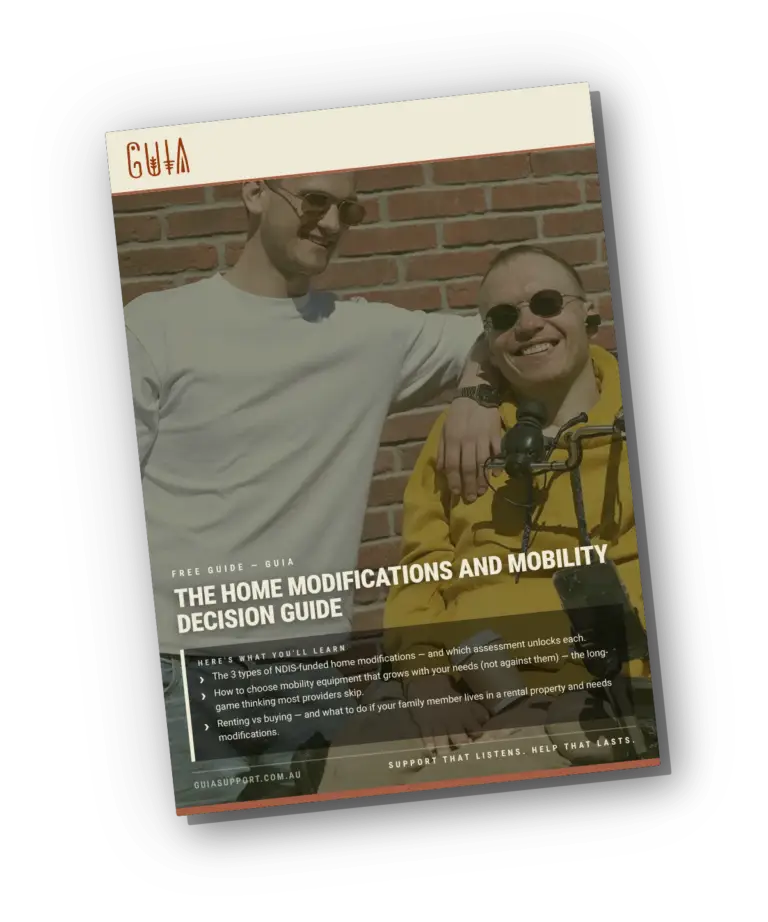
Here's What You'll Learn:
The 3 types of NDIS-funded home modifications — and which assessment unlocks each.
How to choose mobility equipment that grows with your needs (not against them) — the long-game thinking most providers skip.
Renting vs buying — and what to do if your family member lives in a rental property and needs modifications.
ARE YOUR NDIS SUPPORTS WORKING FOR YOU?
GET A FREE NDIS PLAN MANAGEMENT REVIEW