
NDIS support for Brain injuries South West Sydney
NDIS support for Brain injuries South West Sydney
Steady routines that work for you: NDIS support for brain injuries South West Sydney
NDIS support for Brain injuries South West Sydney
NDIS support for Brain injuries South West Sydney
Steady routines that work for you: NDIS support for brain injuries South West Sydney
ARE YOUR NDIS SUPPORTS WORKING FOR YOU?
GET A FREE NDIS PLAN MANAGEMENT REVIEW
NDIS support for Brain injuries South West Sydney starts with understanding what you’re navigating right now. Whether you’re the person rebuilding confidence and independence after a brain injury, or you’re supporting a family member through that journey, you need support that treats you as a capable adult—not a case to manage. Recovery and adjustment aren’t linear, and the right support recognises that complexity without judgment or pressure.
This page covers the practical NDIS support we offer to people with brain injuries and their families across South West Sydney—from daily living assistance and community connection to employment pathways and specialist coordination. We’re NDIS-registered and trained to work with people navigating life after brain injury, and our team speaks English, Spanish, and Arabic. When you’re ready to explore what support might look like for you, we’re here to listen and answer your questions.
NDIS support for Brain injuries South West Sydney starts with understanding what you’re navigating right now. Whether you’re the person rebuilding confidence and independence after a brain injury, or you’re supporting a family member through that journey, you need support that treats you as a capable adult—not a case to manage. Recovery and adjustment aren’t linear, and the right support recognises that complexity without judgment or pressure.
This page covers the practical NDIS support we offer to people with brain injuries and their families across South West Sydney—from daily living assistance and community connection to employment pathways and specialist coordination. We’re NDIS-registered and trained to work with people navigating life after brain injury, and our team speaks English, Spanish, and Arabic. When you’re ready to explore what support might look like for you, we’re here to listen and answer your questions.
The NDIS Family Decision Guide
Helping Australian families make confident NDIS decisions for the person they care about — without the jargon, the runaround, or the regret.
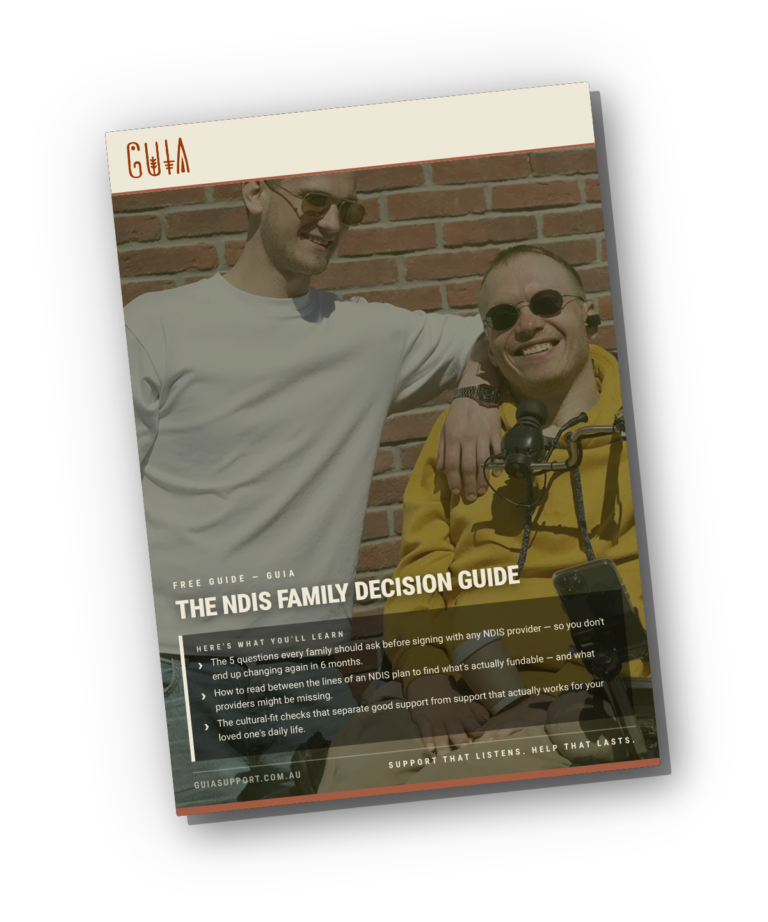
Here's What You'll Learn:
The 5 questions every family should ask before signing with any NDIS provider — so you don't end up changing again in 6 months.
How to read between the lines of an NDIS plan to find what's actually fundable — and what providers might be missing.
The cultural-fit checks that separate good support from support that actually works for your loved one's daily life.
NDIS support for brain injuries in South West Sydney
A brain injury can shift what you need from day to day — and sometimes hour to hour. You might wake up ready to tackle your plan, then find concentration drops by mid-morning. Your family member watches this unpredictability and worries about consistency. Neither of you should have to guess whether the support showing up will actually match what’s needed right now.
When routines are predictable and respect how your brain works best, everything else becomes possible. You regain a sense of control over your own day. Your family can step back from managing every detail, knowing the support is stable and genuinely tailored. That’s where real independence starts — not from doing everything alone, but from having support that actually fits.
Read More - See what consistent support actually feels like
Recovery from a brain injury or stroke involves far more than medical treatment. You’re navigating changes to memory, processing speed, fatigue, and how you manage everyday tasks. Your family is often managing their own adjustment—learning what support looks like, what you can do independently, and how to help without taking over. The NDIS — National Disability Insurance Scheme recognises this reality and funds support that helps you rebuild confidence while your family gains the consistency and safeguards they need.
What makes support actually work after brain injury is predictability. Your cognitive load is higher than it was before. Familiar routines, the same support worker on the same days at the same times, and clear communication about what’s happening next—these aren’t luxuries. They’re the foundation that lets you focus on recovery instead of managing uncertainty. When routines are solid, you can direct your own life more clearly. Your family can trust that you’re being supported reliably, not scrambling to fill gaps.
Memory and processing changes are real and specific to you; some people struggle with new information. Others lose recent memories but retain older ones. Some need extra time to process questions or instructions. Good support means your worker understands your particular pattern—not treating you as a case. They’ll use strategies that work for your brain, not approaches. This level of tailoring takes time to build, which is why consistency in your support team matters so much for your independence and wellbeing.
Support workers trained in acquired brain injury and post-stroke recovery bring knowledge that makes the difference between help that feels clumsy and help that actually fits. They understand fatigue patterns, communication changes, and how to support you without creating dependency. Whether you need help with daily personal activities, getting out into the community, or rebuilding work capacity, the right match means you’re working with someone who gets the specifics of brain injury. Guia’s team includes workers with this training, and we match you carefully so the relationship builds trust from the start. Over time, NDIS — Improved Health and Wellbeing and NDIS — Daily Living Supports compound naturally alongside Brain injuries — together they build the daily rhythm and outward connections that make real independence stick.
If you’re ready to explore what NDIS support for brain injuries could look like for you and your family, the next step is straightforward. We’ll listen to your situation, explain how support works in practice, and help you understand what’s possible. There’s no pressure—just a conversation about what might help.
What good support looks like after brain injury
A brain injury changes how you process information, manage your day, and plan ahead. You might find that sudden noise overwhelms you, or that planning a week ahead feels impossible when your energy shifts day to day. Your family sees the person they’ve always known, but they’re also noticing the fatigue, the frustration, the things that now take longer. Neither of you needs someone talking about your “recovery journey”—you need someone who shows up consistently and builds routines that actually fit how your brain works right now.
When support is tailored to your cognitive load and your family’s peace of mind, everything shifts. You can focus on what matters instead of managing the logistics. Your family knows there’s someone reliable in your corner who understands why consistency matters more than intensity. That’s the kind of NDIS support for brain injuries South West Sydney that lets you move forward at your own pace, with dignity intact.
Read More - Come talk through what could work for you
Recovery after a brain injury isn’t linear, and neither should your support be. You’re navigating shifts in memory, processing speed, fatigue, and confidence—sometimes all at once. Your family is learning alongside you, often managing practical logistics while you’re adjusting to how your mind and body work now. Good support acknowledges both realities in the same conversation, treating you as the decision-maker while providing your family the consistency and safeguards they need. The NDIS — National Disability Insurance Scheme exists to fund exactly this kind of tailored, long-term help.
What changes when support workers understand brain injury specifically is the detail they notice and respect. You might need the same Tuesday afternoon visit every week—not because routine is a preference, but because your brain processes change better with predictability. You might need written instructions rather than verbal ones, or a five-minute break before a task, or someone who doesn’t rush you through decisions. These aren’t obstacles your support worker accommodates reluctantly. They’re the foundation of how the visit actually works. When a worker trained in acquired brain injury shows up, your family sees someone who gets why consistency matters and builds it in from the start.
Memory and processing support work best when they’re built into the everyday, not bolted on as an afterthought. If you’re working toward rebuilding independence—managing appointments, tracking medications, planning a week—a support worker who knows how to scaffold these tasks makes the difference between feeling stuck and feeling capable. They’re not doing the thinking for you. They’re structuring the environment and the conversation so your brain can do the work. Your family notices this too: instead of worrying whether you’ll remember to attend that appointment, they see you managing it with a simple system that actually fits how you think now.
Guia’s team includes workers trained in brain injury and post-stroke support, paired with you based on what actually matters—whether that’s language match, the kind of tasks you’re rebuilding, or the pace that feels right. We also offer support coordination to help you and your family navigate your NDIS plan, plus allied health and wellness support if movement, fitness, or wellbeing goals are part of your recovery. The practical starting point is usually a conversation about what a typical week looks like for you right now and what would shift if support showed up reliably and understood how your brain works. Over time, NDIS — Improved Health and Wellbeing and NDIS — Daily Living Supports compound naturally alongside Brain injuries — together they build the daily rhythm and outward connections that make real independence stick.
If this sounds like the kind of support you’re after, the next step is straightforward. Get in touch with no pressure and no jargon—just a conversation about what you need and how we might help.
What happens when brain injury support falls through the gaps
After a brain injury, the smallest changes to routine can knock you sideways—a different support worker, a cancelled appointment, a shift in how tasks get done. You need people who understand that consistency isn’t just nice to have; it’s how your brain rebuilds trust and confidence. Your family needs to know that whoever shows up on Tuesday afternoon will be the same person who knows your preferences, your pace, and what works.
When support workers stick around and learn how you actually operate, recovery shifts. You stop spending energy explaining yourself and start spending it on what matters—rebuilding skills, reconnecting with community, moving toward independence on your own terms. That’s the difference between support that feels like management and support that feels like partnership.
Read More - See what consistent, reliable support could mean for your week
Recovery after a brain injury or stroke often means rebuilding routines you once took for granted. You might find that memory feels less reliable, or processing information takes longer than it used to. Your family sees the frustration when familiar tasks suddenly feel harder. The right support doesn’t rush you through these changes — it builds around how your brain works now. According to the NDIS — National Disability Insurance Scheme, participants with acquired brain injury can access tailored support that respects both pace and dignity. That’s where consistent, predictable help makes the real difference.
What changes for you is the structure itself. Instead of scrambling to remember what comes next, a trained support worker shows up at the same time each week, follows the same sequence, and doesn’t spring surprises. Your family stops carrying the mental load of “who’s helping today” — they know exactly who will be there, what they’ll do, and how long it takes. You feel less like a puzzle to solve and more like a person whose needs are simply understood. That consistency isn’t just comforting. It actually helps your brain settle into routines without the extra cognitive strain.
Memory and processing changes after brain injury are common, not a personal failing. Your support worker learns what works for you specifically — whether that’s written reminders, step-by-step verbal guidance, or extra time between instructions. They don’t treat these adaptations as obstacles. They treat them as how you operate best. Over time, this approach builds your confidence because you’re not constantly fighting against your own brain. You’re working with it. The mechanism is simple: when external support matches your actual processing speed, you have room to think, make decisions, and feel in control.
Guia’s team includes workers trained in acquired brain injury and post-stroke support. They understand fatigue that comes from concentration, the frustration when words don’t come, and the difference between “I can’t” and “I can’t right now. ” Your family gets that too — no judgment, just realistic planning. We offer in-home daily living support and community access that’s designed around the specific needs people face after brain injury. When you’re ready to explore what this kind of support could look like for you, we’ll match you with someone who understands both your goals and your actual capacity on any given day. Over time, NDIS — Improved Health and Wellbeing and NDIS — Daily Living Supports compound naturally alongside Brain injuries — together they build the daily rhythm and outward connections that make real independence stick.
You deserve support that treats you as the expert on your own life, while giving your family the peace of mind that comes from knowing exactly what’s happening and why. That’s not complicated language or promises. It’s reliability, respect, and people who show up ready to understand.
How NDIS support works after brain injury
Recovery after a brain injury isn’t linear, and neither should your support be. You need routines that work with how your brain functions now—not against it. Your family needs to know someone reliable will show up the same time, the same way, every week. That consistency matters more than you might think when cognitive load is already high.
When support is predictable and tailored to your actual needs—not a checklist—you can focus energy on what matters to you. Your family moves from constant problem-solving into genuine partnership with your support team. That’s when real independence starts to feel possible again.
Read More -Send through a quick enquiry about brain injury support in your area
Send through a quick enquiry about brain injury support in your area
Recovery after a brain injury isn’t linear, and the support you need shifts week to week. You’re managing fatigue, memory gaps, and sometimes emotional changes that feel unpredictable. Your family is learning alongside you, often becoming your safety net while trying to respect your independence. The NDIS — National Disability Insurance Scheme recognises brain injury as a life-altering event, and registered providers can help you navigate both the practical and emotional terrain. What matters most is finding support that speaks to you as a capable adult, not about you as a project.
Predictable routines reduce cognitive load in ways most people don’t realise. When a support worker shows up at the same time each week, follows the same check-in process, and remembers what you told them last visit, your brain doesn’t have to spend energy on surprises or re-explaining yourself. That consistency frees mental space for actual recovery. Your family sees the difference too: they worry less about gaps in care, and they can step back knowing someone reliable is there. That’s not just convenience—it’s the foundation of real progress.
Memory and processing accommodations work best when they’re built into how support happens, not bolted on as an afterthought. A good support worker writes things down without being asked, checks their notes before each visit, and gives you time to process questions instead of rushing through a checklist. They understand that brain injury recovery isn’t about pushing harder—it’s about working smarter, with your actual cognitive capacity in mind. Your family can trust that the support respects your pace and your dignity, every single time.
Workers trained in acquired brain injury and post-stroke support understand the specific challenges you’re facing. They recognise fatigue patterns, know how to adjust communication when processing is slower, and can spot when you need to rest before you hit a wall. Support Coordination helps you match the right worker to your needs and goals, while In-Home Daily Living & Personal Care Support provides the steady, skilled presence that makes independence possible. The fit between you and your support worker matters more than the credentials on a wall. Over time, NDIS — Improved Health and Wellbeing and NDIS — Daily Living Supports compound naturally alongside Brain injuries — together they build the daily rhythm and outward connections that make real independence stick.
When you’re ready to explore what good support looks like in practice, Guia can help you understand your options and find a match that works for both you and your family. We’ve been supporting people across South West Sydney since 2022, and we’re NDIS-registered with staff trained in the specifics of brain injury recovery.
Getting started with NDIS support after brain injury
After a brain injury, the smallest changes in routine can feel overwhelming. You might find that a Tuesday morning support visit needs to happen at the same time every week, or that switching support workers mid-month disrupts your concentration for days. Your family watches this carefully—they’re noticing what helps you settle and what sends you backwards. What you both need is support that understands this isn’t about being rigid; it’s about protecting the mental space you need to rebuild.
When your support is predictable and consistent, you can focus on what matters—rebuilding confidence, managing fatigue, reconnecting with what you want your life to look like. Your family gets the reassurance that someone reliable is there, showing up the same way every time, noticing the details that help you thrive. That’s where real independence starts.
Read More - When you're ready, we're here to listen and help you both move forward
Recovery after a brain injury isn’t linear, and the support you need changes week to week. Your cognitive load shifts. Memory feels unpredictable. Routines that worked last month stop working this month. What families tell us is that NDIS support doesn’t account for this reality — it treats every week the same. Under the NDIS — National Disability Insurance Scheme, you’re entitled to support that adapts to where you actually are in recovery, not where a provider’s schedule says you should be.
Predictable routines protect cognitive energy. When you know your support worker arrives at 10 am every Tuesday, you’re not spending mental effort on uncertainty. You can focus on the task at hand — showering, cooking, managing the day — instead of managing anxiety about when help will show up. For families, this consistency means you can plan your own week; you’re not fielding last-minute cancellations or scrambling to cover gaps. That’s what good NDIS support for brain injuries looks like in practice: reliability that lets you both breathe.
Memory and processing don’t work the same way after a brain injury. You might forget instructions mid-conversation, or need information written down instead of spoken. A support worker trained in acquired brain injury understands this isn’t laziness or lack of effort — it’s how your brain is healing right now. They’ll write things down without making you ask twice. They’ll repeat themselves without frustration. They’ll notice when you’re overwhelmed and slow the pace. This isn’t about lowering expectations; it’s about removing barriers so you can actually do the things you’re capable of.
The right support builds your independence over time, not dependency. That means your support worker is trained to teach you strategies — not just do tasks for you. If you’re rebuilding daily living skills after stroke or trauma, you need someone who understands the neurology of recovery and can scaffold learning in small, repeatable steps. In-home daily living support paired with employment and capacity building creates a pathway where you’re gradually taking more back. Your family sees progress. You feel it too. Over time, NDIS — Improved Health and Wellbeing and NDIS — Daily Living Supports compound naturally alongside Brain injuries — together they build the daily rhythm and outward connections that make real independence stick.
Guia has supported participants with brain injuries across South West Sydney since 2022, with staff trained in ABI and post-stroke recovery. We’re NDIS-registered and Code of Conduct compliant, and we match you with a worker who understands your specific injury and your goals — not just your diagnosis. When you’re ready to explore what support that actually respects your recovery looks like, Enquire about support.
How to know if support is making a difference
Recovery after a brain injury means rebuilding routines that work with how your brain functions now. You need support that fits your actual day—not a schedule. Your family needs to know what’s happening, when, and why. Both of you deserve consistency that doesn’t add to the cognitive load you’re already managing.
When support is predictable and tailored to your pace, you can focus on what matters: rebuilding confidence, managing fatigue on your terms, and staying connected to the people and activities that define you. Your family can step back from constant coordination and trust that you’re being supported with the same care they’d provide themselves.
Read More - Find out how other families have built confidence in their support
Recovery after a brain injury means rebuilding routines that your brain can actually manage. Whether you’re returning home after a stroke, managing the aftermath of a traumatic injury, or navigating the cognitive and physical changes that follow, the support you need is different from what works for other disability types. You deserve workers who understand how fatigue, memory changes, and processing speed affect your day—not just your mobility. Your family needs consistency and workers trained to recognise when you’re pushing too hard, even when you think you’re fine. The NDIS — National Disability Insurance Scheme funds this kind of tailored support, and the right provider makes the difference between feeling managed and feeling respected.
Predictable routines protect your cognitive load in ways that support never will. If you’re managing fatigue or memory changes, a support worker who arrives at the same time each week, follows the same sequence for household tasks, and recognises when you need a quiet break isn’t just convenient—they’re essential. Your family sees this too: when routines stay consistent, you’re calmer, more independent, and less likely to become overwhelmed. A worker who texts the same day each week, confirms the same time, and doesn’t spring surprises on you isn’t being rigid—they’re building the scaffold that lets your brain function at its best. That’s what dignity looks like in practice.
Memory and processing accommodations aren’t add-ons; they’re how the support actually works. Your support worker writes things down. They repeat information without making you feel slow. They break tasks into smaller steps and give you time to process without rushing. They notice when you’ve said something twice and gently redirect without embarrassment. They understand that “I’ll remember that” often means “I won’t, and that’s not laziness. ” For your family, this means trusting that the person in your home isn’t just helping with dishes—they’re actively supporting your cognitive recovery by removing pressure and creating space for your brain to work at its own pace.
Workers trained in acquired brain injury and post-stroke recovery bring expertise that makes real difference. They recognise fatigue patterns, understand why you might struggle with initiation or planning, and know how to support without infantilising. They’ve worked with people managing similar changes and can anticipate what helps. This is the foundation of in-home support that actually reduces your stress rather than adding to it. Your family can focus on being family instead of managing every detail of your care. When you’re ready to explore what this looks like in practice, start a conversation about your specific needs and what good support actually means to you. Over time, NDIS — Improved Health and Wellbeing and NDIS — Daily Living Supports compound naturally alongside Brain injuries — together they build the daily rhythm and outward connections that make real independence stick.
The right support for brain injury recovery across South West Sydney combines reliability, training, and respect for now. You’re not a project to be managed—you’re a person rebuilding your life with the right people beside you. Your family isn’t alone in figuring this out.
Building confidence and independence after brain injury
Recovery after a brain injury means rebuilding routines that feel manageable and safe. You’re learning what your body and mind can do now, day by day. Your family is watching for patterns—what helps you settle, what overwhelms you, when you need a break. Neither of you should have to guess whether support will show up the same way twice.
When routines are predictable and respect how your brain works right now, everything shifts. You start to trust your own capacity again. Your family can step back from constant vigilance. That’s what NDIS support for brain injuries in South West Sydney looks like when it’s built around your actual recovery, not just a service schedule.
Read More - Get in touch about what consistent support could mean for your week
Recovery after a brain injury — whether from stroke, trauma, or acquired causes — reshapes how you think, move, and relate to everyday tasks. You’re not the same person you were before, and that’s a reality families and participants navigate together. The NDIS — National Disability Insurance Scheme recognises this by funding support that helps you rebuild independence at your own pace, not on a timeline someone else sets.
What matters most after brain injury is consistency. You need the same support worker showing up on Tuesday afternoon at 2 pm, not a rotating roster of faces. You need someone who remembers what you said last week, who notices when fatigue hits hardest, and who doesn’t treat memory gaps as failure. That kind of reliability — the same person, the same routine — is how your brain begins to rebuild trust in the world around you.
Cognitive load is real. Simple tasks — getting dressed, planning a meal, managing a conversation — take more energy than they used to. Good support doesn’t pretend this away. It builds predictable routines that protect your mental energy for things that matter to you. A support worker trained in brain injury knows this isn’t laziness or lack of effort; it’s how recovery actually works. Routines reduce the number of decisions you face each day, which means more capacity for the things you want to do.
In-home support and community participation work together after brain injury. You might start with help at home — personal care, household tasks, managing appointments — while you’re still rebuilding stamina. As you stabilise, the same support can shift toward getting you out into community, rebuilding confidence, and reconnecting with people and places. Both are part of the same journey. Guia’s team includes workers trained specifically in acquired brain injury and post-stroke support, which means they understand the pace and the setbacks that are part of recovery. Over time, NDIS — Improved Health and Wellbeing and NDIS — Daily Living Supports compound naturally alongside Brain injuries — together they build the daily rhythm and outward connections that make real independence stick.
Your family carries a lot in this season — managing appointments, watching for changes, wondering whether you’re pushing too hard or not hard enough. Good support means they’re not doing this alone. It means someone reliable is there on the days they need to step back, and someone who talks directly to you about what you need — not just to your family about what you need. That’s the difference between support that reduces independence and support that builds it. When you’re ready to explore what this looks like for your situation, Enquire about support.
Building confidence after brain injury with NDIS support
Recovery after a brain injury often means learning new routines while managing fatigue, memory changes, or attention shifts that weren’t there before. You’re working to rebuild confidence in tasks you used to do automatically—and your family is watching for signs you’re pushing too hard or losing track of time. Neither of you should have to guess whether today’s support is reliable or whether the person helping understands what cognitive load actually means.
When NDIS support for brain injuries South West Sydney is built around predictable routines and clear communication, something shifts. You start to know what to expect, your family stops holding their breath, and the small wins—finishing a task, remembering the plan, feeling steady—become possible again. That’s the kind of support that lets you lead your own recovery, not just survive it.
Read More - Find out what changes when support actually fits right
Recovery from a brain injury is rarely linear. Your thinking might feel slower, memory gaps might frustrate you, or fatigue might hit without warning. For families watching this unfold, the uncertainty can be just as exhausting. The NDIS — National Disability Insurance Scheme recognises brain injury as a significant disability, and the right support can help you rebuild confidence and independence at your own pace, not someone else’s timeline.
What makes a real difference is consistency paired with understanding. When you have the same support worker showing up on Tuesday mornings, you don’t waste energy re-explaining your needs or your good days and bad days. That person learns your rhythms. They notice when you’re managing well and when you need to slow down. For families, this reliability means fewer last-minute scrambles and real peace of mind that your loved one is with someone who gets it.
Memory and processing changes are common after brain injury, and they don’t mean you can’t do things—they mean you need support structured around how your brain works now. Written reminders, consistent routines, and workers trained to explain things clearly rather than assume you remember from last week—these aren’t shortcuts. They’re the actual scaffolding that lets you stay independent and build new skills. It’s the difference between feeling managed and feeling capable.
NDIS support for brain injuries works best when it connects you to people who understand post-stroke or acquired brain injury recovery specifically. In-home daily living support helps with the everyday tasks that fatigue or concentration changes make harder. Community access and social participation rebuild your confidence in doing things beyond your front door. Both services work together—one creates the stable foundation at home, the other helps you stay connected to the world. Over time, NDIS — Improved Health and Wellbeing and NDIS — Daily Living Supports compound naturally alongside Brain injuries — together they build the daily rhythm and outward connections that make real independence stick.
The most common starting point is a conversation about what matters to you right now. What would make your day feel more manageable? What would your family feel more confident about? There’s no pressure to have all the answers, and your support coordinator or family member can ask questions too. When you’re ready to explore how this kind of support could work for you, Enquire about support.
Guia Is Trusted By NDIS Participants, Families And Support Coordinators
Imagine a life designed to empower you!


NDIS Participants South West Sydney Choose Guia
You’re looking for support that understands brain injury recovery isn’t linear. You need a provider who listens to what matters to you and your family, then builds a plan around your actual life. Guia’s focus on brain injury means we know the specific challenges you face—fatigue, memory, routine sensitivity, rebuilding confidence. We’re here to navigate that complexity with you, not simplify it away. That’s how you stay in control and move forward at your own pace.
Person-Centred From the First Conversation
After a brain injury, what matters most is having support that listens—not a one-size-fits-all plan. We start by understanding your goals and what a good day looks like for you. Your support worker learns your pace, your preferences, your needs. That consistency builds trust and confidence. You’re in control of how your support shapes up, every single visit.
Reliable Consistency Every Single Visit
When you’ve experienced a brain injury, routine matters. Your body and mind need predictability to feel safe. That’s why we match you with the same support worker every visit—no rotating faces, no explaining your needs repeatedly. They learn what helps you, what your day looks like, what you need without asking. Families tell us this consistency lets them breathe easier, plan their week with confidence, knowing exactly who’s walking through the door.
Culturally Diverse, Multilingual Team
When you’re recovering from a brain injury, consistency matters—and so does being understood. Our multilingual team speaks English, Spanish, and Arabic, so support arrives in your language and with respect for your background. Same support worker, same routine, same cultural understanding. That stability helps your recovery. That respect helps you feel at home in your own care.
Six Years of South West Sydney Experience
After a brain injury, consistency matters more than ever. Your support worker knows your routines, your preferences, your triggers. We’ve been supporting people across South West Sydney since 2022—we know the community, the local services, the spots where you’ll feel comfortable. That familiarity means your team becomes part of your everyday life, not another thing to adjust to.
NDIS Quality and Safeguards Commission Compliant
After a brain injury, consistency matters more than ever. Your support worker is NDIS-registered, screened, and trained to understand your recovery needs. You get the same person showing up reliably—no surprises, no rotating faces. That steady presence helps you rebuild confidence while your family knows you’re in capable, accountable hands.
Word-of-Mouth Referrals Build Trust
Most families find us through other families who’ve trusted us with their support. Word-of-mouth matters because it means real people—people like you—have already tested whether we show up, keep routines steady, and treat their loved one with dignity. That reputation is built on consistency and respect, not promises; when you’re navigating brain injury support, that kind of trust makes the difference.
READY FOR A FREE PLAN MANAGEMENT REVIEW?
Find Unused Funding
Fix Budget Confusion
Plan Supports Better
FAQs For Brain injuries
What NDIS support is available for adults with brain injury?
NDIS support for brain injury in South West Sydney covers daily living assistance, community participation, employment support, and life stage transitions. We help adults regain confidence and independence after brain injury through reliable, person-centred support matched to your goals.
Whether you’re the person recovering or the family member supporting them, we listen to what matters most. Our team provides consistent support workers, flexible scheduling around medical appointments, and practical help rebuilding routines. We’re here to help you both feel confident about what comes next.
Enquire about support — find out how Guia can help with brain injury.
What NDIS support can help after a brain injury?
The NDIS covers support for people living with acquired brain injury across South West Sydney. Funding depends on your plan and goals. Common supports include daily living assistance, community access, employment help, and life stage transition support.
If you’re managing recovery or adjusting to life after brain injury, you deserve support that fits your pace and needs. Families often coordinate initial research, and that’s valued here. We match you with reliable, qualified support workers who understand brain injury and show up consistently. When you’re ready to explore what’s available in your plan, we can help you navigate options clearly.
Enquire about support — find out how Guia can help with brain injuries.
How does support coordination help with my NDIS plan?
Support coordination helps adults with a brain injury navigate NDIS funding and find the right supports. A coordinator works with you to understand your goals, explain your plan options, and connect you with providers who match your needs. It’s about having someone in your corner who knows the system.
What we hear from families is that coordination matters most after a brain injury, when decisions feel overwhelming and consistency is critical. Your coordinator helps you stay on track with your recovery goals, checks that supports are actually working for you, and adjusts things when life changes. You’re always the one making final decisions — the coordinator helps you make them with confidence.
Enquire about support — find out how Guia can help with brain injuries.
Can NDIS funding cover therapy after a brain injury?
Yes, the NDIS can fund therapy and rehabilitation after brain injury. Your plan may include allied health support, exercise physiology, or life stage transition assistance depending on your goals and recovery needs. NDIS support for brain injuries in South West Sydney is tailored to what matters most to you.
If you’re directing your own plan, you choose which services and providers suit your recovery. If family members are involved in your decisions, they’re welcome in conversations with us about consistency, timing, and what ongoing support looks like. We match you with qualified, screened staff who show up reliably and respect your pace through recovery.
Enquire about support — find out how Guia can help with brain injuries.
What daily living support can help after a brain injury?
Daily living support after a brain injury helps you manage everyday tasks at your own pace. NDIS support for brain injuries in South West Sydney covers personal care, household help, and routines tailored to your recovery and goals. Support workers are trained to work with the specific changes you’re navigating.
What we hear from families is that consistency matters most — the same support worker, reliable timing, and someone who learns your routines. For you as a participant, that means dignity and control over how support happens in your home. We match support workers carefully and show up on time, every time, so both you and your family can focus on what comes next.
Enquire about support — find out how Guia can help with brain injuries.
How do support workers handle changes in my thinking and memory?
Support workers managing cognitive variability after brain injury focus on consistency, clear communication, and flexibility within routine. NDIS support for brain injuries in South West Sydney recognises that good days and difficult days are both normal. We work with you to build strategies that work with your brain, not against it.
Here’s what that looks like in practice: your support worker learns your patterns, adjusts the pace and timing of tasks when needed, and communicates simply and clearly. We also work closely with you and your family to understand what helps most—whether that’s written reminders, shorter support visits, or breaking tasks into smaller steps. You stay in control of your decisions; we provide the reliable, steady support that makes daily life manageable.
Enquire about support — find out how Guia can help with brain injuries.
How can families stay involved in my NDIS plan after a brain injury?
Families stay involved by being part of every conversation about support. After a brain injury, your NDIS plan should reflect what the participant wants and what the family knows works best. We listen to both voices and build support around them.
Here’s what that looks like in practice: regular check-ins where you can raise concerns, consistency in who provides support so routines stay steady, and clear communication about changes before they happen. The participant leads their own decisions. Your role as family is to make sure nothing gets missed—the small things that matter at home, the patterns you’ve noticed, the goals that make sense for their recovery. We work with both of you, not around you.
Enquire about support — find out how Guia can help with brain injuries.
Can NDIS support help me rebuild community connections after brain injury?
Yes. NDIS support can help you rebuild confidence and reconnect with community after brain injury. We work with participants across South West Sydney to develop practical pathways back to activities, routines, and connections that matter to you.
What we hear from families is that consistency matters most during recovery. A reliable support worker who shows up the same day, same time, every week helps rebuild trust in routine. We match you with someone who understands your pace, respects what you’re relearning, and helps you stay safe while you’re building independence back.
Enquire about support — find out how Guia can help with brain injuries.
How is ABI support different from stroke support under NDIS?
ABI (acquired brain injury) and stroke are both brain injuries, but NDIS support focuses on what you need day-to-day, not the medical cause. Whether your injury came from trauma, stroke, or another event, your NDIS plan funds the same kinds of support: daily living help, community access, employment assistance, and allied health like exercise physiology in South West Sydney.
What matters most is how the injury affects you now. Your support worker will match your needs—whether that’s help with routine tasks, rebuilding confidence, or managing fatigue. Families often ask how we keep things consistent; we work closely with you both, respect your routines, and show up reliably. When you’re ready to explore what support looks like for your situation, we can walk you through it together.
Enquire about support — find out how Guia can help with Brain injuries.
How do I get started with an NDIS plan after brain injury?
Starting an NDIS plan after a brain injury involves contacting the National Disability Insurance Agency (NDIA) to apply. They’ll assess your support needs and create a plan that funds the help you need. NDIS support for brain injuries in South West Sydney covers daily living, community access, and employment assistance tailored to your recovery and goals.
You and your family don’t have to navigate this alone. A support coordinator can help explain your plan options and match you with providers who understand brain injury recovery. What matters most is that you’re heard as the person making decisions about your own support, while your family has confidence in the consistency and safeguards that come with registered NDIS providers.
Enquire about support — find out how Guia can help with brain injuries.
Reach out for a non-obligation NDIS Plan Management Assessment
ARE YOUR NDIS SUPPORTS WORKING FOR YOU?
GET A FREE NDIS PLAN MANAGEMENT REVIEW