


New NDIS plan: your first 30 days, in order
A new plan arrives and nothing tells you what to do first. Here is the order we work through with families in South West Sydney, and the two mistakes that cost the most.
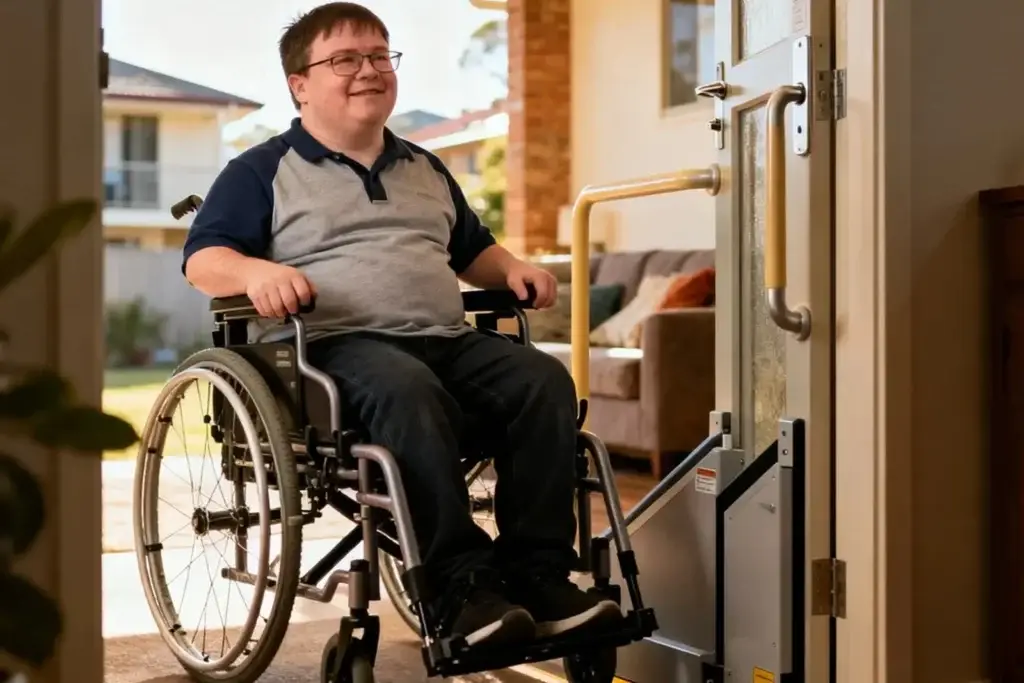
NDIS mobility equipment sits at the centre of independence for many families supporting someone with disability. The challenge isn’t finding equipment — it’s finding someone who will assess your home properly, source the right gear, train you how to use it safely, and then show up for maintenance when things wear or break. Families often worry about providers who promise equipment delivery but disappear after installation, leaving you stranded with a wheelchair that needs adjustment or a transfer aid that isn’t working right. That inconsistency costs time, dignity, and confidence.
Home modifications and personal mobility equipment work because they remove barriers one step at a time. A properly fitted wheelchair, walking frame, or transfer board doesn’t just sit in your home — it changes what your family member can actually do independently. The mechanism is straightforward: the right equipment, matched to the right person and the right space, reduces the physical strain on both participant and carer. When equipment is chosen thoughtfully and installed with training, it builds capability rather than creating dependency.
Here’s what that looks like in practice. Guia’s team assesses your home, understands your routines, and sources equipment that fits your life — not a solution. We train everyone who’ll use the equipment, and we’re here for maintenance and adjustments when you need them. Our support workers become part of your extended team because we commit to showing up consistently, respecting your family’s rhythm, and treating your family member as the capable adult they are.
NDIS mobility equipment can feel overwhelming when you’re trying to work out what your family member actually needs. You might be wondering: will a wheelchair help them get out more? Should we look at walking aids? How do we even know what the NDIS will fund? These are the questions families ask us every week.
Here’s what matters most: mobility equipment isn’t just about moving from one room to another. It’s about independence, dignity, and staying connected to the people and places that matter. A wheelchair that fits properly means your mum can visit her friend without exhaustion. Walking aids chosen with care mean your brother can get to the shops on his own terms. Transfer equipment means personal care happens with respect, not strain.
The tricky part is that “mobility equipment” covers a lot of ground—wheelchairs, walking frames, transfer aids, standing frames, and more. Each person’s needs are different. What works brilliantly for one participant might not suit another. That’s why we don’t start with equipment. We start with your family member’s actual life: where do they want to go? What do they want to do? What barriers are in the way right now?
Once we understand that, we can match them with the right equipment and the right support to use it safely and confidently. Training matters too. Equipment sitting in a corner helps no one. A wheelchair or walking aid that comes with proper instruction, regular check-ins, and maintenance—that changes things.
If you’re at the stage where you’re researching what might help, or you’ve got equipment already but something isn’t working, we can help you think it through. No pressure, no assumptions. Just a conversation about what your family member needs to live their life the way they want to.
A power wheelchair isn’t just equipment—it’s the difference between staying home and getting out. If your family member is spending more time sitting because walking or manual pushing exhausts them, it’s worth a conversation with their support coordinator about whether NDIS mobility equipment might fit their plan.
Here’s what that looks like in practice. Marcus, a 34-year-old autistic adult, used to walk short distances around his neighbourhood. Over two years, fatigue and joint pain made those walks shorter and rarer. By Tuesday afternoon, when his Guia support worker arrived for a two-hour community access visit, Marcus was staying indoors most days. The support worker noticed—not as a problem to fix, but as information to share. A conversation with Marcus and his mum led to exploring whether a power wheelchair could change the picture.
The assessment wasn’t rushed. Guia’s Home & Mobility Solutions team spent time understanding what Marcus actually wanted to do—visit his local café, attend community art classes, spend time at the park. They looked at his home setup, his transport options, and what would make independent movement feel possible rather than exhausting. The recommendation came back clear: a power wheelchair would give Marcus genuine choice about when and where he went.
Once approved and delivered, the real work started; the support worker didn’t just drop it off. Training happened over several visits—how to charge it, navigate kerbs safely, what to do if the battery ran low. The support worker also noticed small things: Marcus felt more confident when someone sat beside him the first few times, and he preferred going out mid-morning when the café was quieter. Those details went into his support notes so every visit felt consistent.
If your family member’s mobility is changing and you’re wondering whether NDIS mobility equipment might help, that’s the right instinct. When you’re ready to explore options, enquire about support and we’ll walk through it together.
Many families think NDIS mobility equipment means a one-off purchase: you get a wheelchair or walking frame, it’s delivered, and that’s the end of it. In reality, mobility equipment is part of a broader support journey that includes assessment, training, ongoing maintenance, and adjustments as your family member’s needs change.
Here’s what that looks like in practice. When you first explore NDIS mobility equipment with us, we don’t just match you to a product off a shelf. We listen to how your family member moves through their day—at home, in the community, at work or school. A wheelchair that works brilliantly for someone who spends most of their time indoors might not suit someone who needs to navigate steep driveways or uneven footpaths in their neighbourhood. The equipment itself is only half the story.
The other half is training and confidence. Many participants and families tell us they’ve received equipment in the past but didn’t feel confident using it safely or maintaining it. We include hands-on training with your family member and anyone supporting them—how to operate it, care for it, and troubleshoot common issues. That builds genuine independence and control, not just access to a device.
Maintenance and adjustment matter too. Equipment wears. Bodies change. A walking aid that suited your family member two years ago might need tweaking now. We stay connected, check in, and make adjustments without waiting for a crisis or a formal plan review. That’s what reliable, person-centred support actually feels like.
If you’re ready to explore what the right mobility equipment and support could mean for your family member, we’re here to talk through it without pressure. Enquire about support and let’s work out what makes sense for your situation.
Home & Mobility Solutions is practical support that helps you or your family member move around safely at home and in the community. It covers equipment, modifications, and training so you can do the things that matter to you with confidence and dignity.
The service includes personal mobility equipment like wheelchairs, walking aids, and transfer equipment. It also covers home modifications—ramps, handrails, bathroom changes, doorway widening—that make your space work for your body. Training on how to use equipment properly and safely is part of it too, along with ongoing maintenance so things keep working when you need them.
What it does NOT include: medical diagnosis or treatment. We’re not prescribing what you need based on your condition. Instead, we listen to what you actually do day-to-day and what’s stopping you. A parent might say, “My son can’t get into the shower safely. ” A wheelchair user might say, “I need to access the front door independently. ” We work from there, matching equipment and modifications to your real life, not a diagnosis.
It’s worth knowing that NDIS mobility equipment sits in a registration group called Assistive Technology, Equipment and Modifications. If your NDIS plan includes funding in this group, you can use it for mobility support. Your support coordinator can tell you what’s in your plan and what amount you have available.
Here’s what that looks like in practice: We assess your home and your routines. We source the right equipment or plan modifications with you. We arrange installation and training. Then we’re there if something needs adjustment or repair. The goal is simple—help you stay safe, independent, and in control of your own space.
If that sounds like the kind of support you’re after, enquire about support and we’ll talk through what Home & Mobility Solutions could look like for you.
NDIS mobility equipment sits within your plan as either a Core Support or a Capacity Building support, depending on what you’re working towards. Core Supports cover day-to-day needs—a wheelchair, walking frame, or transfer equipment you use regularly. Capacity Building supports help you build independence or try new skills, like learning to use new equipment safely or adapting your home so you can move around more freely.
The key thing to understand is that you—or your family member—direct how that funding gets spent. You’re not locked into one provider or one type of equipment; if a wheelchair or mobility aid isn’t working the way you need it to, you can change it. That choice and control is built into how the NDIS works, and it means your support should fit your life, not the other way around.
When you’re looking at NDIS mobility equipment, the conversation usually starts with what you actually need to do each day. Can you get to the bathroom safely; do you need help getting in and out of the car? Are there steps or doorways making it hard to move around your home? Those real, everyday questions shape what equipment makes sense and how it gets funded.
Here’s what that looks like in practice: you might have funding allocated for equipment, but you’ll also need assessment, setup, and training to use it properly. That’s where support coordination and home modifications come in—they work together with the equipment itself to make your home and mobility actually work for you.
If you’re navigating this for someone you care for, it’s worth knowing that good providers help you understand what’s included in your plan and what your options are. When you’re ready to explore what NDIS mobility equipment might look like for your situation, we’re here to help you think it through without pressure.
Seating and pressure management equipment is about comfort, dignity, and staying mobile. Your family member deserves a chair or cushion that actually fits their body and their daily routine. That’s where your control starts—and where we can help you navigate it clearly.
When you’re choosing NDIS mobility equipment for seating support, several decisions sit squarely with you and your family. You decide which provider matches your values and your suburb. You choose how often support visits happen—weekly, fortnightly, monthly. You pick the support worker whose personality and communication style fit your family best. You set the scope of what you need help with: equipment selection, delivery, setup, training on use, or ongoing maintenance. These choices shape what your support actually feels like day to day.
Here’s what sits outside this kind of support. We don’t diagnose pressure injuries or recommend specific medical treatments—that’s clinical territory, and your GP or allied health team owns that conversation. We don’t create or manage your NDIS plan; the NDIA does that work. We don’t make decisions about what funding the scheme will approve; those calls come from the NDIS itself. We also can’t a particular outcome or timeline for equipment delivery, because supply chains and approvals move at their own pace.
What we do is listen to what matters to your family, explain your options in plain language, and coordinate the practical steps—sourcing equipment that fits, arranging delivery, showing your family member how to use it safely, and check-ing in when you need adjustments. We’re here to make the process less confusing and more reliable.
If seating and pressure management support sounds like what your family needs, let’s talk through how we’d work together. Reach out and enquire about support when you’re ready.
Home & Mobility Solutions sits within the NDIS category called Assistive Technology, Equipment and Modifications. If your family member’s plan already lists funding here, you may not need to wait for a review to get started. It’s worth check-ing your plan documents or ringing your support coordinator to confirm what’s already allocated.
The clearest signal you need mobility equipment is when everyday movement around the home or community has become harder or unsafe. This might look like your family member struggling to stand from a chair, needing help to transfer in and out of bed, or finding stairs increasingly difficult. A wheelchair, walking frame, or transfer board isn’t about giving up independence—it’s about protecting dignity and keeping movement possible on their own terms.
Another common starting point is when you’ve noticed your family member isolating more because getting out feels too risky or tiring. A lightweight wheelchair or mobility aid can mean the difference between staying home and actually joining a community outing. Equipment that fits their body and routine—not a solution—is what makes this real.
Home modifications often come next. If doorways are too narrow for a wheelchair, if the bathroom isn’t accessible, or if your family member can’t safely navigate stairs, modifications create genuine choice and control. These changes respect the home as it’s while making it work for them.
If any of these situations sound familiar, the next step is straightforward. Reach out to Guia and we’ll talk through what your family member actually needs, check what your plan covers, and help you move forward without pressure. We’ve been supporting people across South West Sydney for two years, and we’re NDIS-registered with all staff qualified and worker-screened.
Enquire about support and let’s work out what comes next.
An autistic adult in Bass Hill was using a standard wheelchair that didn’t fit their sensory needs. The rigid frame made transfers difficult, and the lack of customisation meant longer community outings left them uncomfortable. Their family worried that investing in specialised NDIS mobility equipment would be wasted if it didn’t work in practice.
Guia arranged a trial period with a lightweight, adjustable wheelchair before any funding commitment. A support worker visited twice weekly to help them test it in real settings—the local shops, community centre, a family visit. We tracked what worked and what didn’t in plain language notes the family could understand and act on.
After four weeks, the trial showed the specialised chair made a genuine difference to their comfort and independence during transfers. The family felt confident moving forward with the purchase through their NDIS plan. The same support worker then provided training on maintenance and adjustment, so the participant and their family could manage it themselves day to day.
This is how NDIS mobility equipment works best—not as a one-off purchase, but as part of a supported journey. Trial periods remove the guesswork. Training and ongoing support mean the equipment actually gets used well. When families and participants have choice and control over what they’re buying and why, the outcome lasts.
If your family member is considering mobility equipment but you’re unsure whether it’s the right fit, we can help you explore options without pressure. We work with your NDIS plan and your budget to find what actually works for their life. When you’re ready to talk through the options, enquire about support and we’ll walk you through what a trial and training process looks like.
NDIS mobility equipment sits within your plan’s Core Supports budget. Core Supports cover day-to-day assistance and equipment that help you stay safe, healthy, and connected at home and in the community. The NDIS uses a price guide to set fair rates for wheelchairs, walking aids, transfer equipment, and other mobility devices you might need.
How much funding you receive depends on your plan and goals. Your NDIS planner works with you to identify what mobility support fits your circumstances. They’ll ask: What equipment helps you move around safely? What stops you from doing the things that matter? The answers shape how much Core Support funding gets set aside for equipment and training.
Once your plan is approved, you choose the provider. That’s where Guia comes in. We work within NDIS price-guide rates and help you understand exactly what’s included—the equipment itself, delivery, setup, training on how to use it safely, and ongoing maintenance. We’re transparent about costs so there are no surprises. If your plan doesn’t cover everything you need, we’ll talk through gap-funding options with you, but we never pressure you to spend beyond what feels right.
Training matters as much as the equipment. A wheelchair that doesn’t fit properly, or that you don’t know how to operate safely, isn’t much help. Our team makes sure you and your family understand how to use and care for your mobility equipment. We’re here to answer questions weeks or months later, not just on delivery day.
Every participant’s plan is different. Some people need one piece of equipment; others need several. The best first step is talking through what you actually need and how your current plan might cover it. When you’re ready, we can walk you through the options.
NDIS mobility equipment—wheelchairs, walking aids, transfer equipment—needs looking after. Your plan covers the cost of repairs and maintenance once the equipment is set up and in use. It’s worth knowing that funding for upkeep is separate from the initial purchase or modification costs.
Here’s what that looks like in practice. If a wheelchair needs new tyres, brake adjustments, or a cushion replacement, those costs come from your maintenance budget line. If a ramp or handrail develops wear or damage, repair funding is usually available. The key is planning ahead—knowing what your plan covers helps you avoid unexpected out-of-pocket costs.
Many families ask whether maintenance is included or if it’s a separate claim; the answer depends on your plan and what your support coordinator has approved. Some participants have a dedicated equipment maintenance budget; others claim repairs as they happen. We help you understand which applies to you, so there’s no confusion when something needs fixing.
When you’re ready to get started, the process is straightforward. Ring us for a quick chat about what equipment you have and what maintenance or repairs you’re facing. We’ll ask a few questions about your plan, your situation, and what you need. From there, we arrange a time to meet—usually within a week—and match you with a support worker who knows mobility equipment inside out.
At your first visit, we’ll assess the equipment, talk through what needs doing, and work with you to plan the repairs or maintenance. We handle the coordination with your plan, manage the paperwork, and make sure the work gets done on time. You’ll know exactly what’s happening and when to expect it.
If you’re managing NDIS mobility equipment in South West Sydney and want support with maintenance or repairs, enquire about support. We’re here to help.
Choosing the right NDIS mobility equipment provider matters. You want someone who listens to what your family member actually needs, shows up reliably, and treats them with genuine respect. Before you commit, ask these questions.
At Guia, we believe consistency and respect are non-negotiable. We match support workers carefully, show up every time, and treat each participant as a capable adult deserving dignity. Our team speaks English, Spanish, and Arabic, and every staff member is qualified and screened. When you’re ready to explore what genuine, reliable support looks like, enquire about support.
When you’re looking for NDIS mobility equipment support, especially for vehicle modifications in South West Sydney, it’s worth knowing what reliable providers actually do—and what warning signs suggest a poor fit for your family.
At Guia, we match you with support workers who show up consistently and understand your family’s routine. We’re NDIS-registered and based locally in Bass Hill. When you’re ready to explore vehicle modifications or other mobility equipment that fits your life, enquire about support and we’ll talk through what works for you.
When NDIS mobility equipment support is working well, you’ll notice it in the everyday rhythms of your family member’s life. The signs are quiet but real. A consistent support worker who knows their routine, their preferences, and what matters to them makes all the difference. When the same person shows up, they don’t need to re-explain everything each visit.
Regular check-ins from the support team are another clear marker. You’ll hear from them without having to chase—updates on how the equipment is performing, whether adjustments are needed, or if something isn’t quite right. This kind of communication means problems get caught early, before they become frustrations. It also means your family member’s priorities stay front and centre, not buried under service schedules.
You’ll also notice your family member using their equipment with more confidence. Whether it’s a wheelchair they’re learning to navigate independently, walking aids they’re using without hesitation, or home modifications that have genuinely changed how they move through their space—real progress shows. They’re not just using the equipment; they’re choosing to use it because it actually works for them.
Finally, watch for growing independence and choice. When NDIS mobility equipment support is effective, your family member has more control over their day. They can get to the kitchen without assistance. They can join a community activity because transport is sorted. They’re making decisions about what they want to do, rather than fitting around what’s possible. That shift—from managing around limitations to building on what’s working—is how you know the support is genuinely empowering them.
If you’re seeing these signs, the support is doing its job. If you’re not yet, it’s worth having a conversation about what needs to change. When you’re ready to explore NDIS mobility equipment support tailored to your family member’s actual needs, enquire about support with Guia.
When you’re choosing NDIS mobility equipment or working with a support provider on home modifications, you’re making decisions that affect your everyday life. That’s why choice and control matter. If something isn’t working—whether it’s the equipment itself, how it’s been fitted, or how the support worker is communicating with you—you have real options.
The first step is usually the simplest. Talk directly to your support worker or the provider’s team about what’s not fitting. Many issues get sorted quickly when you raise them. If that doesn’t help, ask to speak with a manager. A good provider takes feedback seriously and will listen to what you’re telling them about your family member’s needs.
You can also request a different support worker. Cultural and linguistic fit matters—if you’d prefer a Spanish-speaking or Arabic-speaking support worker, or someone with specific experience, that’s a reasonable request. Guia works across South West Sydney with multilingual staff, and we match support workers with genuine care for who your family member is and what they actually need day-to-day.
If you want to change providers altogether, that’s your choice too. Your NDIS plan belongs to you, and you get to decide who supports you. There’s no penalty for switching, and your new provider will work with you to make the transition smooth.
If you’ve raised concerns and nothing has changed, you can lodge a formal complaint with the NDIS Quality and Safeguards Commission. They investigate concerns about provider conduct and quality of support. It’s there to protect you.
When you’re ready to explore NDIS mobility equipment support that feels right for your family, we’re here. Enquire about how Guia can help—no pressure, just a conversation about what you actually need.
If you’re looking at NDIS mobility equipment for your family member, you’ve probably noticed how much depends on getting the right match between the person, the equipment, and the support worker who helps with it. That’s where a lot of families get stuck — not because the equipment itself is wrong, but because nobody’s explained how it actually works in their home, or how to use it safely day to day.
What we hear from families in South West Sydney is that they want someone who shows up consistently, knows their suburb, and takes time to understand what their family member actually needs — not just what the NDIS paperwork says they’re eligible for. We’ve been supporting people across Cumberland and Canterbury for two years, and we’re NDIS-registered to help with equipment, modifications, and the practical training that makes both work together.
Here’s what that looks like in practice: We don’t just deliver a wheelchair or walking aid and leave. We work with you and your family member to make sure they’re comfortable using it, that your home setup supports them safely, and that you know who to call if something changes. Our team speaks English, Spanish, and Arabic, and we match support workers with genuine care for how cultural fit matters when someone’s in your home regularly.
If you’re ready to explore what NDIS mobility equipment support could look like for your situation, enquire about support and we’ll have a straightforward conversation about what you need. No pressure, no jargon — just practical next steps whenever you’re ready.
A new plan arrives and nothing tells you what to do first. Here is the order we work through with families in South West Sydney, and the two mistakes that cost the most.
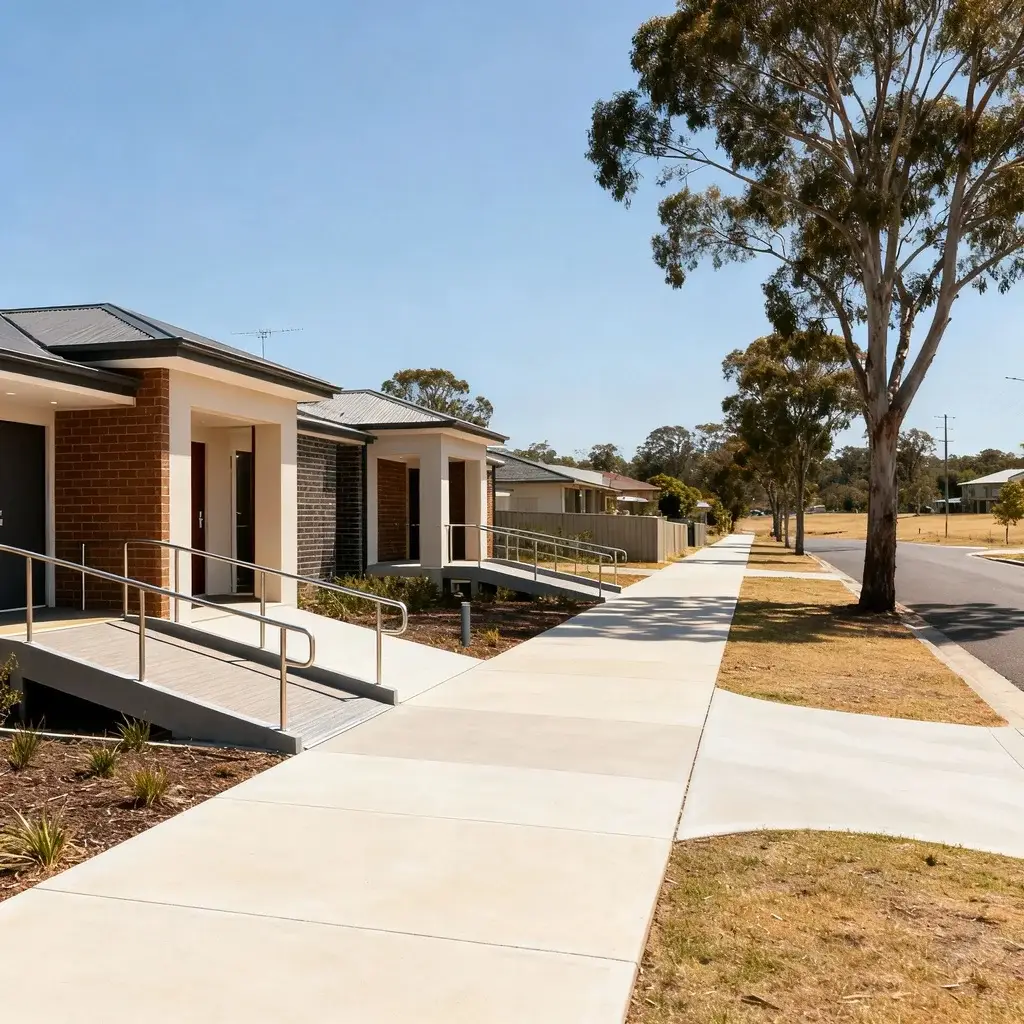
Aged care at home South West Sydney from Guia. Reliable support workers who show up consistently and become part of your family’s everyday routine.

NDIS allied health support sydney from Guia. Reliable support workers who show up consistently and become part of your family’s circle. Peace of mind fo…
The Home Modifications and Mobility Decision Guide
How to access NDIS home modifications and mobility equipment — without losing months to assessments or buying the wrong solution.
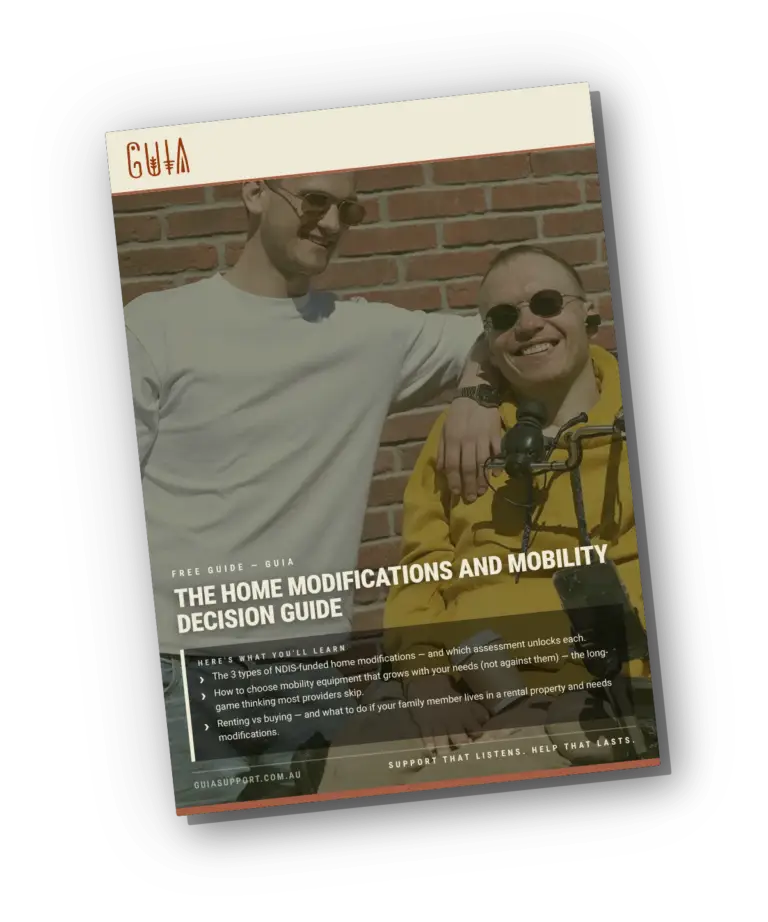
Here's What You'll Learn:
The 3 types of NDIS-funded home modifications — and which assessment unlocks each.
How to choose mobility equipment that grows with your needs (not against them) — the long-game thinking most providers skip.
Renting vs buying — and what to do if your family member lives in a rental property and needs modifications.
ARE YOUR NDIS SUPPORTS WORKING FOR YOU?
GET A FREE NDIS PLAN MANAGEMENT REVIEW