


New NDIS plan: your first 30 days, in order
A new plan arrives and nothing tells you what to do first. Here is the order we work through with families in South West Sydney, and the two mistakes that cost the most.
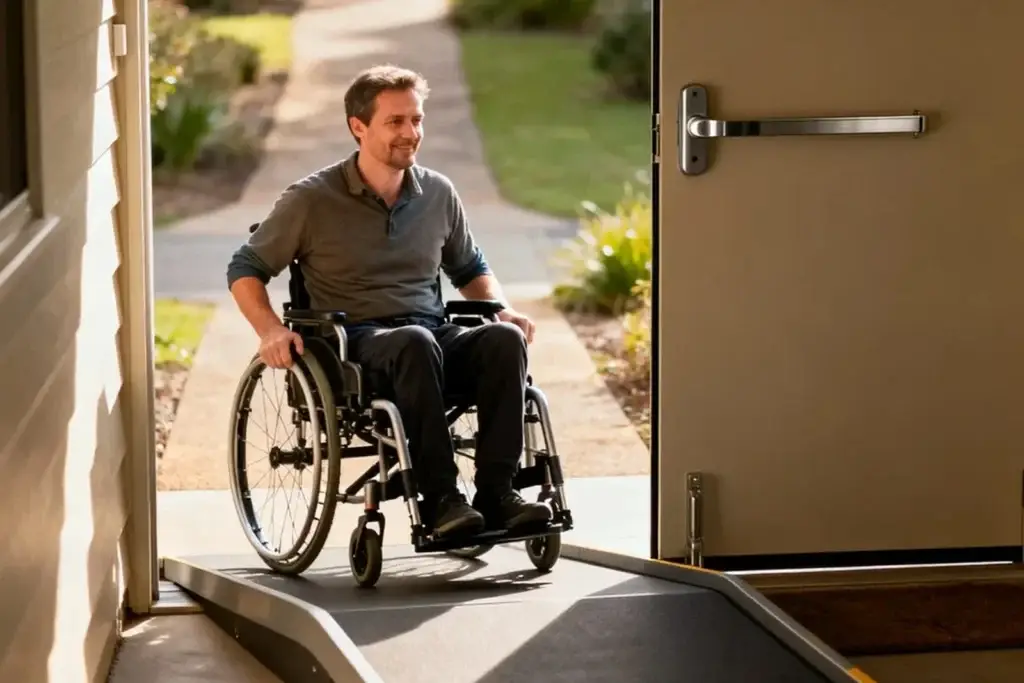
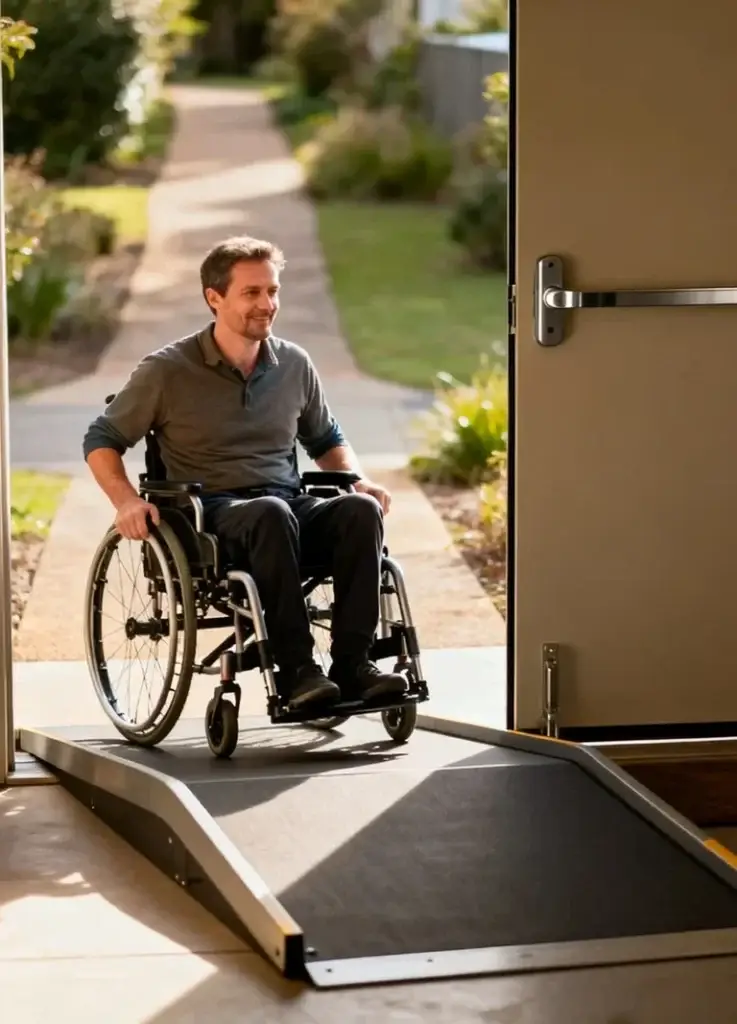
NDIS home modifications start with a simple truth: your family member’s home should work for them, not against them. When stairs become barriers, bathrooms feel unsafe, or doorways are too narrow, the frustration compounds daily. The NDIS recognises home modifications as essential support—ramps, grab rails, accessible kitchens, and layout changes that restore independence. Yet many families worry the provider they choose will disappear mid-project or leave the work incomplete. That anxiety is real because reliability matters most when someone depends on that modification every single day.
Home modifications work because they remove the daily friction that erodes confidence and safety. A well-planned ramp doesn’t just solve a physical problem—it restores the choice to move freely without asking for help. Guia’s approach combines careful assessment, proper funding navigation, and hands-on project management. We match each family with a team that understands their routines and respects the home as it is. The modification gets planned with the participant and family first, not designed in isolation and imposed later.
Here’s what that looks like in practice: we visit, listen to how your family member moves through their space, then develop a plan together. Our team stays with the project from approval through completion. You get a consistent point of contact who knows your family’s needs and shows up when promised. That reliability—the certainty someone will follow through—transforms a modification from a logistical headache into genuine support. When you’re ready to explore what’s possible for your home, we’re here to talk it through at your pace.
NDIS home modifications can mean anything from a grab rail in the shower to a complete kitchen redesign. The real question families ask us is: how do we know what your family member actually needs, and how do we get it funded?
Here’s what matters. Not every home change costs the same or takes the same planning; a minor modification might be a ramp at the front door or handrails in a hallway. These are straightforward, usually installed quickly, and often the first step toward making daily life safer and easier at home.
Complex modifications are different. They might involve structural work—widening doorways, relocating bathrooms, or installing accessible flooring throughout. These need proper assessment, builder coordination, and closer attention to how the change fits into your home and your family member’s routine. They take longer to plan and cost more, but they’re about building a home that works for the long term.
Specialist disability accommodation is the third category. This is for people with very high support needs—adults who need 24-hour care or have complex mobility, sensory, or safety requirements. The home itself becomes part of the support system; these modifications are substantial and require expert assessment from the start.
What we hear from families is that the biggest worry isn’t the cost—it’s knowing whether the modification will actually solve the problem, and whether the person doing the work understands their family member’s needs. That’s where the real conversation starts. Before any modification happens, we listen to what daily life looks like right now, what’s hard, and what would make a genuine difference.
When you’re ready to explore what NDIS home modifications might look like for your family, we’re here to walk through it with you in plain language.
It’s a Tuesday afternoon in Bass Hill. Your mum’s support worker, Maria, arrives at 2 pm with a clipboard and a measuring tape. She’s here to assess the bathroom doorway—your mum’s wheelchair won’t fit through at the moment, and getting in and out of the shower has become risky. Maria takes photos, notes the wall thickness, and asks your mum specific questions: “Do you prefer the grab rail here or here? What time of day do you usually shower? ” Your mum points. Maria writes it down. This is what choice looks like in practice.
Over the next two weeks, Maria coordinates with an occupational therapist and a builder. They work within your mum’s NDIS plan to scope the modification—widening the doorway, installing grab rails at the exact height your mum specified, and adding a non-slip floor. Maria keeps you in the loop with plain-language updates. No jargon. No surprises. When the work starts, Maria is there on the first day to make sure the builders understand your mum’s routine and respect her privacy.
By week four, the doorway is wider. The rails are installed. Your mum wheels into the bathroom independently for the first time in eighteen months. Maria comes back to check everything works as planned. She shows your mum how to use the rails safely, adjusts one that sits slightly awkward, and leaves a simple one-page guide on the kitchen bench. “Ring me if anything feels off,” she says. She means it.
This is how NDIS home modifications work when someone takes time to listen first and plan second. Guia has been supporting families across South West Sydney for two years; we’re NDIS-registered and our team speaks English, Arabic, and Spanish. When you’re ready to explore what modifications might help your home feel safer and more independent, we’re here to talk it through.
Many families think NDIS home modifications means a contractor will show up, measure the space, and leave you with a bill. That’s not how it works—and it’s worth understanding the real process before you start.
The truth is that NDIS home modifications begin with an occupational therapy assessment. An occupational therapist visits your home, talks with you and your family member about how they move through the space, and identifies where barriers exist. They’re not there to judge the state of your house. They’re there to understand your daily reality—how your family member gets in and out of the shower, whether they can reach the kitchen bench, what happens on the stairs.
This assessment becomes the foundation for everything that follows. The therapist documents what modifications will actually help your family member stay safe and independent at home. They consider your routines, your budget within your NDIS plan, and what matters most to you. If modifications aren’t the right fit, they’ll say so. If they are, they’ll detail exactly what’s needed and why.
Once the assessment is done, we work with you to plan the modifications themselves. We manage the coordination, the contractors, the timeline—so you’re not juggling multiple tradespeople or chasing paperwork. We also make sure any equipment or assistive technology is installed properly and that your family member knows how to use it safely.
The goal isn’t to tick a box on your NDIS plan. It’s to make your home work for your family member, so they can move through it with dignity and confidence. When you’re ready to explore what modifications might help, we’re here to walk you through it in plain language.
Enquire about home modifications support and we’ll start with a conversation about what your family actually needs.
Home and Mobility Solutions is practical support that makes your home safer, more accessible, and easier to move around in. It includes home modifications, assistive equipment, and the planning and training that goes with them. It does NOT include ongoing personal care, cleaning services, or clinical therapy.
Here’s what that looks like in practice. A home modification might be a ramp at the front door, grab rails in the bathroom, or widened doorways for a wheelchair. Assistive equipment could be a walking frame, transfer equipment, or a personalised mobility aid. Your NDIS plan sets aside funding for these items under “Assistance with Accommodation and Tenancy” or “Assistance with Daily Personal Activities”—your support coordinator can confirm which applies to you.
What matters is that modifications are planned around your life, not imposed on it. If you’re autistic and routine changes feel unsettling, we work with you to time the work and explain what’s happening. If you speak Arabic, Spanish, or Auslan at home, that language stays central to how we communicate with you throughout the process. If you have complex mobility needs, we match you with someone who understands your body and your goals.
The equipment and modifications themselves are only half the story. Training and ongoing support matter just as much. If you’re learning to use a new walking aid or navigating a modified bathroom, you need someone to show you how—not just drop it off and disappear. That’s where dignity and empowerment come in. You’re building confidence and independence, not just ticking a funding box.
When you’re ready to explore what Home and Mobility Solutions could mean for you or your family member, enquire about support. We’ll listen to what you need and explain how the funding and process actually work.
NDIS home modifications and mobility equipment are funded through your plan as either Core Supports or Capacity Building Supports. The difference matters because it affects how you choose your provider and what flexibility you have.
Core Supports cover the day-to-day assistance you need right now — things like personal care, daily living help, or the support worker time needed to help you use new equipment safely at home. Capacity Building Supports fund things designed to build your skills or independence over time, which often includes equipment and home modifications that help you do more for yourself. Both can include mobility aids, wheelchair ramps, bathroom modifications, and assistive technology that makes your home work better for you.
Here’s what that looks like in practice. If you need a wheelchair ramp installed, the modification itself might be funded under Capacity Building. The support worker time to help you learn how to use it safely, or to support you while you’re adjusting to your home changing, could be Core or Capacity Building depending on your plan and goals. You get to choose which NDIS-registered provider does the work — there’s no requirement to use one specific company.
What we hear from families is that the paperwork and planning feel overwhelming. You need to know what’s actually in your plan, which registration groups cover what you’re after, and whether your chosen provider can deliver it. That’s where support coordination helps. A coordinator can walk you through your plan in plain language, help you understand what equipment or modifications might work for you, and connect you with providers who can do the job well.
Guia is NDIS-registered for Home & Mobility Solutions across South West Sydney. We handle the planning, sourcing, and installation of modifications and equipment — and we respect your routines and your home while we do it. When you’re ready to explore what’s possible for your home, get in touch.
When you’re planning NDIS home modifications, it helps to know exactly what’s in your hands and what isn’t. That clarity means you can focus your energy where it actually matters — on the choices that shape your home and your daily life.
Here’s what that looks like in practice with home modifications support:
What’s your call
What’s outside this support
What we do is support you through the process. We help you think through what modifications actually matter for daily life; we work with your budget and your timeline. We make sure the work respects your home and the routines that matter to your family. And we’re there to answer questions and adjust as things change.
The NDIS scheme sets the funding rules. Your plan sets the budget. You set the priorities. Our job is to help you turn those priorities into a home that works better for everyone in it.
If that sounds like the kind of support you’re after, enquire about home modifications support with Guia. We’ll talk through what you’re hoping to achieve and how we can help.
If your family member uses a wheelchair—whether manual or power—your NDIS plan likely already includes personal mobility equipment. Here’s how to tell if it’s time to talk to us about an upgrade or replacement.
The first signal is wear and tear. A manual wheelchair that’s hard to push, or a power chair losing battery life between charges, makes daily life harder for both of you. If your family member is spending more energy fighting the equipment than moving freely, that’s a real problem. NDIS funding can cover replacement or repair, and we help match the right chair to their body, strength, and where they actually go each week.
The second is a change in their body or routine. Weight shifts, growing pain, a new job or community group—these all change what wheelchair works. A chair that fitted perfectly last year might not suit them now. We assess what’s changed and help you understand whether a different model or adjustment would give them better control and comfort.
The third is access at home. A manual wheelchair might work for outdoor community time but struggle on your hallway carpet or through doorways. A power chair solves that—but only if your home’s layout supports it. We look at both the chair and the space, sometimes recommending small modifications alongside equipment, so everything works together.
Your plan may already have funds set aside for personal mobility equipment. You don’t need to wait for a plan review. If you’re unsure what’s included or whether an upgrade makes sense, we can walk through it with you—no pressure, just clarity. When you’re ready, enquire about support and we’ll talk through what your family member actually needs.
An autistic adult in Bass Hill was struggling with sensory overwhelm in their shared home. Bright overhead lights triggered migraines. The kitchen layout made meal prep chaotic. Their family worried about safety but didn’t know where to start with NDIS funding for modifications.
Guia’s Home & Mobility Solutions team visited to listen first. No assumptions, no rush. They asked what times of day felt hardest, which rooms felt safest, what the participant actually wanted to change. The family mentioned the participant’s need for predictable routines and low-sensory spaces.
Together, they planned three changes within the participant’s NDIS plan; dimmable lighting in the bedroom and living areas. A reorganised kitchen with clear zones and labelled storage. A quiet corner with acoustic panels for decompression. The team sourced equipment, coordinated installation, and stayed present throughout to respect the participant’s sensory needs on the day.
What mattered most wasn’t the modifications themselves—it was the approach; the support worker explained each step beforehand. They worked around the participant’s energy levels. They didn’t rush. The family felt heard, not lectured. It participant regained control over their own space.
Six weeks later, the participant was cooking independently most evenings. Migraines dropped. The family stopped worrying about safety in the kitchen. It modifications stayed practical because they were designed around how this person actually lived, not what a checklist said they needed.
If your family member needs NDIS home modifications that fit their actual life—not just tick boxes—we’re here to help. We listen first, plan together, and deliver with respect for routines and sensory needs. When you’re ready to explore what’s possible, enquire about support and we’ll talk through your situation.
NDIS home modifications are funded through your plan’s Core Supports or Capacity Building budget, depending on what you’re modifying and why. The NDIS uses a price guide to set fair rates for different types of work — things like ramps, handrails, bathroom access, and door widening all have set costs. Your support coordinator or planner will work with you to check what’s eligible under your plan before any work starts.
Here’s what that looks like in practice. If your family member needs a ramp to access the front door safely, that’s typically funded as an assistive technology or home modification under Core Supports. If the modification is about building independence — like grab rails in the bathroom to help them shower alone — it might sit under Capacity Building instead. The difference matters because it affects which part of your plan pays for it.
What we hear from families is that the process feels confusing at first. You need to know the price guide rates, understand which support category applies, and sometimes get quotes from providers before approval. That’s where clarity helps. We work with you to gather the right information, explain the funding rules in plain language, and make sure your plan is set up to cover what you actually need.
Gap funding — where the NDIS covers part of the cost and you cover the rest — can happen if the work costs more than the price guide allows. It’s worth knowing that upfront so there are no surprises. Some families choose to proceed; others adjust the scope of work to stay within the NDIS amount. Both choices are valid.
If you’re ready to explore what modifications might work for your family member and how your plan could fund them, we’re here to help. Get in touch and we’ll walk through your options together.
When you call Guia about NDIS home modifications, we start with a straightforward conversation. We ask what’s happening at home right now—maybe stairs are becoming harder to navigate, or the bathroom layout doesn’t work anymore. We listen to what matters most to you and your family member. This first chat usually takes fifteen to twenty minutes.
After that call, we send you some simple information about how the process works. We explain which parts of your NDIS plan might cover home modifications, and what happens next. There’s no pressure to decide anything immediately. We’re here when you’re ready to move forward.
Once you’ve decided to work with us, we arrange a home visit; one of our team comes to your place to see the space and understand your daily routines. They’ll take measurements, ask questions about what you need, and talk through realistic options. They respect your home and your family’s rhythm—no disruption, no surprises. This visit usually takes an hour.
From there, we develop a plan together. We outline what modifications might help, what the process looks like, and realistic timeframes. We also explain how funding works, so there are no unexpected costs. You stay in control of every decision. When you’re ready, we coordinate with the right tradespeople and manage the work start to finish.
Throughout this whole process, you’re working with the same team. We’re NDIS-registered, all our staff are qualified and worker-screened, and we’re here consistently. If you have questions mid-project, you reach the same people who started with you; that reliability matters when you’re making changes to your home.
If this sounds like the kind of support you’re after, enquire about support and we’ll take it from there.
Disability doesn’t stay static, and neither should your home. As your family member’s needs shift over time, the modifications that worked last year might need adjusting. A good Home & Mobility Solutions provider understands this and builds flexibility into their approach from day one.
At Guia, we treat NDIS home modifications as part of your ongoing story, not a one-off project. We match you with the same support worker where possible, maintain detailed records, and stay responsive as your circumstances evolve. When you’re ready to explore modifications that grow with your family, enquire about support.
When you’re researching NDIS home modifications providers in South West Sydney, it’s worth knowing what to watch for. Some providers talk a good game but don’t deliver the consistency, care, or local knowledge your family needs.
Guia does the opposite. We’re NDIS-registered, based in Bass Hill, and our team speaks English, Arabic, and Spanish. Every worker is qualified and screened. We stay with you after modifications are installed, offering training and ongoing support. When you’re ready to talk through your home’s needs, enquire about support.
When NDIS home modifications are working well, you’ll notice patterns that tell you the support is genuinely fitting your family member’s life. The first sign is consistency—the same support worker shows up, knows your home layout, understands your family member’s preferences, and doesn’t need to start from scratch each visit. That continuity builds trust and makes problem-solving faster when something needs adjusting.
Regular check-ins between you, your family member, and the support team are another strong indicator. You’re not left wondering whether the ramp angle is still comfortable or if the grab bars are positioned right. The team actively asks how things are working in daily life and makes tweaks without waiting for formal reviews. This shows they’re focused on what actually matters to your family, not just ticking boxes.
Your family member having real say in what gets modified or purchased is essential too. If they’re choosing the colour of their walking frame, deciding which room gets priority for modifications, or suggesting equipment that suits their routine, that’s empowerment in action. You’ll see them more confident moving around home and less reliant on you for physical support—that’s genuine independence building.
Finally, watch for practical outcomes you can measure day-to-day. Your mum can reach the kitchen cupboards without asking for help. Your brother gets in and out of the shower safely on his own. Your sister uses the modified bathroom without anxiety. These aren’t dramatic transformations—they’re small freedoms that add up to real dignity and control over their own space.
If you’re seeing these signs, the support is landing well; if something feels off, that’s worth raising with your support team. When you’re ready to explore what home modifications might look like for your family member, enquire about support and we’ll talk through your specific situation.
Support should feel right for your family member and your family; if NDIS home modifications aren’t working the way you hoped, you have real options. Choice and control sit at the heart of the NDIS — and that includes the choice to change direction.
Start with the provider directly. If a modification isn’t meeting your family member’s needs, or if a support worker isn’t the right fit, talk to the provider’s manager. Most good providers want to know when something isn’t working. A conversation often leads to a quick adjustment — a different approach, a different team member, or a rethink of how the modification is set up.
If that doesn’t resolve it, you can request a different support worker or ask the provider to reassess the modification plan altogether. You’re not locked in. Your family member’s needs change, and the support should change with them.
You also have the right to switch providers entirely. If Home & Mobility Solutions support from one provider isn’t meeting your needs, you can choose another registered NDIS provider. Your support coordinator or the NDIS can help you explore other options in South West Sydney.
If you believe a provider has breached the NDIS Quality and Safeguards Commission standards or the NDIS Code of Conduct, you can lodge a formal complaint. The Commission investigates concerns about quality, safety, and provider conduct; that’s a last step, but it’s there to protect you.
The point is simple: you’re in charge; if something isn’t working, you have the power to change it. When you’re ready to explore what better support looks like, get in touch.
If you’ve been reading through your NDIS plan and thinking about NDIS home modifications, the next step doesn’t have to feel overwhelming. Here’s what that looks like in practice with Guia.
We start by listening. A member of our team will talk through what’s not working in your home right now—whether it’s a bathroom that’s hard to access, stairs that limit where your family member can go, or equipment that needs space to be set up safely. We ask questions about daily routines, what matters most, and what your budget looks like. No pressure, no assumptions.
From there, we work with you to understand what your NDIS plan covers. Home modifications fall under the “Assistance with Accommodation and Tenancy” registration group, and we help families navigate what that actually means for your situation. We can explain funding options, timelines, and what to expect at each stage; if you’re renting, we know the extra steps involved. If you own your home, we understand the different pathway.
Once we’re clear on what you need, we coordinate the planning and delivery. We connect you with qualified tradespeople and assessors who understand disability access. We manage the paperwork, check-ins, and quality; you’re not left juggling contractors or wondering what’s happening next.
The whole process is designed around your family’s pace and preferences. We’ve supported families across South West Sydney through modifications big and small—from grab rails and ramps to bathroom renovations and accessible kitchen layouts.
When you’re ready to explore what’s possible for your home, enquire about support and we’ll have a conversation, no obligation. If now isn’t the right time, that’s okay too. We’re here whenever you need us.
A new plan arrives and nothing tells you what to do first. Here is the order we work through with families in South West Sydney, and the two mistakes that cost the most.
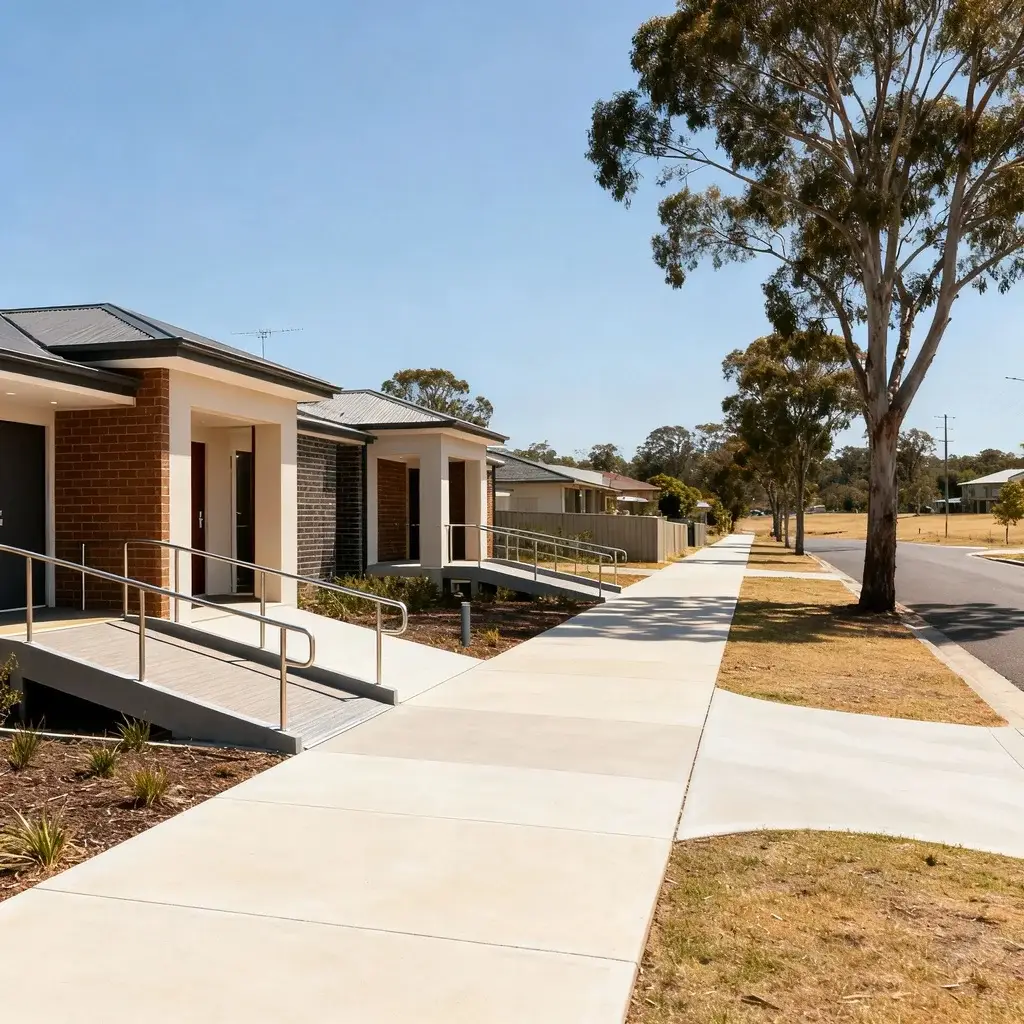
Aged care at home South West Sydney from Guia. Reliable support workers who show up consistently and become part of your family’s everyday routine.

NDIS allied health support sydney from Guia. Reliable support workers who show up consistently and become part of your family’s circle. Peace of mind fo…
The Home Modifications and Mobility Decision Guide
How to access NDIS home modifications and mobility equipment — without losing months to assessments or buying the wrong solution.
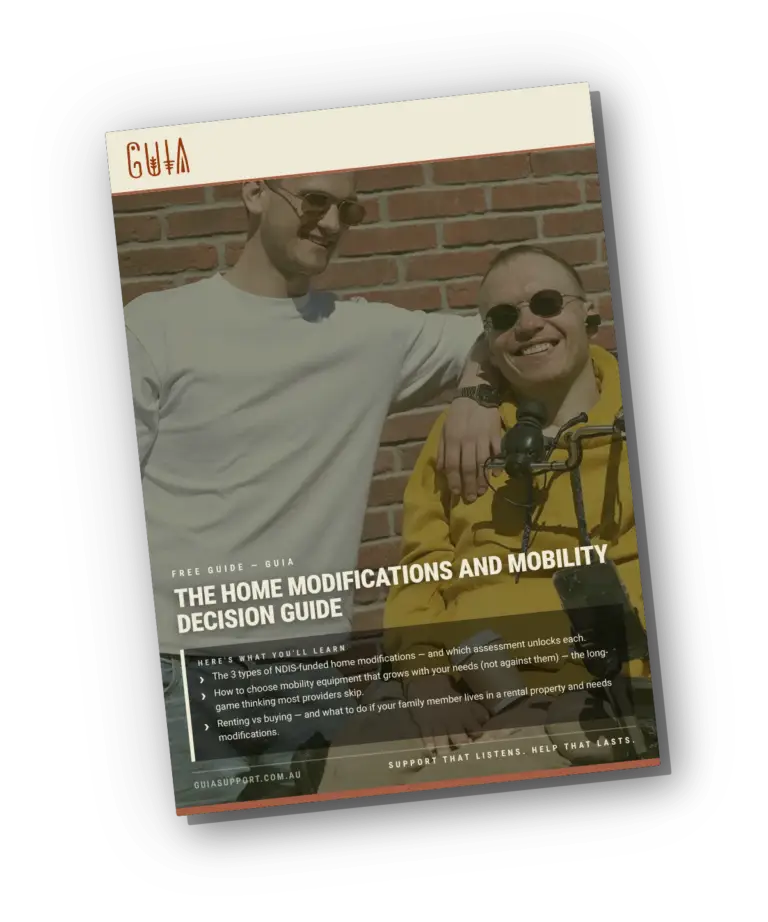
Here's What You'll Learn:
The 3 types of NDIS-funded home modifications — and which assessment unlocks each.
How to choose mobility equipment that grows with your needs (not against them) — the long-game thinking most providers skip.
Renting vs buying — and what to do if your family member lives in a rental property and needs modifications.
ARE YOUR NDIS SUPPORTS WORKING FOR YOU?
GET A FREE NDIS PLAN MANAGEMENT REVIEW