


New NDIS plan: your first 30 days, in order
A new plan arrives and nothing tells you what to do first. Here is the order we work through with families in South West Sydney, and the two mistakes that cost the most.


Level 2 support coordination sits at the intersection where most families need help most. Your family member has an NDIS plan, but the terminology feels opaque, the registration groups confusing, and the question of which provider actually fits their life stays unanswered. What you’re really worried about is consistency—whether someone will show up, understand what matters to your family, and stick around long enough to build trust. The NDIS scheme itself is sound, but without skilled coordination, even a well-funded plan can feel scattered and reactive.
Level 2 support coordination works because it bridges the gap between your family’s real needs and the plan’s technical structure. A Level 2 coordinator doesn’t just tick boxes—they translate NDIS language into plain English, match your family member with providers who fit their personality and communication style, and check in regularly to make sure the arrangement is actually working. The mechanism is simple: consistency builds trust, and trust gives your family member the confidence to engage more fully with their supports.
Here’s what that looks like in practice. A Level 2 coordinator meets with your family, listens to what a typical week looks like, and then sits with you to explain which parts of the plan address which parts of life. They don’t disappear after the initial setup—they stay involved, answering questions when a support worker changes or a goal shifts. Over time, the coordinator becomes someone your family knows and relies on, not a stranger processing paperwork.
Level 2 support coordination helps you navigate your NDIS plan and choose providers who actually fit your life. If you’re sitting with a plan document that feels overwhelming, or you’re unsure which services your family member needs, you’re not alone. Most families tell us the same thing: the NDIS terminology is dense, the funding categories are confusing, and they just want someone to explain it plainly.
Here’s what that looks like in practice. A Level 2 support coordinator works with you to understand what your NDIS plan covers, what it doesn’t, and which providers can actually deliver what you need. They help match support workers to your family member—someone whose communication style fits, whose availability works for your routine, and who respects how your family operates day to day.
What we hear from families is that consistency matters most. You need someone who shows up reliably, who knows your situation well enough to anticipate problems, and who treats your family member as a capable adult deserving dignity. A good support coordinator is that steady presence between you, the NDIS, and the providers you choose.
In South West Sydney, where many families speak Arabic, Spanish, or Auslan at home, cultural and linguistic fit isn’t a nice extra—it’s essential. Your support coordinator should help you find workers who speak your language and understand your family’s values. That’s not a luxury. That’s how real support actually works.
If this sounds like the kind of support you’re after, Guia offers Level 2 and Level 3 specialist coordinators who’ve been doing this work for two years. We’re NDIS-registered and trained to help families like yours navigate plans with confidence. When you’re ready to explore what support coordination could look like for your family, we’re here to talk it through.
Level 2 support coordination means having a specialist coordinator who knows your NDIS plan inside out and helps you find the right providers to deliver it. Unlike Level 1, which is simpler plan navigation, Level 2 goes deeper—your coordinator actively matches you with services, checks in regularly, and adjusts things when they’re not working.
Here’s what that looks like in practice. Say your adult son needs help with daily living support and community access. Your Level 2 coordinator starts by sitting down with you both—maybe a Tuesday afternoon at your kitchen table—to understand what matters most. Not what the plan says on paper, but what actually happens in your week. They listen to your concerns about consistency, cultural fit, or specific routines your son needs respected.
Over the next few weeks, your coordinator researches local providers, checks their registrations with the NDIS Quality and Safeguards Commission, and makes introductions. They don’t just hand you a list and leave you to it. They’re thinking about whether a Spanish-speaking support worker might matter to your family, or whether someone experienced with autistic adults would be a better fit. They ask questions you might not have thought to ask.
Once support starts, your coordinator stays connected. If a support worker cancels last-minute or your son’s routine changes, you contact your coordinator—not to complain, but to problem-solve together. They follow up with providers, track what’s working, and advocate for you if something needs to change. It’s the difference between having a plan and having someone who actually helps you live it.
That consistency and genuine care—showing up, listening, and staying involved—is what Level 2 coordination means. When you’re ready to explore what that could look like for your family, we’re here to talk through it.
Many families think Level 2 support coordination means someone will make decisions about their family member’s NDIS plan for them. That’s the biggest misconception we hear. In reality, Level 2 support coordination is about helping you understand your options and navigate the system — not taking control away.
Here’s what that looks like in practice. A Level 2 support coordinator works with you and your family member to explain what’s in the plan, which providers can help with what, and how to match the right support to real goals. They translate NDIS language into plain English. They help you see what’s actually possible within your funding. But the choices stay with you and your family member — always.
What we hear from families is that they felt lost after their plan was approved. The NDIS uses its own terminology. Registration groups, support categories, budget codes — it’s a lot to hold in your head while you’re also managing day-to-day life. A good Level 2 coordinator sits with that complexity alongside you. They don’t rush you toward decisions. They ask what matters most, listen to your concerns, and then help you find providers who genuinely fit.
The other thing families often worry about is whether a support coordinator will stick around. Reliability matters when you’re building trust with someone who’s helping guide decisions about someone you love. At Guia, our coordinators are qualified, screened, and trained in person-centred support. We’re NDIS-registered and Code of Conduct compliant. We show up consistently because we know that consistency builds the confidence you need to make good choices for your family member.
If that sounds like the kind of support you’re after, here’s what happens next. Get in touch and we’ll talk through what you’re navigating right now — no pressure, no sales pitch.
Level 2 support coordination is a specialist role held by someone with formal qualifications and NDIS registration. These coordinators help you understand your NDIS plan, choose providers that match your needs, and navigate changes over time. They’re your steady point of contact when the system feels complex.
Here’s what that looks like in practice. A Level 2 coordinator sits down with you and your family to unpack what your plan actually says. They explain which services you can access, how much funding sits in each category, and what happens when circumstances change. They help you find providers—like Guia—who can deliver the support you’ve chosen. They’re also there if something isn’t working and you need to adjust.
What Level 2 support coordination does NOT do: it doesn’t create or manage your plan on behalf of the NDIS (that’s the National Disability Insurance Agency’s job). It doesn’t provide direct personal care, transport, or community activities. Those are separate supports you might fund through your plan. A Level 2 coordinator helps you find and connect with the people who deliver them.
At Guia, our Level 2 coordinators are qualified professionals with NDIS registration and Code of Conduct compliance. Many have lived experience of disability or family caregiving, which means they understand the real questions families ask. We match coordinators thoughtfully—if cultural or linguistic fit matters to you, we listen to that and act on it. Our team speaks English, Arabic, and Spanish, and we work with Auslan interpreters when needed.
The goal is simple: you should feel confident about your plan and supported in your choices. When you’re ready to talk through what Level 2 support coordination might look like for your family, enquire about support and we’ll walk you through it at your pace.
Support Coordination sits within your NDIS plan as a Core Support — meaning it’s funded specifically to help you navigate your plan and connect with other supports. The NDIS funds this because good coordination makes everything else work better. Level 2 support coordination is the mid-range option, designed for participants who need help understanding their plan, matching with providers, and problem-solving when things change.
Your plan will show a dollar amount allocated to Support Coordination. That’s your budget for this service alone — it doesn’t come out of your personal care or community participation funding. How you use it’s up to you. Some families use it steadily across the year with regular check-ins. Others front-load it when they’re making big changes, like moving house or starting a new job, then use less as things settle.
What Level 2 actually covers depends on your goals and circumstances. A coordinator might help you understand what registration groups mean, match you with a personal care provider who speaks your language, or work through a conflict between you and a support worker. They’re not making decisions for you — they’re translating the system and keeping your choices front and centre.
It’s worth knowing that support coordination is flexible. If your needs change mid-year, you can adjust how much you’re using or shift focus. That control stays with you. Many families find that having a consistent coordinator — someone who knows your story and shows up reliably — makes the whole NDIS experience feel less overwhelming.
When you’re ready to explore Level 2 support coordination with a team that understands South West Sydney and speaks your language, we’re here to help. Enquire about support and let’s talk about what your plan could look like.
Level 2 support coordination is built for participants who need help understanding their plan and finding the right providers. It’s practical, structured, and gives you real control over the decisions that matter. But some families find their situation is more complex — and that’s when Level 3 might be a better fit.
Here’s what’s genuinely your call with Level 2 support coordination:
These decisions stay with you. A good Level 2 coordinator explains your options clearly and supports you to choose. They don’t decide for you.
Here’s what sits outside the scope of Level 2 support coordination:
If your family member has multiple complex health or behavioural needs, or if you’re managing a very high-intensity support plan with many moving parts, Level 3 specialist coordination might give you more hands-on help. Level 3 coordinators spend more time on plan management and can navigate more intricate situations.
The honest truth: Level 2 works well when you want a knowledgeable partner who helps you think clearly and find good providers. Level 3 works better when you need someone embedded in the detail of your plan week to week.
Not sure which one fits? We can talk through your situation in plain language — no pressure, no jargon; Enquire about support and let’s work out what makes sense for your family.
Level 2 support coordination works best when your family member needs help understanding their NDIS plan but doesn’t require the intensive specialist input of Level 3. Here’s what that looks like in practice — and whether it might fit your situation right now.
You’re navigating a new NDIS plan or your first plan review. The paperwork feels overwhelming. You’re not sure which support categories apply to your family member, what funding sits in each bucket, or how to actually book a provider. A Level 2 coordinator translates the plan into plain language and helps you match the right services to real life.
Your family member is changing life stages — leaving school, moving toward employment, or settling into a new shared living arrangement. These transitions involve new support needs and new decisions. Level 2 coordination helps you plan the practical steps: what skills to build, which providers fit, how to time the changes.
You’re managing support from multiple providers but no one is talking to each other. Your family member sees a personal care worker on Tuesdays, a community access coordinator on Thursdays, and an employment support person once a month. A Level 2 coordinator joins the dots, makes sure everyone knows the plan, and spots gaps before they become problems.
You’re spending hours on admin — chasing invoices, check-ing if funding is spent correctly, organising provider changes. A coordinator handles this behind the scenes so you can focus on your family member, not the paperwork.
It’s worth knowing that many NDIS plans already include support coordination funding. Check your plan letter — if it lists “Support Coordination” as a line item, you may not need to wait for a review. When you’re ready to explore whether Level 2 coordination fits, enquire about support and we’ll walk through your situation together.
An autistic adult in Bankstown had been managing their NDIS plan alone for two years. They knew what they needed—consistent support workers, predictable routines, and help navigating the sensory demands of community outings—but felt lost in the paperwork and unsure whether their current plan matched their actual goals.
Their family noticed the stress building. Every plan review felt overwhelming, and they worried their son wasn’t getting the right level of support coordination to make real choices about his week. That’s when they asked their support coordinator at Guia to help them request a Level 2 support coordination review at the next plan stage.
Here’s what that looked like in practice. The coordinator sat down with the family and their son, listened to what was working and what wasn’t, then put together a clear, straightforward case for the NDIA showing why Level 2 coordination made sense. They didn’t use jargon. They showed, step by step, how better coordination would mean fewer last-minute cancellations, more choice about which support workers showed up, and real support in planning community activities that felt manageable rather than overwhelming.
The request was approved. With Level 2 coordination in place, the coordinator could spend more time matching him with Spanish-speaking or sensory-aware support workers, planning his week around his routines, and helping him build confidence trying new things at his own pace. His family went from feeling like they were managing a system to feeling like they had a genuine partner in his plan.
If you’re noticing that your family member’s current support coordination isn’t quite meeting their needs, it’s worth exploring whether a different level might fit better. When you’re ready to talk through what that could look like, we’re here to help.
Support Coordination sits within the NDIS price guide as either a Core Support or a Capacity Building support, depending on your family member’s plan and goals. The NDIS sets maximum hourly rates for Level 2 support coordination, and your plan will have a dollar amount allocated to this category. How much you use is up to you and your support coordinator.
Here’s what that looks like in practice. When your family member’s NDIS plan is approved, it will list the total funding for Support Coordination. Your support coordinator then works within that budget to help your family member navigate their plan, understand their options, and connect with other providers. If your family member needs more hours than the plan allows, some families choose to top up the difference themselves—but that’s entirely optional and a conversation to have with your coordinator.
The NDIS price guide sets the maximum rates coordinators can charge, which means you’re protected from unexpected costs. Your support coordinator will be transparent about how many hours they’re using each month and what they’ve helped achieve—things like researching providers, attending planning meetings, or helping your family member understand their funding categories.
What matters most is that your coordinator uses the time strategically. A good Level 2 support coordinator doesn’t just process paperwork; they listen to what your family member actually needs and help them make choices that feel right. That’s where the real value sits—not in the dollar amount, but in having someone steady in your corner who knows the system and explains it in plain language.
When you’re ready to explore how support coordination could work for your family, we’re here to talk through your situation and how your current plan might support it.
Level 2 support coordination costs vary depending on your NDIS plan and the complexity of your support needs. Your plan will have a dollar amount set aside for coordination—this is separate from funding for direct support services like personal care or community access. The NDIA sets these amounts based on your assessed need, not on which provider you choose.
Here’s what that looks like in practice. If your plan includes $5,000 for support coordination, that’s the total available regardless of provider. Some coordinators charge hourly rates; others work within a fixed fee structure. The key is understanding what’s actually included. With Level 2 coordination, you’re getting help navigating your plan, matching you to other providers, and ongoing plan management—not creating or amending your plan itself, which the NDIA does.
What we hear from families is confusion about whether their plan has enough coordination funding. When you call Guia, the first conversation includes a straightforward chat about your current plan, what coordination funding sits in it, and whether Level 2 is the right fit. We’re transparent about costs upfront so there are no surprises later.
It’s worth knowing that the NDIS website has a breakdown of support coordination categories and what each level covers. If you’re unsure whether your plan includes coordination funding at all, that’s a perfect starting point for a conversation with us. We can review your plan summary and explain exactly what’s available and how it works.
The goal isn’t to spend every dollar—it’s to use coordination funding in a way that actually helps you and your family feel supported and in control. When you’re ready to explore what Level 2 support coordination could look like for you, get in touch.
Choosing the right support coordinator makes a real difference to how your family member experiences their NDIS plan. A good coordinator listens, shows up consistently, and explains things clearly. Before you commit to any provider, it’s worth asking some direct questions about how they work.
At Guia, we believe support coordination is about genuine partnership, not just paperwork. We’re NDIS-registered, all our staff are qualified and worker-screened, and we speak English, Spanish, and Arabic across South West Sydney. When you’re ready to explore what Level 2 support coordination could look like for your family, enquire about support.
When you’re coordinating multiple layers of support for complex needs, the quality of your Level 2 support coordination provider matters enormously. A poor fit can leave gaps, create confusion, or worse — let your family member down when they’re counting on consistency. Here’s what to watch for.
At Guia, we’ve built our support coordination around the opposite: consistent, qualified workers who stay with your family; flexible scheduling that fits real life; multilingual and Auslan-trained coordinators; and honest, jargon-free explanations every step. We treat coordination as the connective tissue holding your entire support network together. If you’re seeing red flags elsewhere, or ready to explore what genuine coordination looks like, enquire about support.
When Level 2 support coordination is working well, you’ll notice the same coordinator showing up consistently. That continuity matters more than people realise. Your family member builds trust with someone who knows their routines, their preferences, and what matters most to them. You’re not starting from scratch every time.
Regular check-ins become part of the rhythm; your coordinator doesn’t just appear when there’s a crisis or a plan review looming. They stay in touch—a quick call to ask how things are going, whether the current supports are still fitting, if anything’s shifted. You feel heard, not just processed.
Your family member’s priorities lead the conversation, not the funding or the provider’s availability. If they want to focus on building confidence for a particular goal—maybe it’s getting to local shops independently, or reconnecting with a hobby—the coordinator helps you both work toward that. Their plan reflects what actually matters to them, not what’s easiest to arrange.
You’ll spot real outcomes too. Not promises on paper, but changes you can see: your family member seems more confident about their choices, asks better questions about their support, or takes on tasks they weren’t managing before. The coordinator is helping them build capacity over time, not just manage the week-to-week.
Communication feels straightforward; your coordinator explains what’s happening in plain language, not NDIS jargon. When you have a question about registration groups or what’s actually included in support, they answer clearly. You’re not left guessing whether something is possible or how to make it happen.
If this is the kind of support coordination you’re looking for, Guia offers Level 2 and Level 3 specialists across South West Sydney. We match coordinators carefully and keep the same person working with your family. When you’re ready to explore what that looks like, enquire about support.
A common misconception is that once you’ve chosen a support coordinator, you’re locked in. That’s not how it works. You have real choice and control over who supports you and how that support happens. If something isn’t working—whether it’s the coordinator’s style, communication, or how they’re helping you navigate your plan—you have options.
The first step is usually a direct conversation; tell your coordinator what’s not working. Be specific: “I need you to explain things in simpler terms” or “I’d prefer a support worker who speaks Arabic” or “The timing of visits doesn’t suit us. ” Many issues get sorted this way because good coordinators want to get it right.
If that conversation doesn’t shift things, you can ask to speak with their manager. Every provider has a complaints process—it’s part of how they stay accountable. You’re not being difficult; you’re using the system as it’s meant to work. A manager can often arrange a different support worker or adjust how the service is delivered without you having to change providers.
If you want to switch providers entirely, you can do that too. Tell your current coordinator you’d like a change, or contact a new provider directly and they’ll handle the handover. There’s no penalty for moving on; your NDIS plan stays yours; the provider is just the person helping you use it.
For formal complaints about a provider’s conduct or quality, the NDIS Quality and Safeguards Commission manages those independently. They investigate concerns about registration, Code of Conduct breaches, and safeguarding. You don’t need a lawyer or special knowledge to lodge a complaint—they explain the process clearly.
The point is this: you’re in charge. Support coordination works best when the fit feels right. If it doesn’t, there are clear, straightforward ways to make a change.
If you’ve been reading through your NDIS plan and wondering what Level 2 support coordination actually means, you’re not alone. Many families find the terminology confusing at first. Level 2 coordinators work with participants who need more detailed help navigating their plan—whether that’s understanding what services fit their goals, working through funding questions, or matching them with the right providers.
The difference between levels comes down to complexity. Level 2 support coordination suits participants whose needs are straightforward but still benefit from someone who knows the NDIS inside out. A coordinator might help you understand which services your plan covers, connect you with providers in South West Sydney who match your cultural and language needs, or walk you through how to use your funding across the year. They’re there to make the system feel less overwhelming.
What we hear from families is that having a coordinator you trust makes all the difference. You’re not left guessing whether a provider is reliable, whether they’ll show up consistently, or whether they’re a good fit for your family member’s personality and routines. A good Level 2 coordinator knows the local landscape and can match you thoughtfully.
At Guia, our Level 2 coordinators work in plain language and respect your pace; we’re NDIS-registered and compliant with the NDIS Quality and Safeguards Commission. Our team includes Spanish-speaking and Arabic-speaking coordinators, because language and cultural fit matter. We’ve been supporting families across Cumberland and Canterbury for two years, and we know what reliable, dignified coordination looks like.
If you’d like to explore whether Level 2 support coordination could help your family, whenever you’re ready, enquire about support. We’ll listen to your situation and help you figure out the next step.
A new plan arrives and nothing tells you what to do first. Here is the order we work through with families in South West Sydney, and the two mistakes that cost the most.

Aged care at home South West Sydney from Guia. Reliable support workers who show up consistently and become part of your family’s everyday routine.

NDIS allied health support sydney from Guia. Reliable support workers who show up consistently and become part of your family’s circle. Peace of mind fo…
The NDIS Plan Navigation Guide
How to get the most out of your NDIS plan with Level 2 Support Coordination — without losing time to paperwork or pushy providers.
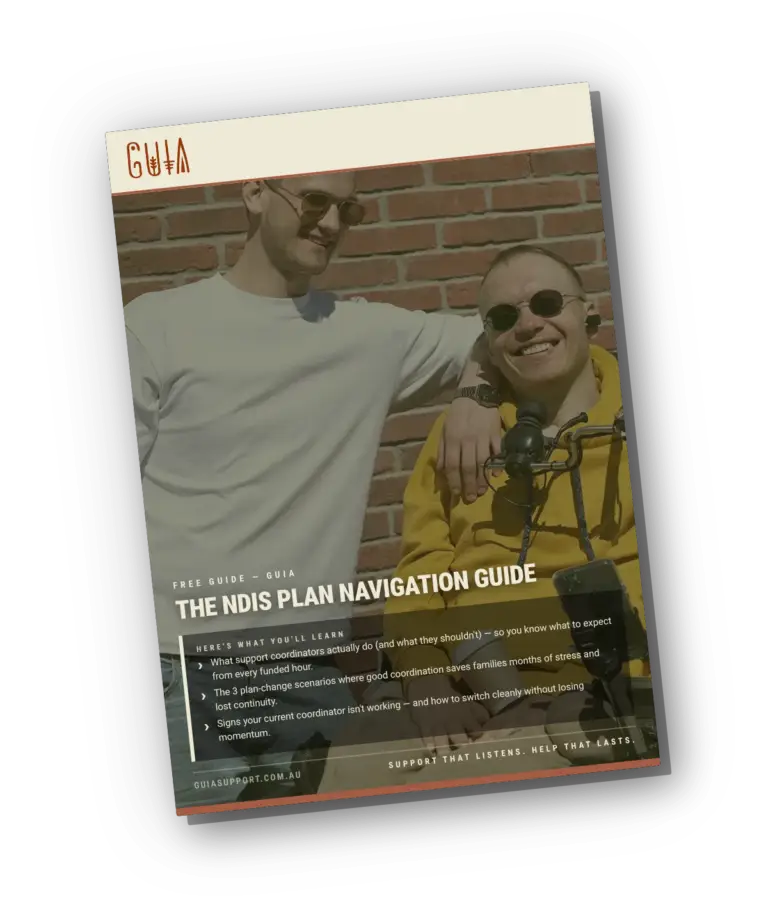
Here's What You'll Learn:
What support coordinators actually do (and what they shouldn't) — so you know what to expect from every funded hour.
The 3 plan-change scenarios where good coordination saves families months of stress and lost continuity.
Signs your current coordinator isn't working — and how to switch cleanly without losing momentum.
ARE YOUR NDIS SUPPORTS WORKING FOR YOU?
GET A FREE NDIS PLAN MANAGEMENT REVIEW