


New NDIS plan: your first 30 days, in order
A new plan arrives and nothing tells you what to do first. Here is the order we work through with families in South West Sydney, and the two mistakes that cost the most.

ARE YOUR NDIS SUPPORTS WORKING FOR YOU?
GET A FREE NDIS PLAN MANAGEMENT REVIEW
Most advice about home modifications is written for someone who owns a freestanding house. In Bankstown that describes a minority. At the 2021 Census, 58.5 per cent of occupied dwellings here were flats or apartments and 50.4 per cent were rented. So the first question for most Bankstown households is not what modification do I need. It is who has to say yes, and in what form.
Most advice about home modifications is written for someone who owns a freestanding house. In Bankstown that describes a minority. At the 2021 Census, 58.5 per cent of occupied dwellings here were flats or apartments and 50.4 per cent were rented. So the first question for most Bankstown households is not what modification do I need. It is who has to say yes, and in what form.
Guia Is Trusted By NDIS Participants, Families And Support Coordinators
Imagine a life designed to empower you!



The NDIS position is short and it is not negotiable. It can only pay for modifications to a home you own, or to a home where the owner agrees it can be modified, and it requires written approval from the homeowner or the relevant bodies before it will fund the work.
In Bankstown that lands on more households than in most suburbs. At the 2021 Census 50.4 per cent of occupied dwellings here were rented, so for around half of local households the person who signs is not the person who lives there. The NDIS also funds only what is disability related, at the limits set in the published pricing arrangements, which is a separate question from whether the owner agrees.
If you rent privately. You need written approval from your landlord. In practice that means the agent first, then the owner. The request that works is specific: what is being changed, by whom, to what standard, who pays, and what happens at the end of the tenancy. A vague request gets a vague no. Ask the occupational therapist for a plain summary of the recommendation you can forward, rather than sending the full clinical report to an agent.
If you are in social or community housing. The landlord is an organisation with its own process, and it usually has one. It is slower and more predictable than a private landlord, which means the useful thing is to start early rather than to negotiate hard.
If you are in an apartment. This is the Bankstown case, because 58.5 per cent of dwellings here are flats or apartments. Anything touching common property, structure, plumbing stacks, the building entry, a lift lobby or a car space involves the owners corporation as well as the owner of the lot. That is a second approval, on a strata meeting calendar rather than on yours. Work inside the lot, such as a bathroom rebuild or internal doorway widening, is more straightforward but can still need the owners corporation to be notified.
If you own the home outright. Only 21.4 per cent of Bankstown households do, and for them this step is simple. It is worth saying so, because most published advice is written as though this is everyone.
A qualified occupational therapist must complete home modification assessments, minor and complex alike. There is no route that starts with a builder, and the households that try one almost always end up doing the assessment anyway, several months later.
What the assessment establishes is not what you want. It is the relationship between your disability, the way you use the home, and the specific change that would make the difference. That is what the funding decision is made on, so the assessment is the most valuable hour in the whole process.
For complex modifications the assessor also gathers two itemised quotes, with help from building construction practitioners or qualified estimators. That is a real piece of work in itself, and it is a common place for a project to stall in Bankstown, because builders are less willing to quote on strata jobs where access and approvals are uncertain.
How to make the assessment hour count: have the person who uses the space present, not just the person who manages the paperwork; have the actual equipment in the home rather than described; clear access to the rooms in question; and know your tenancy position before the appointment, because the recommendation is shaped by what is realistically approvable.
One thing the published guidance does not settle, and we will not pretend it does: the NDIS says there are different assessments for minor and complex modifications, but the line between the two is not defined in plain terms on the public page. If a provider gives you a confident threshold, ask where it is published. See the NDIS guidance on home modification assessments and read it yourself; it is short.
Because 58.5 per cent of Bankstown dwellings are flats or apartments, the practical question here is different from the one in a suburb of freestanding houses. It is not what would make this home work. It is what will an owners corporation agree to, and how long will that take.
Inside the lot is easier. A level-access shower replacing a bath, a widened internal doorway, lever taps, a fold-down shower seat, reinforced walls for grab rails, and non-slip flooring are all inside your own walls. They still need the owner consent, and often notification to the owners corporation, but they are not a decision about the building.
Common property is slower. A ramp at the building entry, changes to a lift lobby, an intercom or door entry system, a car space conversion, or anything touching structure or the plumbing stack requires the owners corporation. That is a meeting, a motion, sometimes a by-law, and it runs on the strata calendar rather than yours. Start it in parallel with the assessment, not after it.
The rented apartment is the hard case, and in Bankstown it is the common one: you need the lot owner in writing and the owners corporation, and neither of them lives there. It is doable. It is a project, and it should be treated as one from day one rather than discovered in month four.
What often works better than a modification. In a rented apartment, assistive technology sometimes achieves the same outcome with no consent required at all: a bath board, a portable ramp, a freestanding rail, a raised toilet seat. An occupational therapist can tell you when equipment is a genuine alternative and when it is a compromise that will fail in six months. Ask the question explicitly, because it is the single most useful shortcut available to renters here.
From 1 October 2026 two categories are reduced: social, civic and community participation allocations by 50 per cent, and capacity building daily activity allocations by 10 per cent. Home modifications are not in either. The Department states that critical supports, which include in-home supports, home modifications, equipment and accommodation, remain unchanged.
Two qualifications that keep this honest. First, the assessment that leads to a modification may be funded from a category that is being reduced, since therapy sits in capacity building. The build is protected; the paperwork engine in front of it is a different question. Second, the Department says the reductions are applied progressively as plans are reassessed or renewed across a twelve-month period, and that they will not necessarily reduce what people actually spend, because many are not using their whole allocation.
What follows practically: if a modification is on your horizon, the useful thing to accelerate is not the build, it is the occupational therapy assessment. Get the report done while the therapy budget is what it is today.
This is one of the few pieces of genuinely reassuring news in the 2026 changes, and it is reassuring because it is published rather than because we are being kind.
From 1 October 2026 two categories are reduced: social, civic and community participation allocations by 50 per cent, and capacity building daily activity allocations by 10 per cent. Home modifications are not in either. The Department states that critical supports, which include in-home supports, home modifications, equipment and accommodation, remain unchanged.
Two qualifications that keep this honest. First, the assessment that leads to a modification may be funded from a category that is being reduced, since therapy sits in capacity building. The build is protected; the paperwork engine in front of it is a different question. Second, the Department says the reductions are applied progressively as plans are reassessed or renewed across a twelve-month period, and that they will not necessarily reduce what people actually spend, because many are not using their whole allocation.
What follows practically: if a modification is on your horizon, the useful thing to accelerate is not the build, it is the occupational therapy assessment. Get the report done while the therapy budget is what it is today.
Home modifications fail on sequencing more than on funding. The steps are stubbornly sequential, each one waits on the one before it, and the total is usually longer than anyone budgets for.
One: establish who owns the home and who else has to approve. Do this first, before an assessment is booked, because it shapes what the therapist can realistically recommend. In a rented Bankstown apartment this means the agent, the lot owner and the owners corporation.
Two: the occupational therapy assessment. A qualified occupational therapist must complete it for minor and complex modifications alike. Book it against the date you need the outcome and work backwards.
Three: written owner consent. The NDIS requires written approval from the homeowner or relevant bodies. Get this in an email you can forward, not a phone call you remember.
Four: quotes. For complex modifications the assessor gathers two itemised quotes, with help from building construction practitioners or qualified estimators. This step is slower in strata because access and approvals are uncertain at quoting time.
Five: the funding decision. Made on the assessment and the quotes.
Six: the build, and the period where the bathroom does not work. Plan the household around this rather than improvising: it is where in-home daily living support and community access earn their keep.
What has not been published is a timeframe for any of these steps, and we are not going to invent one. What we can tell you honestly is that the two things you control are starting the consent conversation early and getting the assessment booked early. Everything else waits on other people.
Half of Bankstown households rent, so this conversation is the project for most people reading this page. It goes better when it is treated as a proposal rather than a request for a favour.
Lead with what does not change. Most modifications are neutral or positive for a property. A level-access shower, lever taps, non-slip flooring and reinforced walls are improvements that outlast your tenancy. Say that first.
Be specific about scope. Name the rooms, the changes, the tradespeople, the standard, and who is paying. The NDIS is paying, not you and not the owner, and agents frequently do not know that until it is said plainly.
Answer the end-of-tenancy question before it is asked. Say what will happen when you leave: reinstated, or left in place. Get that agreement in the same email as the approval.
Give them the summary, not the report. A clinical assessment sent to a real estate agent creates confusion and a privacy problem you did not need. Ask the occupational therapist for a short recommendation letter you can forward.
Put the approval in writing. The NDIS needs written approval from the homeowner or relevant bodies. An email is fine. A verbal yes from an agent is not evidence and will hold the funding decision up.
Your tenancy rights are a separate matter from your NDIS funding, and the NSW Government renting guidance is the place to check what a landlord can and cannot refuse, and how alterations sit in a residential tenancy agreement.
If the answer is no. It happens, and it is not the end of the plan. Ask the occupational therapist what equipment achieves the closest outcome without consent, and treat that as the interim rather than the defeat. In an apartment market like Bankstown, that is often the practical answer for the current lease.
The part nobody plans for is the fortnight the bathroom does not exist. In a Bankstown apartment, where there is often only one bathroom and no second option, this is not a minor inconvenience.
Work out before the build starts where showering happens, whether the household needs extra support hours during the works, whether anyone needs to stay elsewhere, and what happens if the job runs over. Builders working in strata are more exposed to delay than builders working on a house, because they are dependent on building access, lifts and other people schedules.
The supports that carry this period are in-home daily living support and community access. More hours for a few weeks, and somewhere to be during the day, is usually cheaper and calmer than improvising. If your plan has the room, use it here rather than saving it.
Transport is a live issue too. The T3 Bankstown line has been closed since September 2024, with free Southwest Link replacement buses in its place, and Sydney Metro Southwest is expected to open in the second half of 2026, with every converted station fully accessible. If the plan during the build is to shower at a relative home across the suburb, check the actual journey before you rely on it.
Finally: keep the paper. Approvals, quotes, variations, dates, and photographs before and after. If anything is disputed later, the household with the record wins the conversation, and if a provider behaves badly the NDIS Quality and Safeguards Commission is who you take it to.
Guia does not build bathrooms. We are the support provider that keeps a modification moving, and in a suburb of rented apartments that is most of the work.
We start with consent. Before an assessment is booked we establish who owns the property, who else has to approve, and what is realistically approvable. It changes what the therapist should be recommending.
We help with the landlord conversation. Drafting the request, getting the recommendation into a form an agent can read, and chasing the written approval that the funding decision waits on.
We prepare the assessment. The right people in the room, the right rooms accessible, and the household clear on what is being asked.
We hold the timeline. Six sequential steps, each waiting on someone else, is exactly the kind of project that quietly stops. We keep a written record of where it is and what it is waiting on.
We cover the build period. Extra in-home hours and somewhere to be while the bathroom is out, planned in advance rather than improvised in week two.
You get the same people. A modification is a months-long project and it goes badly when the person managing it changes three times.
If any of that stops being true, tell us. It is easier to fix a small complaint than to replace a provider.
What home modifications in Bankstown gets you, in practical terms.
Support Coordination
A coordinator is the difference between a modification that moves and one that sits waiting on a quote nobody chased. This is the support most worth having during a build.
In-Home Daily Living
Modifications take months. Daily living support is what keeps the household safe in the meantime, in the bathroom that has not been changed yet.
Employment Support
Workplace modifications run through a different door from home modifications, and knowing which one you are standing at saves a season.
Allied Health
An occupational therapist must complete the assessment for both minor and complex home modifications. Allied health is not a later step here, it is the first one.
Community Access
While the bathroom is out of action, getting out of the house matters more, not less. Community access keeps the week from shrinking around a building site.
Aged Care
Support at Home replaced Home Care Packages on 1 November 2025. If an older family member shares the household, modifications may sit across two systems.
What home modifications in Bankstown gets you, in practical terms.
Who has to approve, in what order, and what is realistically approvable in your building.
The right people present and the right rooms accessible, so the OT hour is spent well.
Six sequential steps tracked in writing, with someone chasing the one that has stalled.
What achieves the closest outcome with no consent required, if the answer is no.
Extra hours and somewhere to be while the bathroom is out of action.
Approvals, quotes, variations and photographs kept, so a dispute later is not your word alone.
Six reasons Bankstown families stay with us, none of which are awards.
The NDIS Family Decision Guide
What to ask before you agree to a home modification service in Bankstown.
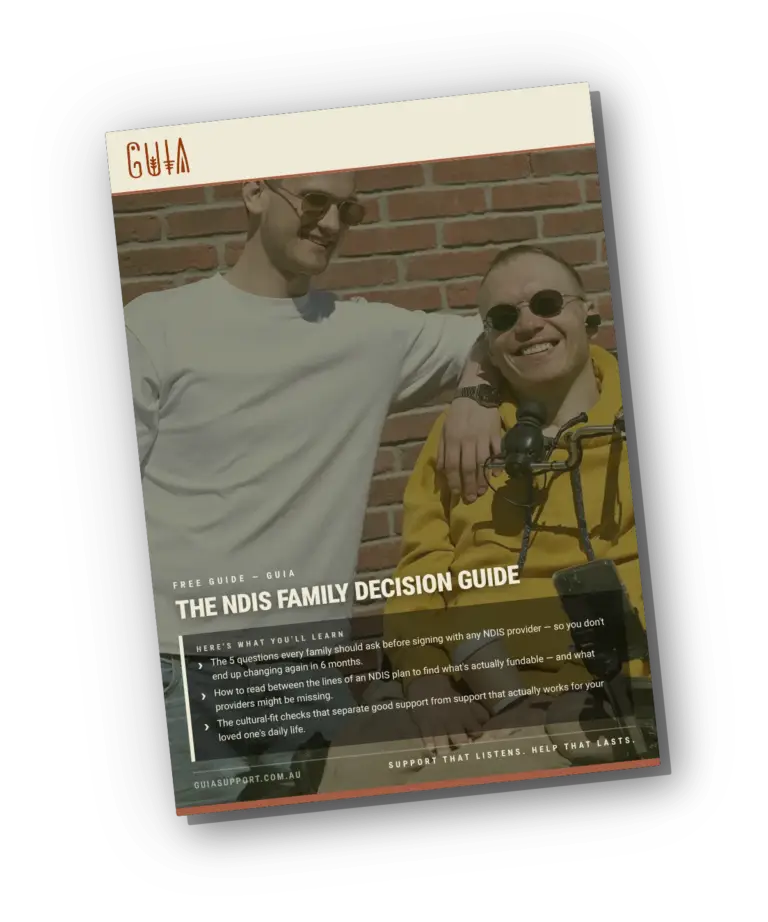
Here's What You'll Learn:
Who has to say yes, and in what form
When equipment beats a modification in a rental
How to build a record that survives October
Finance Manager
Operations Manager
Community Outreach Coordinator
Yes, with written approval. The NDIS states it can only pay for modifications to a home you own, or a home where the owner agrees it can be modified, and it requires written approval from the homeowner or relevant bodies. In practice that means the agent, then the lot owner, and in an apartment often the owners corporation as well. Half of Bankstown households rent, so this is the normal path here rather than the exception.
You need the occupational therapist. A qualified OT must complete home modification assessments for both minor and complex modifications. The assessment establishes the link between your disability, how you use the home and the specific change that would help, and that is what the funding decision is made on. Households that start with a builder generally end up doing the assessment anyway, months later.
It adds an approval. In Bankstown 58.5 per cent of occupied dwellings are flats or apartments, so this is the common case. Work inside your own lot, such as a level-access shower or a widened internal doorway, needs owner consent and often notification to the owners corporation. Anything touching common property, structure, plumbing stacks, the building entry, a lift lobby or a car space needs the owners corporation itself, which runs on a strata meeting calendar. Start that in parallel with the assessment, not after it.
The NDIS says there are different assessments for each, and for complex modifications the assessor gathers two itemised quotes with help from building construction practitioners or qualified estimators. What the public guidance does not do is define the boundary between the two in plain terms. If a provider gives you a firm threshold, ask them to show you where it is published. We have looked and cannot find it stated plainly, so we are not going to tell you a number.
Home modifications are not in either reduced category. From 1 October 2026, social, civic and community participation allocations reduce by 50 per cent and capacity building daily activity allocations by 10 per cent. The Department states that critical supports, including in-home supports, home modifications, equipment and accommodation, remain unchanged. One caveat worth knowing: the occupational therapy assessment in front of a modification is usually funded from capacity building, which is being reduced, so the sensible move is to get the assessment done rather than delay it.
The ones we see most in Bankstown apartments are a level-access shower replacing a bath, grab rails with reinforced walls behind them, lever taps, non-slip flooring, a fold-down shower seat, a raised toilet or over-toilet frame, widened internal doorways and changes to bench or storage heights. What is funded is decided on your assessed disability-related need, not on a catalogue, which is why the assessment comes first.
No, and it is worth asking the occupational therapist a specific question: what equipment gets closest to the same outcome without consent? A bath board, a portable ramp, a freestanding rail or a raised toilet seat sometimes achieves most of what a modification would, with no approval required at all. In a rental apartment market that is often the right answer for the current lease, and it does not stop you revisiting modifications at the next home.
Longer than people budget for, and no published timeframe exists for the steps, so we are not going to quote you one. What we can tell you is the order, because each step waits on the one before it: establish who must approve, occupational therapy assessment, written owner consent, quotes, funding decision, build. The two parts you control are starting the consent conversation early and booking the assessment early. Everything else depends on other people.
This is the question most often left until it is urgent, and in an apartment with one bathroom there is often no fallback inside the home. Decide before the build starts where showering happens, whether extra in-home support hours are needed for those weeks, and what happens if the job runs over. Strata builds are more exposed to delay because they depend on building access and other people schedules. Extra hours for a few weeks is usually cheaper and calmer than improvising.
Start with the ownership question, not the bathroom. Tell us whether you own, rent privately, are in social housing or are in a strata apartment, and we will tell you who has to approve what and in what order. Then we book the occupational therapy assessment against the date you actually need the change, and work backwards. Call 0478 905 550 or book a free discovery call.
Reach out for a non-obligation NDIS Plan Management Assessment
We also provide this support in the nearby suburbs below, or see Home Modifications South West Sydney for the full service area.
A new plan arrives and nothing tells you what to do first. Here is the order we work through with families in South West Sydney, and the two mistakes that cost the most.
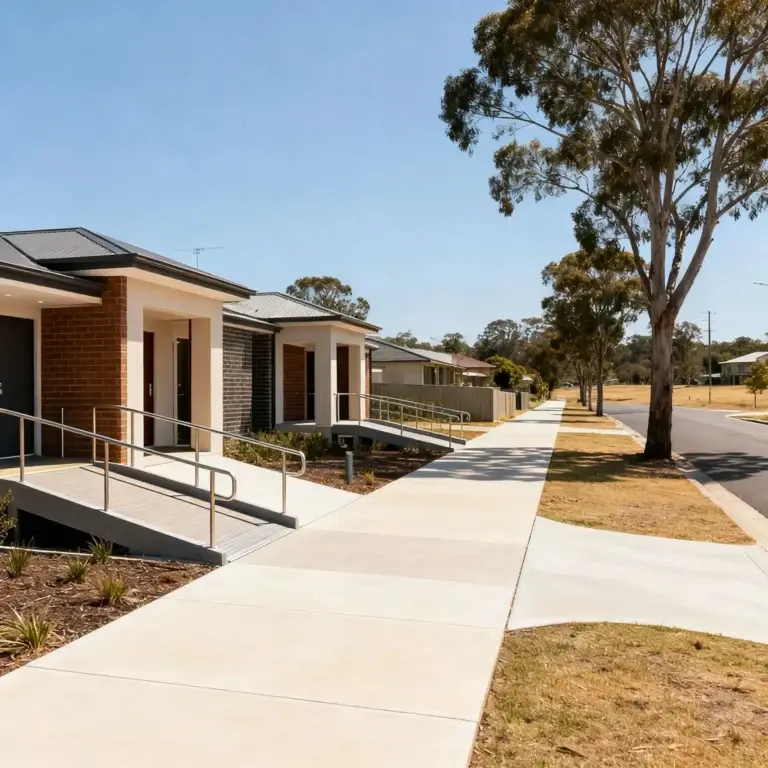
Aged care at home South West Sydney from Guia. Reliable support workers who show up consistently and become part of your family’s everyday routine.
NDIS allied health support sydney from Guia. Reliable support workers who show up consistently and become part of your family’s circle. Peace of mind fo…