


New NDIS plan: your first 30 days, in order
A new plan arrives and nothing tells you what to do first. Here is the order we work through with families in South West Sydney, and the two mistakes that cost the most.

ARE YOUR NDIS SUPPORTS WORKING FOR YOU?
GET A FREE NDIS PLAN MANAGEMENT REVIEW
Allied health Bankstown is where a lot of NDIS plans quietly leak money, and almost none of it is anyone acting badly. Since 1 July 2025 a therapist can claim half of the relevant price limit for time spent travelling, up to 30 minutes each way in a metro area. That comes out of your plan. In a suburb where the train line has been closed since 2024, a home visit sounds like the obvious answer, and sometimes it is the wrong one. This page explains what therapy your plan funds, what a provider may and may not charge you, and how to work out whether they should come to you or you should go to them.
Allied health Bankstown is where a lot of NDIS plans quietly leak money, and almost none of it is anyone acting badly. Since 1 July 2025 a therapist can claim half of the relevant price limit for time spent travelling, up to 30 minutes each way in a metro area. That comes out of your plan. In a suburb where the train line has been closed since 2024, a home visit sounds like the obvious answer, and sometimes it is the wrong one. This page explains what therapy your plan funds, what a provider may and may not charge you, and how to work out whether they should come to you or you should go to them.
Guia Is Trusted By NDIS Participants, Families And Support Coordinators
Imagine a life designed to empower you!
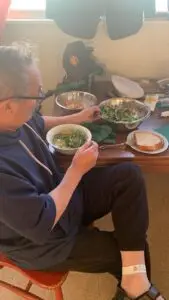




Allied health in an NDIS plan means the registered therapy professions: occupational therapy, physiotherapy, speech pathology, psychology, exercise physiology, dietetics and podiatry among them. It sits in capacity building, and it is funded because it changes what you can do, not because you are unwell.
That distinction is the one that decides most funding arguments. The NDIS funds therapy that relates to your disability and builds your capacity. It does not fund general health care, which is the job of Medicare and the hospital system. A physiotherapy session that builds the strength you need to transfer safely is disability-related. The same physiotherapist treating a sporting injury is not.
In practice the disciplines Bankstown families use most are occupational therapy, for daily living, equipment and modifications; speech pathology, for communication and for swallowing; physiotherapy, for movement, transfers and falls; and psychology, for the emotional work that sits alongside all of it.
What a therapist produces is usually two things: the sessions themselves, and a report. The report is often the more valuable of the two, because it is what unlocks something else. An occupational therapy assessment is what a home modification, a wheelchair, or a workplace adjustment is approved on. If you are working towards one of those, the therapy is not the destination, it is the paperwork engine, and it should be scheduled with that in mind.
What allied health does not cover: acute medical treatment, surgery, most medication management, and anything the health system is responsible for. If a therapist tells you the NDIS will fund something that sounds like health care, ask them to point to where it says so. The published pricing arrangements and the support lists are public documents, and a good provider will show you rather than tell you.
This is the part that surprises people, so it goes near the top. When a therapist travels to see you, they can claim for that travel time out of your plan. Since 1 July 2025 the rate is half the relevant price limit for their time spent travelling, capped at 30 minutes each way in metropolitan areas.
Do the arithmetic once and it changes how you book. A therapist who spends 25 minutes driving to you and 25 minutes driving back can claim for 50 minutes of travel at half the therapy rate. That is the equivalent of roughly 25 minutes of therapy, gone, before anyone has done anything. Across a fortnightly appointment for a year, that is a meaningful share of a therapy budget.
None of this is a provider being greedy. It is the published rule, and it exists because travel is real work. But it means the honest question is not do you do home visits. It is: for this particular goal, is the home visit worth what it costs my plan?
Sometimes it clearly is. An occupational therapist assessing your bathroom has to see your bathroom. A physiotherapist working on transfers needs to see the actual bed and the actual chair. A speech pathologist working on mealtimes needs to be at your table. In those cases the home is the point.
Sometimes it clearly is not. A review appointment, a progress check, a psychology session or a report discussion can often happen in a clinic or by telehealth for no travel cost at all, and the difference goes back into more therapy.
Bankstown sharpens this because of transport. The T3 line has been closed since September 2024, with free Southwest Link replacement buses in its place, and Sydney Metro Southwest is expected to open in the second half of 2026 with every converted station fully accessible. Right now, getting to a clinic is genuinely harder for some households, which makes home visits more attractive at exactly the moment they cost the most. Once the metro is running, a clinic appointment along the corridor becomes a realistic option again for people who cannot drive. Plan for both.
This one is short and it is absolute. A registered provider must not add any other charge to the cost of the supports they provide. The NDIS says plainly that registered providers must not add charges such as gap fees, credit card surcharges, or any additional fees.
If a registered allied health provider has asked you to pay a gap, that is not a negotiation and it is not a misunderstanding of your plan. It is reportable to the NDIS Quality and Safeguards Commission, and you do not need anyone permission to make that report.
Two things worth knowing before you act. First, unregistered providers sit under different rules, so the first question is whether the provider is registered. Second, a cancellation charge is a different thing from a gap fee, and it can be legitimate if it is in your service agreement and within the published rules. Read the agreement before you sign it, and if a clause is not clear, ask for it in plain words.
There is a broader point here about the pricing schedule. A new set of pricing arrangements and price limits took effect on 1 July 2026. We are not going to quote you an hourly figure on a web page, because the number that matters is the one in the current published schedule on the day you sign your service agreement, and web pages go stale. Ask your provider to show you the line item and the limit in the current document. If they cannot, that tells you something.
Speech pathology is the obvious case. A speech assessment done only in English on a child who speaks Vietnamese at home can mistake a language difference for a language disorder, and the consequences of getting that wrong run for years. The right practice is to assess across the languages a child actually uses, with an interpreter or a bilingual clinician, and any speech pathologist working in this area should be able to tell you how they do that.
Psychology has the same problem in a quieter form. Distress described in a second language often comes out flatter than it is, and a clinician who does not account for that can under-read what they are hearing.
Occupational therapy is where it costs money. An OT report is a document that other people act on: an assessor, a builder, an employer, a plan reviewer. If the household could not fully follow the assessment conversation, the report can describe a home that does not quite exist, and the modification that follows fits nobody. We sit in on assessments where that is a risk and we make sure the household has understood what was asked and what was answered.
Practical points that cost nothing: ask whether an interpreter can be arranged before you book, not on the day; ask for the report in writing rather than a verbal summary; and take someone to the appointment whose job is to listen rather than to answer.
At the 2021 Census the most common language spoken at home in Bankstown was Vietnamese at 20.3 per cent, then Arabic at 19.3 per cent, with English third at 18.0 per cent. Allied health is unusually sensitive to this, because most of it is delivered through conversation.
Speech pathology is the obvious case. A speech assessment done only in English on a child who speaks Vietnamese at home can mistake a language difference for a language disorder, and the consequences of getting that wrong run for years. The right practice is to assess across the languages a child actually uses, with an interpreter or a bilingual clinician, and any speech pathologist working in this area should be able to tell you how they do that.
Psychology has the same problem in a quieter form. Distress described in a second language often comes out flatter than it is, and a clinician who does not account for that can under-read what they are hearing.
Occupational therapy is where it costs money. An OT report is a document that other people act on: an assessor, a builder, an employer, a plan reviewer. If the household could not fully follow the assessment conversation, the report can describe a home that does not quite exist, and the modification that follows fits nobody. We sit in on assessments where that is a risk and we make sure the household has understood what was asked and what was answered.
Practical points that cost nothing: ask whether an interpreter can be arranged before you book, not on the day; ask for the report in writing rather than a verbal summary; and take someone to the appointment whose job is to listen rather than to answer.
More Bankstown families need an occupational therapist than realise it, because the OT report is the gate in front of several other things. If you want a home modification, assistive technology, a workplace adjustment or a change to your supports, an assessment is usually what the decision is made on.
Home modifications. An occupational therapist must assess before a modification proceeds. A grab rail, a ramp, a level-access shower: none of them start with a builder. They start with an assessment that says what the disability-related need is and what design meets it. Families who go to a builder first almost always have to go back and start again.
Assistive technology. Wheelchairs, seating, bathroom equipment and communication devices are prescribed, not bought. The prescription is the OT or physiotherapist assessment, and the more expensive the item, the more detailed the evidence has to be.
Workplace adjustments. An employer, or the Employment Assistance Fund, will usually want a professional assessment of what adjustment is needed before funding it. This is where allied health and employment support meet, and it is worth sequencing them deliberately rather than running them as two unrelated pieces of work.
Your next plan. A therapy report that describes function honestly is the strongest evidence a plan reviewer sees. With the October 2026 reset ahead, this matters more than usual.
A word on sequencing. The assessment is the part with the lead time, not the outcome, and every step after it waits on the report. If you know a modification, a piece of equipment, a workplace adjustment or a plan review is coming in the next twelve months, book the assessment against that date and work backwards.
Physiotherapy is the discipline most often confused with health care, and the confusion costs people funding. The test is not what the therapist does. It is why they are doing it.
Building the strength and balance you need to move safely with a disability is capacity building, and the NDIS funds it. Rehabilitation after surgery or an acute injury is health care, and the health system funds it. The same clinician can do both in the same week for two different people. If a physiotherapist is vague about which one they are billing your plan for, that is worth pressing on.
Falls are where this becomes real. A fall is rarely just a fall: it is a hospital admission, a period of lost confidence, and a household that starts doing things for the person that they used to do themselves. Physiotherapy aimed at transfers, balance and safe movement is one of the highest-return things in a plan, and it usually pays for itself in avoided crises rather than in anything you can point at.
Bankstown families should also know what is happening to the local hospital. The new Bankstown Hospital is in early works, with site fencing installed and demolition due to begin in mid 2026 on the former TAFE car park site on Chapel Road. Construction of that scale changes parking, access and traffic around the health precinct for years. If an appointment in that precinct is part of your routine, build the extra time into the plan rather than discovering it on the day.
What we will not tell you is when the new hospital opens or what services will move when. Those details have not been published, and a provider guessing about them is not doing you a favour.
This is the question we are asked most, and allied health sits closer to the change than most supports do. Here is the published position, without softening and without adding to it.
From 1 October 2026, two categories are reduced. Social, civic and community participation budget allocations are reduced by 50 per cent. Capacity building daily activity budget allocations are reduced by 10 per cent. Therapy is commonly funded from capacity building daily activities, which is why this one lands closer to allied health than to most other services.
Three things the Department published that are worth holding on to. The change is applied progressively, as plans are reassessed or renewed across a twelve-month period, not to every plan on the same day. It will not necessarily reduce what you actually spend, because many people are not using their whole allocation now. And critical supports, which include in-home supports, home modifications, equipment and accommodation, are not being reset.
What has not been published is how a 10 per cent category reduction translates into your therapy hours, your review date and your particular plan. We are not going to model it for you, because any number we produced would be invented.
What is worth doing between now and then is unglamorous and effective. Get the therapy that produces reports done. Make sure every session leaves a written record of function, not just attendance. If therapy is holding something together in your household, make sure that is visible on paper before the reassessment rather than argued for afterwards.
Guia is not a therapy clinic. We are a support provider that works around therapy, and that distinction is the useful part, because most of what determines whether therapy works happens in the days between appointments.
We do the follow-through. A therapist writes a home program. Somebody has to do it on a Tuesday when nobody feels like it. That is our job, and it is the difference between a therapy budget that produces change and one that produces reports.
We prepare the assessment. An hour of an occupational therapist time is expensive and finite. We make sure the household knows what will be asked, that the right rooms are accessible, that the equipment being discussed is in the house, and that whoever knows the daily detail is present.
We track the travel. We will tell you what a home visit is costing your plan against a clinic appointment, before you commit to a pattern of booking.
We write it down. Every shift produces a record that a therapist or a plan reviewer can read directly, which means the therapist spends their hour on therapy rather than on reconstructing the fortnight.
We say when therapy is not the answer. Sometimes the problem is equipment, or a modification, or a roster. Recommending more sessions is the easy answer and it is not always the right one. See the NDIS Quality and Safeguards Commission for what you are entitled to expect from any registered provider.
If any of that stops being true, tell us. It is easier to fix a small complaint than to replace a provider.
What allied health in Bankstown gets you, in practical terms.
Support Coordination
A coordinator keeps the therapy recommendations moving after the report is written, which is the point at which most allied health work in Bankstown stalls.
In-Home Daily Living
The exercises, the seating, the routines a therapist recommends only work if they happen daily. Daily living support is what turns a therapy plan into a habit.
Employment Support
Occupational therapy assessments are often what an employer or the Employment Assistance Fund needs before a workplace adjustment can be approved.
Community Access
Physiotherapy and community access answer the same question from different sides: getting out of the house and staying steady once you are there.
Home Modifications
A home modification cannot proceed without an occupational therapist assessment. If a bathroom or a ramp is the goal, allied health is the first step, not the second.
Aged Care
Support at Home replaced Home Care Packages on 1 November 2025, and allied health sits inside it differently from the way it sits inside an NDIS plan.
What allied health in Bankstown gets you, in practical terms.
Assessments timed against the modification, equipment or review they are meant to support.
A clear picture of what a home visit costs your plan against a clinic appointment.
Home programs done between appointments by workers who know the plan.
Interpreters arranged at booking, and assessments a household can actually follow.
Written records of function, not attendance, ready before your plan is reassessed.
Transfers, balance and safe movement worked on before a fall, not after one.
Six reasons Bankstown families stay with us, none of which are awards.
The NDIS Family Decision Guide
What to ask before you agree to an allied health service in Bankstown.
Here's What You'll Learn:
The travel question to ask before the first appointment
What a registered provider may never charge you
How to build a record that survives October
Finance Manager
Operations Manager
Community Outreach Coordinator
Occupational therapy, physiotherapy, speech pathology, psychology, exercise physiology, dietetics and podiatry are the disciplines most commonly funded. It sits in capacity building, and it is funded because it changes what you can do, not because you are unwell. General health care is the job of Medicare and the hospital system. A physiotherapist building the strength you need to transfer safely is disability-related; the same physiotherapist treating a sporting injury is not.
Yes, and it is worth understanding before you settle into a booking pattern. Since 1 July 2025 a therapy provider can claim half the relevant price limit for time spent travelling, capped at 30 minutes each way in metropolitan areas. Twenty-five minutes there and twenty-five back is the rough equivalent of losing twenty-five minutes of therapy. That is the published rule, not a provider being greedy. The useful question is whether this particular appointment needs to happen in your home.
When the home is the point. An occupational therapist assessing a bathroom has to see the bathroom. A physiotherapist working on transfers needs the actual bed and chair. A speech pathologist working on mealtimes needs your table. Reviews, progress checks, psychology sessions and report discussions can often happen at a clinic or by telehealth with no travel charge at all, and the saving goes back into therapy hours.
No. The NDIS states that registered providers must not add any other charge to the cost of the supports they provide, including gap fees, credit card surcharges or additional fees. If a registered provider has asked you for a gap payment, you can report it to the NDIS Quality and Safeguards Commission without needing anyone permission. Two caveats: unregistered providers sit under different rules, so check which you are dealing with, and a cancellation charge set out in your service agreement is a different thing from a gap fee.
We are not going to publish an hourly figure, because the number that matters is the one in the current NDIS pricing arrangements and price limits on the day you sign your service agreement, and a web page goes stale. A new schedule took effect on 1 July 2026. Ask your provider to show you the line item and the price limit in the current published document. If they cannot show you, that is information too.
Therapy is commonly funded from capacity building daily activities, and that is one of the two categories named: capacity building daily activity allocations reduce by 10 per cent from 1 October 2026, alongside a 50 per cent reduction to social, civic and community participation. The Department has said the change is applied progressively as plans are reassessed over twelve months, and that it will not necessarily reduce what you actually spend because many people do not use their whole allocation. How a category reduction lands on your particular plan has not been published, and we will not model it for you.
It should affect how the assessment is done. In Bankstown the most common language spoken at home is Vietnamese at 20.3 per cent, then Arabic at 19.3 per cent, with English third at 18.0 per cent. A speech assessment conducted only in English can mistake a language difference for a language disorder. Ask the clinician how they assess across the languages your child actually uses, and arrange an interpreter when you book rather than on the day.
Because the assessment is what the decision is made on. An occupational therapist must assess before a home modification proceeds, and the same is true for most assistive technology and for many workplace adjustments. Families who go to a builder first usually have to start again. If a modification, a wheelchair or a workplace adjustment is coming in the next year, book the assessment against that date and work backwards, because the assessment is the step with the lead time.
The T3 Bankstown line closed in September 2024 for metro conversion, with free Southwest Link replacement buses running in its place. Sydney Metro Southwest is expected to open in the second half of 2026, and every station on the converted line is being delivered fully accessible, with lifts to every platform, level access to the train and minimal gaps. Until then, clinic appointments are harder for households without a car, which is exactly when home visits look most attractive and cost the most. It is worth planning the year in two halves.
Start with what you are trying to change, not with a discipline. If the goal is a safer bathroom, it is an occupational therapist. If it is falls or transfers, physiotherapy. If it is communication or swallowing, speech pathology. We will help you work out which, tell you what the travel will cost, and prepare the household so the assessment hour is spent well. Call 0478 905 550 or book a free discovery call.
Reach out for a non-obligation NDIS Plan Management Assessment
We also provide this support in the nearby suburbs below, or see Allied Health South West Sydney for the full service area.
A new plan arrives and nothing tells you what to do first. Here is the order we work through with families in South West Sydney, and the two mistakes that cost the most.
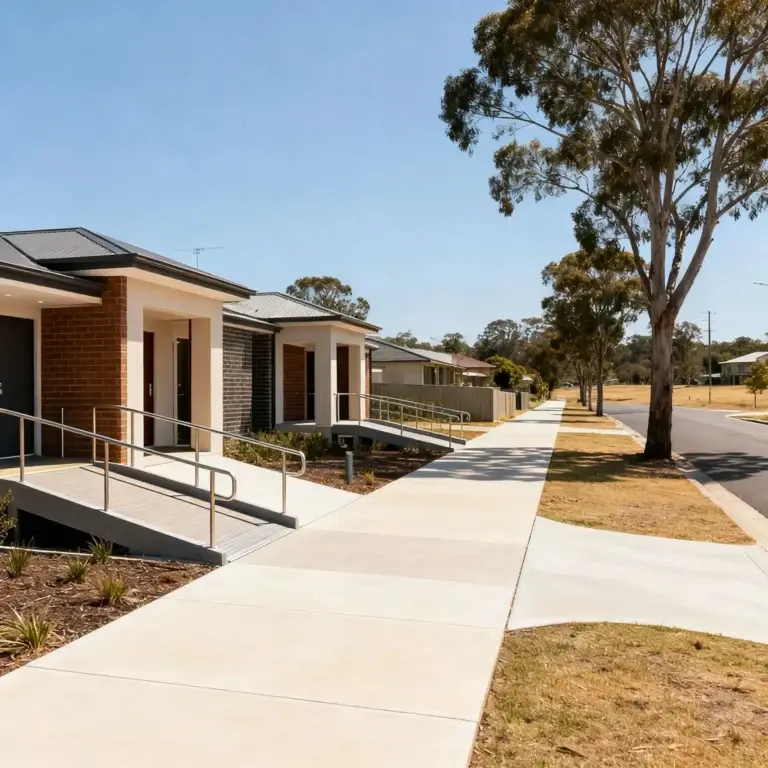
Aged care at home South West Sydney from Guia. Reliable support workers who show up consistently and become part of your family’s everyday routine.

NDIS allied health support sydney from Guia. Reliable support workers who show up consistently and become part of your family’s circle. Peace of mind fo…