


New NDIS plan: your first 30 days, in order
A new plan arrives and nothing tells you what to do first. Here is the order we work through with families in South West Sydney, and the two mistakes that cost the most.

ARE YOUR NDIS SUPPORTS WORKING FOR YOU?
GET A FREE NDIS PLAN MANAGEMENT REVIEW
Community access is the support that gets you out of the house and into the parts of Bass Hill you want to be in — the Plaza on the Hume Highway, the Crest, the library, a class, a mosque or a church, a mate’s place, a job interview, a swim. It is funded from the core part of your plan, and it is the support families most often describe as the one that changed the week rather than the paperwork.
It is also the support the NDIS is about to fund less of. From 1 October 2026 the Australian Government is reducing budget allocations for social, civic and community participation supports by 50 per cent, applied progressively as each plan is reassessed or renewed across the following twelve months. That is not a rumour and it is not a provider talking its own book — it is published by the Department of Health, Disability and Ageing, and you can read it yourself. We would rather tell you now, four weeks out, than have you find out at a reassessment.
What that means in practice is that the hours you do get have to be worth more. A support worker who drives you to Bass Hill Plaza, sits in the car park on their phone and drives you home has always been a waste of your money. After October it is a waste of a support you may not be able to replace. Guia works the other way round: we start from the thing you actually want to do, work backwards to the route, the timing, the fare, the language and the person, and we tell you honestly when the answer is that your plan will not stretch to it.
We are a registered NDIS provider working across South West Sydney, and Bass Hill is one of the suburbs we know street by street rather than from a map. Two thirds of this suburb speaks a language other than English at home. Our team works across English, Arabic, Vietnamese, Spanish and Auslan, and we bring in accredited interpreters where we do not hold the language in-house. We do not ask your daughter to interpret a conversation about your own supports.
Community access is the support that gets you out of the house and into the parts of Bass Hill you want to be in — the Plaza on the Hume Highway, the Crest, the library, a class, a mosque or a church, a mate’s place, a job interview, a swim. It is funded from the core part of your plan, and it is the support families most often describe as the one that changed the week rather than the paperwork.
It is also the support the NDIS is about to fund less of. From 1 October 2026 the Australian Government is reducing budget allocations for social, civic and community participation supports by 50 per cent, applied progressively as each plan is reassessed or renewed across the following twelve months. That is not a rumour and it is not a provider talking its own book — it is published by the Department of Health, Disability and Ageing, and you can read it yourself. We would rather tell you now, four weeks out, than have you find out at a reassessment.
What that means in practice is that the hours you do get have to be worth more. A support worker who drives you to Bass Hill Plaza, sits in the car park on their phone and drives you home has always been a waste of your money. After October it is a waste of a support you may not be able to replace. Guia works the other way round: we start from the thing you actually want to do, work backwards to the route, the timing, the fare, the language and the person, and we tell you honestly when the answer is that your plan will not stretch to it.
We are a registered NDIS provider working across South West Sydney, and Bass Hill is one of the suburbs we know street by street rather than from a map. Two thirds of this suburb speaks a language other than English at home. Our team works across English, Arabic, Vietnamese, Spanish and Auslan, and we bring in accredited interpreters where we do not hold the language in-house. We do not ask your daughter to interpret a conversation about your own supports.
Guia Is Trusted By NDIS Participants, Families And Support Coordinators
Imagine a life designed to empower you!
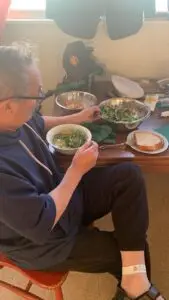




Community access is the plain-English name for what your plan calls assistance with social, economic and community participation. It sits in core supports, which means it is flexible: you are not locked into the activity someone wrote down at your planning meeting.
In practice it pays for a worker to be with you while you do something outside your home. That covers a lot of ground, and the ground is wider than most people are told. It funds the worker’s time. It does not fund your ticket to the thing you are going to.
That distinction catches people out constantly, so it is worth being blunt about it. If you want to go to the pictures, community access pays for the person who comes with you and it does not pay for your cinema ticket, or theirs if they are there as your support. If you want to join a gym at the Crest, the support covers the worker who helps you get there and take part; the membership is yours. If your worker drives you in their own car, there is a per-kilometre component that has to be agreed in writing before it is charged, not appear on an invoice afterwards. Any provider who cannot explain that split to you in one minute is a provider who will surprise you later.
What it does fund, and what Bass Hill families under-use, is the ordinary. Doing your own shopping at the Plaza rather than having it done for you. Getting to Friday prayers or to Mass without depending on a relative who has work. Sitting in on a TAFE information session. Taking a grandchild to the park. Going to a medical appointment in Bankstown when the person you would normally ask is at work. None of that sounds like a program and none of it needs to be. The NDIS test is whether the support is reasonable and necessary to help you take part in the community, not whether it looks like an activity on a timetable.
There is one more thing worth saying, because after October it matters more. Community access hours are not a subscription. If you have a plan with a set amount in that budget and you use none of it for four months, you have not saved it — you have signalled at your next reassessment that you did not need it. That has always been true and it has always been unfair to people who found it hard to get started. With allocations being halved from 1 October 2026, it becomes the difference between a plan that reflects your life and one that reflects a quiet spell.
This is the single most important thing on this page, so we are putting it high up rather than burying it under the marketing. It is also the thing most Bass Hill families have not yet been told.
From 1 October 2026, budget allocations for social, civic and community participation supports are being reduced by 50 per cent. Capacity building daily activity allocations are being reduced by 10 per cent. The reduction does not hit every plan on the same day: it applies when a plan comes up for reassessment or renewal, and the Department has said this will happen progressively across a twelve-month period. Budgets for what the Government calls critical supports — in-home assistance, home modifications, mobility equipment, specialist disability accommodation — are not being reset.
We have deliberately written that paragraph in the Government’s own terms rather than ours, and you should check it rather than take our word for it. It is published on the Department of Health, Disability and Ageing website under the changes to the NDIS. If a provider tells you something different — that it is not happening, that it is worse than that, that they can get you around it — ask them where they read it.
What we do not know, and will not pretend to, is exactly how the reset arrives on any individual plan. The published material describes the mechanism and the percentages. It does not tell us how a delegate will treat a participant whose community participation budget was already modest, or one whose circumstances changed in the last year, or how evidence of need will be weighed against the new allocation. Anybody offering you certainty on that today is selling something. When the operational guidance is published we will read it and tell our participants what it says.
What you can usefully do between now and your reassessment is make the case visible. Not by inflating anything — by recording what actually happens. Which supports you used, what you were able to do because of them, what stopped when they were not there. A reassessment weighs evidence, and “we go out on Thursdays” is weaker evidence than “Thursday transport to the Crest is what has kept a sixteen-year-old in a sport she can still do at twenty”. We help our participants write that down, and we do it before the letter arrives rather than in the fortnight after it.
Bass Hill has no railway station of its own. That single fact shapes community access Bass Hill more than anything else, and it is why a support plan copied from a suburb with a station falls apart in the first fortnight.
What Bass Hill has instead is buses, and one of them matters more than the rest. Metro Route M91 runs the Parramatta to Hurstville corridor and services this area; Transport for NSW has been upgrading stops along it, including on Hector Street at Bass Hill. If you are planning a life around public transport from here, the M91 is usually the spine of it, with the surrounding suburbs — Yagoona, Chester Hill, Sefton, Villawood, Georges Hall, Condell Park — reachable without a car in a way that places further out are not.
The practical consequence is that route knowledge is a real skill and it is worth funding properly. Learning one route well — which stop, which side of the Hume Highway, how long the wait actually runs at four in the afternoon, what to do when the bus is full, who to ask — is worth more than being driven to six different places. It is also capacity building rather than an open-ended core support, which means it should have an end date written into it from the start. A provider who teaches you a route in a way that keeps you needing them for that route has not taught you the route.
We build community access around this deliberately. Early on, a worker travels with you. Then a worker meets you at the other end. Then a worker is on the phone if you need them and is not if you do not. Some people move through that in six weeks and some never finish the middle step, and both outcomes are fine — what is not fine is a service designed so that nobody ever reaches the end of it. With community participation budgets halving from October, the difference between those two designs stops being philosophical and starts being the difference between still going out in 2027 and not.
One honest caveat on transport. We can tell you what the routes are and how they behave, because we use them. We cannot tell you what a taxi or rideshare fare will be on the day, and we will not put a figure in writing that we would have to walk back. Where cost matters to a decision, we work it out with you against the actual fares at the time.
Community access is language work more than most people expect. Booking a class, asking a bus driver a question, telling a receptionist what you need, explaining to a coach what your daughter can and cannot do, reading a form at the library — every one of those is a moment where the wrong language turns a support into an ordeal. A worker who cannot have that conversation is a worker who ends up doing it for you, and doing it for you is the opposite of community access.
Our team works across English, Arabic, Vietnamese, Spanish and Auslan. Where we do not hold a language in-house we bring in an accredited interpreter rather than making do. We do not use a family member as the interpreter for a conversation about that family member’s supports, and we do not use children as interpreters at all. Those are not preferences; they are the difference between a participant’s own view reaching the record and a relative’s view reaching it instead.
NDIS language is hard in English and worse in translation. There is no clean Arabic equivalent for “reasonable and necessary” and “capacity building” lands oddly in Vietnamese. What we do about that is unglamorous: we explain the mechanic rather than the phrase. Instead of translating “capacity building”, we say that this is money for learning something so that later you need less help, and that it is supposed to stop. People understand that immediately in any language, and it is also more accurate than the phrase.
The other half of it is cultural rather than linguistic. Community participation in Bass Hill often means the mosque, the church, the community centre, a family gathering that runs to thirty people, or a women-only session at a pool. Islam is the largest religious affiliation in this suburb at 33.5 per cent, and support that is scheduled without reference to Friday prayers or to Ramadan is support that will be quietly declined rather than argued about. We ask, we write it down, and we roster around it.
At the 2021 Census, 33.6 per cent of Bass Hill households spoke English at home. Arabic was 30.5 per cent and Vietnamese 10.1 per cent. That is not a footnote about diversity. It is the operating condition of any support that involves talking to people outside your family.
Community access is language work more than most people expect. Booking a class, asking a bus driver a question, telling a receptionist what you need, explaining to a coach what your daughter can and cannot do, reading a form at the library — every one of those is a moment where the wrong language turns a support into an ordeal. A worker who cannot have that conversation is a worker who ends up doing it for you, and doing it for you is the opposite of community access.
Our team works across English, Arabic, Vietnamese, Spanish and Auslan. Where we do not hold a language in-house we bring in an accredited interpreter rather than making do. We do not use a family member as the interpreter for a conversation about that family member’s supports, and we do not use children as interpreters at all. Those are not preferences; they are the difference between a participant’s own view reaching the record and a relative’s view reaching it instead.
NDIS language is hard in English and worse in translation. There is no clean Arabic equivalent for “reasonable and necessary” and “capacity building” lands oddly in Vietnamese. What we do about that is unglamorous: we explain the mechanic rather than the phrase. Instead of translating “capacity building”, we say that this is money for learning something so that later you need less help, and that it is supposed to stop. People understand that immediately in any language, and it is also more accurate than the phrase.
The other half of it is cultural rather than linguistic. Community participation in Bass Hill often means the mosque, the church, the community centre, a family gathering that runs to thirty people, or a women-only session at a pool. Islam is the largest religious affiliation in this suburb at 33.5 per cent, and support that is scheduled without reference to Friday prayers or to Ramadan is support that will be quietly declined rather than argued about. We ask, we write it down, and we roster around it.
Generic community access plans send people to “the community”. Real ones send people to a named place, at a time that works, with a person who knows what happens when you get there.
Bass Hill has more of those places than its reputation suggests. The Crest is the obvious one — a sporting complex that includes the Dunc Gray Velodrome, the venue built for track cycling at the Sydney 2000 Olympics, along with athletics, soccer, hockey and cricket facilities. For a participant who wants sport rather than a program that is shaped like sport, having that on your doorstep changes what is realistic. Cycling in particular tends to suit people for whom running is not an option, and a velodrome is a controlled environment in a way a road never is.
Bass Hill Plaza is the other anchor: roughly 20,000 square metres on the Hume Highway with Woolworths, Kmart, Aldi and around sixty specialty stores. It matters for community access because it is one trip that contains a dozen ordinary tasks. Learning to shop there independently is worth more than being driven to three different centres, and it is a place where a worker can step back progressively without the participant being stranded.
Then there is the ordinary infrastructure that never appears in a brochure. The library. The parks. The places of worship. The medical centres along the highway. The neighbouring suburbs — Yagoona, Chester Hill, Sefton, Villawood, Lansdowne, Georges Hall, Condell Park and Bankstown Aerodrome — most of which are reachable on the bus network rather than requiring a car.
Canterbury-Bankstown Council maintains a Disability Inclusion Action Plan and consults on it publicly; the current cycle runs to 2026 with the next being consulted on now. It is worth knowing that exists, because it is the mechanism through which footpaths, accessible toilets, library programs and event access in this LGA get argued about. We point participants at those consultations rather than speaking for them. A community access service that never once helps someone have a say in their own council’s plan is not really doing community participation, whatever the invoice says.
Bass Hill has three schools: Bass Hill Public, Bass High, and George Bass School, which is a school for students with disability. That last one changes the shape of demand in this suburb in a way that a generic South West Sydney page does not account for.
School leaver transition is the point where community access either works or the family loses years. While a young person is at school, the day has a structure that nobody has to build. The week after it ends, that structure is gone, and what replaces it is whatever was arranged in advance. Families who start that conversation in the final year usually land somewhere good. Families who start it in December usually take what is left.
What we push for is that the plan be built around what the young person wants to be doing at twenty-five, not around filling Monday to Friday. That is a genuinely different exercise. Filling the week is easy and it is what a lot of services sell. It also produces adults who have been busy for a decade and have not moved an inch. Building toward something means accepting that some weeks look emptier on paper — a TAFE taster course, two shifts of volunteering, one sport, and time that is not scheduled at all.
The October reset makes this urgent rather than merely important. A young person transitioning out of school in the next twelve months will have their social, civic and community participation allocation set under the reduced arrangements at their reassessment. The families who will do best are the ones who can show, with specifics, what the support has produced and what it is building toward. We start that record in the final school year, not after the first plan comes back thinner than expected.
One thing we will not do is promise an outcome we cannot deliver. We cannot guarantee a job, a course place or a particular allocation. What we can do is make sure the young person has actually tried enough different things by the time it matters to know which direction to argue for.
Community access is the easiest support to sell badly, because the deliverable looks the same whether it was done well or not. Somebody went out. Here is the invoice.
There are four questions that separate providers, and none of them are about values statements. First: who is the worker, and will it be the same one next month? Community access depends on a relationship more than almost any other support. A roster that sends a different face every fortnight is not a cheaper version of the same service — it is a different, worse service, because the participant spends every session starting again.
Second: what is charged for travel, and is it in the service agreement in writing before the first shift? There is a legitimate per-kilometre component when a worker drives you, and there are legitimate rules about a worker’s travel time to you. Both should be spelled out and agreed. Neither should appear as a surprise line on an invoice. If a provider is vague about this at the start, they are not going to become clearer when they are billing you.
Third: what happens when a shift fails? Not if — when. A worker gets sick, a bus does not turn up, somebody is unwell on the day. The honest answer is not “that does not happen to us”. It is a named person who answers the phone, a stated timeframe, and a cancellation policy you were shown before you signed. We publish ours and we would rather lose a sign-up than have that conversation for the first time on a Thursday morning.
Fourth, and most relevant this year: what will they tell you about the October reset? A provider who has not raised it with you by now either does not know or has decided not to mention it. Neither is a good sign for the next twelve months.
On pricing, we will not put dollar figures on this page. Community access is subject to the NDIS Pricing Arrangements and Price Limits, those limits change, and a number written here would eventually be wrong and read as a quote. Ask us and we will work through your actual plan with you against the current published arrangements.
No assessment day, no six-week onboarding, no folder. The first conversation is about what you want to be doing that you are not doing now.
We start with a conversation, in your language, at a time that suits — at home, at the Plaza, on the phone, or with an interpreter on the line. What we want out of it is not a care plan. It is one or two concrete things you want to be able to do, and an honest account of what has stopped you so far. Sometimes the answer is transport. Sometimes it is that the last worker was unreliable. Sometimes it is that nobody has ever asked.
Then we tell you whether your plan can pay for it, and if it cannot, we say so at that point rather than after you have signed. That happens more than you would think, and it is going to happen more from October. Where the budget will not stretch, we will usually have a suggestion — a council program, a community group, something at the library, a different budget line that fits better. We are not paid for any of those and we suggest them anyway.
The first month is deliberately small. One or two outings, the same worker, at a fixed time, so that something predictable exists before anything ambitious is attempted. We write down what worked and what did not, in specifics rather than adjectives, because that record is what your reassessment will rest on. By the end of the month you should be able to tell us plainly whether the worker is right, and if the answer is no, changing them is a phone call and not a complaint process.
After that it depends entirely on you. Some people want a standing Thursday and nothing else. Some want to build up to travelling independently and be rid of us. Both are legitimate outcomes and we will not pretend the second one is a failure of engagement.
What community access in Bass Hill is actually for.
Support Coordination
A support coordinator is the person who turns a plan into working services. If you are heading into a reassessment under the new arrangements, coordination is often what makes the difference between an allocation that reflects your life and one that reflects a quiet six months.
In-Home Daily Living
Help at home with the ordinary parts of the day. Worth knowing that in-home assistance is one of the supports the Government has said is not being reset in October, so if your need is really at home rather than out of it, that is the line to be looking at.
Employment Support
Finding and keeping work is a different budget line from getting to the door. If your goal is a job rather than an outing, this is where the funding sits and we will point you at it rather than billing the hours as community access.
Allied Health
Therapy that builds what you can do. Where community access keeps hitting the same physical or communication barrier, allied health is usually the support that moves it rather than working around it week after week.
Home Modifications
Changes to the house so it works for you. Also on the Government’s list of critical supports not being reset in October, which makes it worth assessing properly rather than assuming everything is being cut.
Aged Care
For people over 65 and for families managing both systems at once. The rules differ from the NDIS and the wrong assumption costs months, so it is worth a conversation before anyone fills in a form.
What community access in Bass Hill is actually for.
Not a program you were placed in. We start from the thing you want to do and work backwards to the route, the timing and the person.
Route training with an end date written into it from the start, so the support reduces because you got better rather than because the budget ran out.
English, Arabic, Vietnamese, Spanish and Auslan, with accredited interpreters where we do not hold the language in-house.
Rostered for continuity, because a different face every fortnight means starting again every session.
Specifics, written down as you go, so your plan meeting rests on evidence rather than on how the last month happened to look.
What is changing, what is not, and what nobody yet knows — with the Government’s own page rather than our summary of it.
Six reasons families in Bass Hill stay with us, none of which are awards.
Bass Hill has no station. Our workers use the M91 and the surrounding stops themselves and know how they behave at four in the afternoon, which is not what a timetable tells you.
Two thirds of this suburb speaks a language other than English at home. We work across English, Arabic, Vietnamese, Spanish and Auslan, and bring in accredited interpreters where we do not hold the language.
Community participation allocations reduce by half from 1 October 2026, applied at reassessment. We put that in front of participants early and point at the Department’s own page rather than our summary of it.
Community access runs on a relationship. We roster for continuity and tell you honestly when we cannot, rather than sending a new face and calling it flexibility.
We are a registered NDIS provider. Every worker holds an NDIS Worker Screening Check, and the complaints path runs to the NDIS Quality and Safeguards Commission, not just to us.
If what you need is daily living support or a free council program rather than billable community access hours, we say so. We would rather keep you four years than bill you hard for one.
The NDIS Family Decision Guide
What to ask before you agree to a community access service in Bass Hill.
Here's What You'll Learn:
The four questions that separate providers
What travel can and cannot be charged to you
How to build a record that stands up at reassessment
Finance Manager
Operations Manager
Community Outreach Coordinator
No. Community access pays for the support worker’s time while they are with you. It does not pay for your entry fee, ticket, membership, meal or fare, and it does not pay for the worker’s ticket either. If a worker drives you in their own vehicle there is a separate per-kilometre component, and that has to be agreed in your service agreement in writing before it is charged rather than appearing on an invoice afterwards. Any provider who is vague about that split at the start will not become clearer when they are billing you.
Budget allocations for social, civic and community participation supports are being reduced by 50 per cent, and capacity building daily activity allocations by 10 per cent. It does not land on every plan at once — it applies when a plan is reassessed or renewed, progressively across a twelve-month period. Budgets for critical supports such as in-home assistance, home modifications, mobility equipment and specialist disability accommodation are not being reset. That is the Department of Health, Disability and Ageing’s own wording, and it is worth reading their page rather than any provider’s summary of it.
We do not know, and we are not going to guess on a client’s website. The published material sets out the mechanism and the percentages. It does not tell us how a delegate will weigh evidence of need against the new allocation for any individual participant, or how someone whose community participation budget was already modest will be treated. When operational guidance is published we will read it and tell our participants what it actually says. In the meantime the useful thing is to make your evidence specific rather than general.
Yes. Getting to a mosque, a church, a temple or a community gathering is community participation, and in a suburb where Islam is the largest religious affiliation it is one of the most commonly requested supports. What matters practically is that the roster respects it — support scheduled across Friday prayers, or during Ramadan without a conversation about it, tends to be quietly declined rather than argued about. We ask, we write it down, and we roster around it.
Yes. Our team works across English, Arabic, Vietnamese, Spanish and Auslan. Where we do not hold a language in-house, including some of the smaller language groups in this area, we bring in an accredited interpreter rather than making do. We do not ask a family member to interpret a conversation about their own relative’s supports, and we do not use children as interpreters at all.
We will not put a figure on this page. Community access is subject to the NDIS Pricing Arrangements and Price Limits, those limits are revised, and a number written here would eventually be wrong and read as a quote. What we will do is sit down with your actual plan against the current published arrangements and work out what your budget covers and for how long. If the honest answer is that it will not stretch to what you want, we say that at that point rather than after you have signed.
Unused funding does not roll over and it does not count in your favour. A quiet six months reads at reassessment as evidence that the support was not needed, which has always been unfair to people who found it hard to get started. With allocations reducing from October it matters more than it used to. The fix is not to spend for the sake of it — it is to keep a record specific enough to argue with. Dates, what the support made possible, and what stopped when it was not there. “We go out on Thursdays” is weak. “Thursday transport to the Crest is what has kept a sixteen-year-old in a sport she can still do at twenty” is not. If you are not using hours because the service is not working, fix that now rather than at your plan meeting.
Getting there, yes. Support to travel to a TAFE information session, an interview or a volunteering shift is community participation. Support that is specifically about finding and keeping employment sits in a different part of the plan, and building the travel skill so that you eventually do not need a worker is capacity building rather than an open-ended core support. Those distinctions matter because using the wrong line is how people run out early. We will tell you which one you are actually asking for.
That is what we roster for, because community access depends on a relationship more than most supports do. A different face every fortnight is not a cheaper version of the same service; it is a worse one, because you spend every session starting again. We will not claim it never changes — people move on and get sick — but when it does change we tell you in advance and introduce the new worker rather than letting you find out at the door.
Four things, and none of them require a provider. First, write down what you have actually used your community access hours for, with dates — not a summary, the real list. Second, for each one, write the consequence of it not happening; that is the part delegates weigh and the part families leave out. Third, gather anything written by somebody other than you or us — a therapist’s note, a school report, a letter from a coach or an imam — because independent evidence carries further than a provider’s opinion. Fourth, decide what you want the next twelve months to look like and say it in one sentence you can repeat, because reassessments move fast and the person across the table is working from a form.
Under the arrangements starting 1 October 2026 your social, civic and community participation allocation will be set at the reduced level when your plan is reassessed or renewed. We cannot tell you how that will land on your particular plan and we are not going to pretend otherwise. What we can say is that the participants who come out of reassessments with something workable are almost always the ones who arrived with specifics. We help our participants put that together before the letter arrives, not in the fortnight after it.
Reach out for a non-obligation NDIS Plan Management Assessment
We also provide this support in the nearby suburbs below, or see Community Access South West Sydney for the full service area.
A new plan arrives and nothing tells you what to do first. Here is the order we work through with families in South West Sydney, and the two mistakes that cost the most.
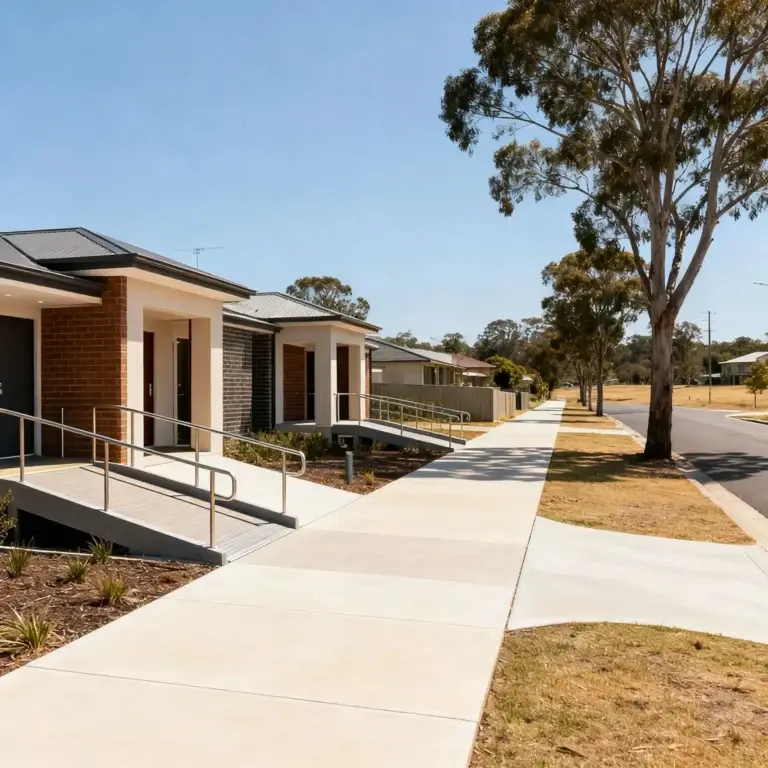
Aged care at home South West Sydney from Guia. Reliable support workers who show up consistently and become part of your family’s everyday routine.

NDIS allied health support sydney from Guia. Reliable support workers who show up consistently and become part of your family’s circle. Peace of mind fo…