


New NDIS plan: your first 30 days, in order
A new plan arrives and nothing tells you what to do first. Here is the order we work through with families in South West Sydney, and the two mistakes that cost the most.

ARE YOUR NDIS SUPPORTS WORKING FOR YOU?
GET A FREE NDIS PLAN MANAGEMENT REVIEW
Community access is the support that gets you out of the house and into the parts of Bankstown you want to be in — the Central, Paul Keating Park, the library, a class, the mosque or the temple, a friend’s place, a job interview, the pool. It is funded from core supports, and it is the support families describe as the one that changed the week rather than the paperwork.
Two things make it different here, and both are happening right now. Bankstown has had no train since September 2024. The T3 line closed for conversion to metro and free Southwest Link replacement buses have run ever since. Sydney Metro says services return in the second half of 2026 — now — and that every station will have lifts, level access between train and platform, and minimal gaps. For anyone using a wheelchair, that is not a nicer train. It is the difference between rail being usable on your own or not.
The second is that the funding for this exact support is being cut in half. From 1 October 2026 the Government is reducing budget allocations for social, civic and community participation supports by 50 per cent, applied progressively as plans are reassessed. That is on the Department’s website and you can read it yourself. So Bankstown gets its rail access back and its going-out budget halved in the same year, and how those two land on any one person depends entirely on what gets written into their plan between now and their reassessment.
We are a registered NDIS provider in the same council area. At the 2021 Census, English was the third most common language spoken at home in Bankstown — 18.0 per cent, behind Vietnamese at 20.3 and Arabic at 19.3. Our team works across English, Arabic, Vietnamese, Spanish and Auslan, with accredited interpreters where we do not hold the language.
Community access is the support that gets you out of the house and into the parts of Bankstown you want to be in — the Central, Paul Keating Park, the library, a class, the mosque or the temple, a friend’s place, a job interview, the pool. It is funded from core supports, and it is the support families describe as the one that changed the week rather than the paperwork.
Two things make it different here, and both are happening right now. Bankstown has had no train since September 2024. The T3 line closed for conversion to metro and free Southwest Link replacement buses have run ever since. Sydney Metro says services return in the second half of 2026 — now — and that every station will have lifts, level access between train and platform, and minimal gaps. For anyone using a wheelchair, that is not a nicer train. It is the difference between rail being usable on your own or not.
The second is that the funding for this exact support is being cut in half. From 1 October 2026 the Government is reducing budget allocations for social, civic and community participation supports by 50 per cent, applied progressively as plans are reassessed. That is on the Department’s website and you can read it yourself. So Bankstown gets its rail access back and its going-out budget halved in the same year, and how those two land on any one person depends entirely on what gets written into their plan between now and their reassessment.
We are a registered NDIS provider in the same council area. At the 2021 Census, English was the third most common language spoken at home in Bankstown — 18.0 per cent, behind Vietnamese at 20.3 and Arabic at 19.3. Our team works across English, Arabic, Vietnamese, Spanish and Auslan, with accredited interpreters where we do not hold the language.
Guia Is Trusted By NDIS Participants, Families And Support Coordinators
Imagine a life designed to empower you!



Community access is the plain-English name for assistance with social, economic and community participation. It sits in core supports, which means it is flexible — you are not locked into whatever activity someone wrote down at your planning meeting.
It pays for a worker to be with you while you do something outside your home. It funds the worker’s time. It does not fund your ticket to the thing you are going to, and that catches people out constantly. Cinema: it pays for the person who comes with you, not your seat or theirs. A gym membership is yours. If a worker drives you in their own car there is a per-kilometre component, and it has to be agreed in writing in your service agreement before it is charged rather than appearing on an invoice afterwards.
What it does fund, and what Bankstown families under-use, is the ordinary. Doing your own shopping rather than having it done for you. Getting to Friday prayers or to the temple without depending on a relative who is at work. Sitting in on a TAFE information session. Taking a grandchild to Paul Keating Park. Getting to a medical appointment when the person you would normally ask is working. None of it looks like a program and none of it needs to. The test is whether the support is reasonable and necessary to help you take part in the community, not whether it fits a timetable.
One more thing, and after October it matters more than it used to. Community access hours are not a subscription. If there is money in that budget and you use none of it for four months, you have not saved it — you have signalled at your next reassessment that you did not need it. That has always been unfair to people who found it hard to get started. With allocations halving, it becomes the difference between a plan that reflects your life and one that reflects a quiet spell.
If you have been going out less for the last two years because the trains stopped, that is exactly the situation this applies to, and it is worth saying out loud before your plan is reassessed rather than after.
The T3 Bankstown Line between Sydenham and Bankstown closed in September 2024 for conversion to metro. Free Southwest Link replacement buses have run for the whole period and will until it reopens.
Two years is long enough for habits to disappear. The course somebody stopped attending because the trip doubled. The Saturday routine that quietly ended. The job that became unreachable. None of that shows up as a complaint — it shows up as a person who goes out less, and then as a reassessment that records lower need because less was used.
Sydney Metro states services are due in the second half of 2026 and that all stations will be fully accessible: lifts, level access between train and platform, and minimal gaps between platform and train. That last detail is the one that matters most and gets the least attention. Level boarding with a minimal gap is the difference between a wheelchair user boarding independently and needing a staff member with a ramp, which means booking ahead, which in practice means not going.
So a real possibility for a lot of people here is that trips currently needing a support worker will not need one next year. That is a good outcome and it is also a planning problem, because it lands in the same window as the funding reduction. Cut the support in anticipation and you gamble somebody’s independence on a rail line opening on time. Ignore it and you write a plan for last year.
What we do is plan for both explicitly and write it down: what the support looks like now on replacement buses, what it should look like once level boarding is running, and what evidence will show which. That is a coordinator-and-provider conversation that should happen before the reassessment, not after.
This is the most important thing on the page for anyone whose plan is reassessed in the next twelve months, so it is up here rather than buried.
From 1 October 2026, budget allocations for social, civic and community participation supports are being reduced by 50 per cent, and capacity building daily activity allocations by 10 per cent. It does not hit every plan on the same day — it applies when a plan is reassessed or renewed, progressively across a twelve-month period. Budgets for critical supports, which the Government names as in-home assistance, home modifications, mobility equipment and specialist disability accommodation, are not being reset. That is the Department’s own wording and it is worth reading rather than taking any provider’s summary of it.
What we do not know, and will not pretend to, is how the reset arrives on any individual plan. The published material gives the mechanism and the percentages. It does not say how a delegate will weigh evidence of need against the new allocation, or how someone whose community participation budget was already modest will be treated. Anyone offering you certainty on that is selling something.
What you can usefully do is make the case visible. Not by inflating anything — by recording what actually happens. Which supports you used, what you were able to do because of them, what stopped when they were not there. A reassessment weighs evidence, and in Bankstown there is a specific version of that worth writing down: what you stopped doing when the trains stopped, and what you would do again once they return.
When the operational guidance is published we will read it and tell our participants what it says, including if it is bad news.
Community access is language work more than people expect. Booking a class. Asking a bus driver a question when the replacement service is running late. Telling a receptionist what you need. Explaining to a coach what your daughter can and cannot do. Reading a form at the library. Every one is a moment where the wrong language turns a support into an ordeal, and a worker who cannot have that conversation ends up having it for you — which is the opposite of community access.
Our team works across English, Arabic, Vietnamese, Spanish and Auslan, and we bring in accredited interpreters where we do not hold the language in-house. We do not use a family member as the interpreter for a conversation about that family member’s supports, and we do not use children as interpreters at all.
NDIS language is hard in English and worse in translation. There is no clean Arabic equivalent for “reasonable and necessary” and “capacity building” lands oddly in Vietnamese. So we explain the mechanic rather than the phrase: this is money for learning something so that later you need less help, and it is supposed to stop. That is understandable in any language and more accurate than the term.
The cultural half matters as much. Bankstown’s largest religious affiliation is Islam at 31.1 per cent, with Buddhism at 11.0 per cent reflecting the Vietnamese community. Support scheduled across Friday prayers, or during Ramadan or Tết without a conversation, does not get argued about — it gets quietly declined, and it gets recorded as somebody being hard to engage. We ask, we write it down, and we roster around it.
At the 2021 Census, Vietnamese was spoken at home in 20.3 per cent of Bankstown households, Arabic in 19.3 per cent and English in 18.0 per cent. English is third. That is the operating condition of any support involving people outside your family.
Community access is language work more than people expect. Booking a class. Asking a bus driver a question when the replacement service is running late. Telling a receptionist what you need. Explaining to a coach what your daughter can and cannot do. Reading a form at the library. Every one is a moment where the wrong language turns a support into an ordeal, and a worker who cannot have that conversation ends up having it for you — which is the opposite of community access.
Our team works across English, Arabic, Vietnamese, Spanish and Auslan, and we bring in accredited interpreters where we do not hold the language in-house. We do not use a family member as the interpreter for a conversation about that family member’s supports, and we do not use children as interpreters at all.
NDIS language is hard in English and worse in translation. There is no clean Arabic equivalent for “reasonable and necessary” and “capacity building” lands oddly in Vietnamese. So we explain the mechanic rather than the phrase: this is money for learning something so that later you need less help, and it is supposed to stop. That is understandable in any language and more accurate than the term.
The cultural half matters as much. Bankstown’s largest religious affiliation is Islam at 31.1 per cent, with Buddhism at 11.0 per cent reflecting the Vietnamese community. Support scheduled across Friday prayers, or during Ramadan or Tết without a conversation, does not get argued about — it gets quietly declined, and it gets recorded as somebody being hard to engage. We ask, we write it down, and we roster around it.
Generic plans send people to “the community”. Real ones send people to a named place, at a time that works, with a person who knows what happens when you get there.
Bankstown has more of those than a suburb of 35,000 usually does, because it functions as a centre rather than a dormitory. Bankstown Central for the trip that contains a dozen ordinary tasks — learning to shop there independently is worth more than being driven to three different centres, and a worker can step back progressively without anyone being stranded. Paul Keating Park and the civic precinct. The library. Bankstown Arts Centre. The pool. Places of worship across several faiths, which in this suburb is not a footnote.
Then the practical infrastructure: Bankstown Hospital, the medical centres, the TAFE and university presence, and Bankstown as a major bus interchange for the whole area — Yagoona, Bass Hill, Punchbowl, Greenacre, Condell Park, Chester Hill are all reachable without a car.
What two years without rail has done is shrink the map. Trips within Bankstown stayed viable; trips out of it got long. So the honest planning question right now is which category a goal falls into, and whether it is worth waiting a few months for the metro rather than burning support hours on a two-hour bus trip that will be forty minutes next year.
Canterbury-Bankstown Council maintains a Disability Inclusion Action Plan and consults on it publicly. It is the mechanism through which footpaths, accessible toilets, library programs and event access get argued about in this LGA. We point participants at those consultations rather than speaking for them — a community access service that never helps someone have a say in their own council’s plan is not really doing community participation.
Community access is the easiest support to sell badly, because the deliverable looks identical whether it was done well or not. Somebody went out. Here is the invoice.
Four questions, none about values statements. First: who is the worker, and will it be the same one next month? This support runs on a relationship. A roster sending a different face every fortnight is not a cheaper version of the same service, it is a worse one, because the participant starts again every session.
Second: what is charged for travel, and is it in the service agreement in writing before the first shift? There is a legitimate per-kilometre component when a worker drives you, and legitimate rules about a worker’s travel time. Both belong in writing. Neither should appear as a surprise line on an invoice. A provider vague about this at the start does not get clearer when they are billing you.
Third: what happens when a shift fails? Not if — when. A worker gets sick, a replacement bus does not turn up. The honest answer is a named person who answers the phone, a stated timeframe, and a cancellation policy you saw before signing.
Fourth, and most relevant this year: what will they tell you about October, and about the metro? A provider who has raised neither with you is either not paying attention or has decided not to mention them.
We are a registered NDIS provider, every worker holds an NDIS Worker Screening Check, and complaints run to the NDIS Quality and Safeguards Commission, not just to us. On price, we will not put figures on this page — community access is subject to the NDIS Pricing Arrangements and Price Limits and a number here would eventually be wrong and read as a quote.
Route knowledge is a real skill, it is fundable, and it is about to be worth considerably more than it was.
Learning one route properly — which stop, which side of the road, how long the wait actually runs at four in the afternoon, what to do when a bus is full, who to ask — is worth more than being driven to six different places. It is capacity building rather than an open-ended core support, which means it should have an end date written into it from the start. A provider who teaches you a route in a way that keeps you needing them for that route has not taught you the route.
The timing argument is specific to here. Once the metro opens with level access and minimal gaps, the number of destinations reachable independently from Bankstown goes up sharply. Someone who has learned to navigate the network is positioned to use that; someone who has been driven everywhere for two years is not. Travel training done in the next few months pays off precisely when the funding for accompanied trips is reducing.
We build it in stages deliberately. A worker travels with you. Then meets you at the other end. Then is on the phone if you need them and is not if you do not. Some people move through that in six weeks and some never finish the middle step, and both are fine — what is not fine is a service designed so nobody ever reaches the end.
One honest caveat: we can tell you how the routes behave because we use them, but we cannot tell you what a taxi or rideshare will cost on the day, and we will not put a figure in writing we would have to walk back.
No assessment day, no six-week onboarding, no folder. The first conversation is about what you want to be doing that you are not doing now.
We start with a conversation, in your language, at a time that suits — at home, at the Central, on the phone, or with an interpreter on the line. What we want is one or two concrete things you want to be able to do, and an honest account of what has stopped you. In Bankstown the answer is often transport, and often it has been transport since 2024.
Then we tell you whether your plan can pay for it, and if it cannot, we say so at that point rather than after you have signed. Where the budget will not stretch we will usually have a suggestion — a council program, a community group, something at the library, a different budget line. We are not paid for any of those and we suggest them anyway.
The first month is deliberately small. One or two outings, the same worker, at a fixed time, so something predictable exists before anything ambitious is attempted. We write down what worked and what did not in specifics rather than adjectives, because that record is what your reassessment will rest on — and this year, with allocations halving, that record is doing more work than usual.
After that it depends on you. Some people want a standing Thursday and nothing else. Some want to build toward travelling independently and being rid of us. Both are legitimate and we will not pretend the second is a failure of engagement.
What community access in Bankstown is actually for.
Support Coordination
The person who turns a plan into working services. Going into a reassessment while the transport picture is changing, coordination is what gets the evidence into the right shape in time.
In-Home Daily Living
Help at home with the ordinary parts of the day. In-home assistance is on the Government’s list of supports not being reset in October, so if the need is really at home, that is the steadier line.
Employment Support
Finding and keeping work is a different budget line from getting to the door. DES no longer exists and the eight-hour eligibility floor is gone, which matters to anyone told years ago they did not qualify.
Allied Health
Therapy that builds what you can do. Where community access keeps hitting the same physical or communication barrier, allied health is what moves it rather than working around it weekly.
Home Modifications
Changes to the house so it works for you. Also on the Government’s list of critical supports not being reset in October, which makes it worth assessing properly.
Aged Care
For people over 65 and households running both systems at once. Home Care Packages ended — Support at Home replaced them on 1 November 2025.
What community access in Bankstown is actually for.
Not a program you were placed in. We start from the thing you want to do and work backwards to the route, the timing and the person.
Route training with an end date, timed so it pays off exactly when the metro opens and accompanied-trip funding reduces.
English, Arabic, Vietnamese, Spanish and Auslan, with accredited interpreters and never a child interpreting.
Rostered for continuity, because a different face every fortnight means starting again every session.
Including what you stopped doing when the trains stopped — that is evidence, and most people will not think to write it down.
What support looks like now on replacement buses, and what it should look like once level boarding arrives.
Six reasons Bankstown families stay with us, none of which are awards.
Two years of replacement buses, and a metro due in the second half of 2026 with level boarding. We know how both behave, not how the timetable says they should.
English is the third language spoken at home here, behind Vietnamese and Arabic. We work across English, Arabic, Vietnamese, Spanish and Auslan, with accredited interpreters where we do not hold the language.
Community participation allocations halve from 1 October 2026 as plans are reassessed. We put that in front of participants early and point at the Department’s own page.
Community access runs on a relationship. We roster for continuity and tell you honestly when we cannot, rather than sending a new face and calling it flexibility.
We are a registered NDIS provider. Every worker holds an NDIS Worker Screening Check and complaints run to the NDIS Quality and Safeguards Commission, not just to us.
If what you need is daily living support or a free council program rather than billable community access hours, we say so. We would rather keep you four years than bill you hard for one.
The NDIS Family Decision Guide
What to ask before you agree to a community access service in Bankstown.
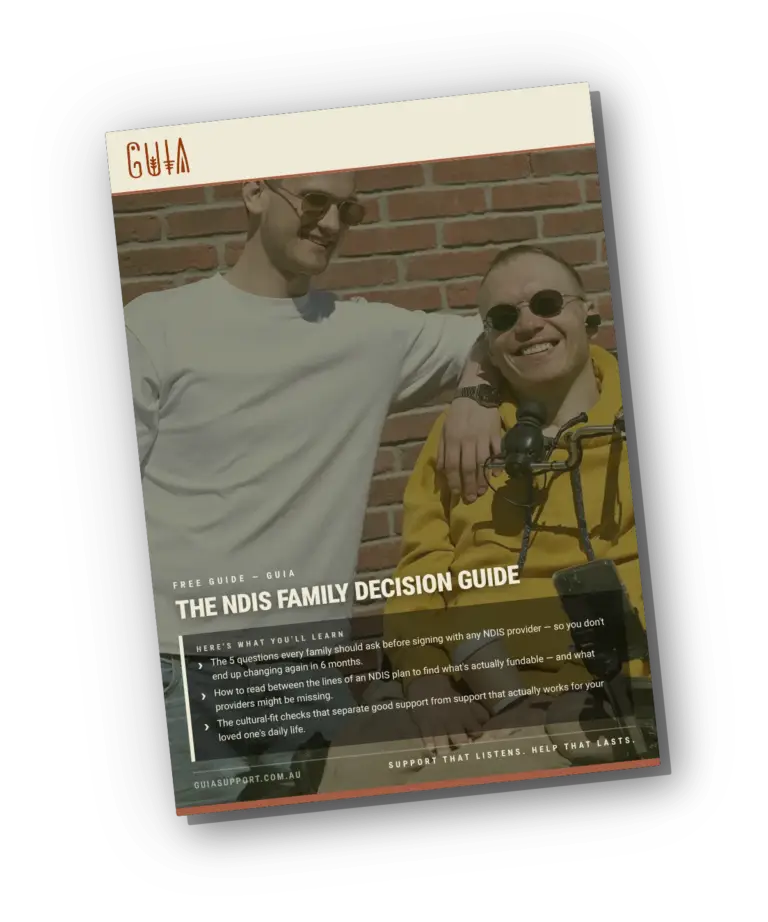
Here's What You'll Learn:
The four questions that separate providers
What travel can and cannot be charged to you
How to build a record that survives October
Finance Manager
Operations Manager
Community Outreach Coordinator
No. It pays for the support worker’s time while they are with you. It does not pay for your entry fee, ticket, membership, meal or fare, and it does not pay for the worker’s ticket either. If a worker drives you in their own vehicle there is a separate per-kilometre component, and that has to be agreed in your service agreement in writing before it is charged rather than appearing on an invoice afterwards. A provider vague about that split at the start will not get clearer when they are billing you.
Budget allocations for social, civic and community participation supports reduce by 50 per cent, and capacity building daily activity allocations by 10 per cent. It does not land on every plan at once — it applies when a plan is reassessed or renewed, progressively across twelve months. In-home assistance, home modifications, mobility equipment and specialist disability accommodation are not being reset. That is the Department of Health, Disability and Ageing’s own wording, worth reading rather than any provider’s summary.
Sydney Metro states the second half of 2026, without a specific date. The T3 line closed in September 2024 and free Southwest Link buses have run since. Whether it helps you depends on how you travel: all stations will have lifts, level access between train and platform, and minimal gaps. If you use a wheelchair, level boarding with a minimal gap is the difference between getting on independently and needing a staff member with a ramp — which means booking ahead, which in practice often means not going. If you walk, the gain is mostly speed and predictability.
Yes. Our team works across English, Arabic, Vietnamese, Spanish and Auslan, and where we do not hold a language in-house we bring in an accredited interpreter rather than making do. This matters more in Bankstown than almost anywhere in Sydney — at the 2021 Census English was the third most common language at home, at 18.0 per cent, behind Vietnamese at 20.3 and Arabic at 19.3. We do not use a family member to interpret a conversation about their own relative’s supports, and never children.
Yes. Getting to a mosque, a church, a temple or a community gathering is community participation. Bankstown’s largest religious affiliation is Islam at 31.1 per cent, with Buddhism at 11.0 per cent reflecting the Vietnamese community, so this is one of the most commonly requested supports here. What matters practically is that the roster respects it — support scheduled across Friday prayers, or during Ramadan or Tết without a conversation, tends to be quietly declined rather than argued about. We ask, we write it down, and we roster around it.
We will not put a figure on this page. Community access is subject to the NDIS Pricing Arrangements and Price Limits, those limits are revised, and a number written here would eventually be wrong and read as a quote. We will sit down with your actual plan against the current published arrangements and work out what your budget covers and for how long. If the honest answer is that it will not stretch to what you want, we say so at that point rather than after you have signed.
It can, and that is exactly why it is worth writing down. Unused funding does not roll over and it does not count in your favour — a quiet stretch reads at reassessment as evidence the support was not needed. If the real reason is that a two-hour replacement bus trip made something impractical, say that, with specifics and dates. “I stopped attending because the journey went from forty minutes to two hours” is a different statement from a gap in the record, and it is the kind of thing families consistently leave out.
No, and equally do not assume it changes nothing. The sensible position is to plan for both: what the support looks like now on replacement buses, what it should look like once level boarding is running, and what evidence will show which. Cutting support in anticipation of a rail line that has not opened is gambling somebody’s independence on a schedule. Ignoring it writes a plan for last year. Travel training is the one thing worth doing now regardless, because it pays off precisely when the metro opens and accompanied-trip funding reduces.
That is what we roster for, because community access depends on a relationship more than most supports. A different face every fortnight is not a cheaper version of the same service; it is a worse one, because you spend every session starting again. We will not claim it never changes — people move on and get sick — but when it does we tell you in advance and introduce the new worker rather than letting you find out at the door.
Four things, none needing a provider. Write down what you actually used your community access hours for, with dates — the real list, not a summary. For each one, write the consequence of it not happening; that is the part delegates weigh and the part families leave out. Gather anything written by someone other than you or us — a therapist’s note, a school report, a letter from a coach or an imam — because independent evidence carries further. And say what you want the next twelve months to look like in one sentence you can repeat.
In Bankstown add a fifth: write down what you stopped doing when the trains stopped in 2024, and what you would do again once the metro opens. Your allocation will be set at the reduced level at your reassessment, and a record that explains a quiet two years is considerably stronger than a gap nobody accounts for.
Reach out for a non-obligation NDIS Plan Management Assessment
We also provide this support in the nearby suburbs below, or see Community Access South West Sydney for the full service area.
A new plan arrives and nothing tells you what to do first. Here is the order we work through with families in South West Sydney, and the two mistakes that cost the most.
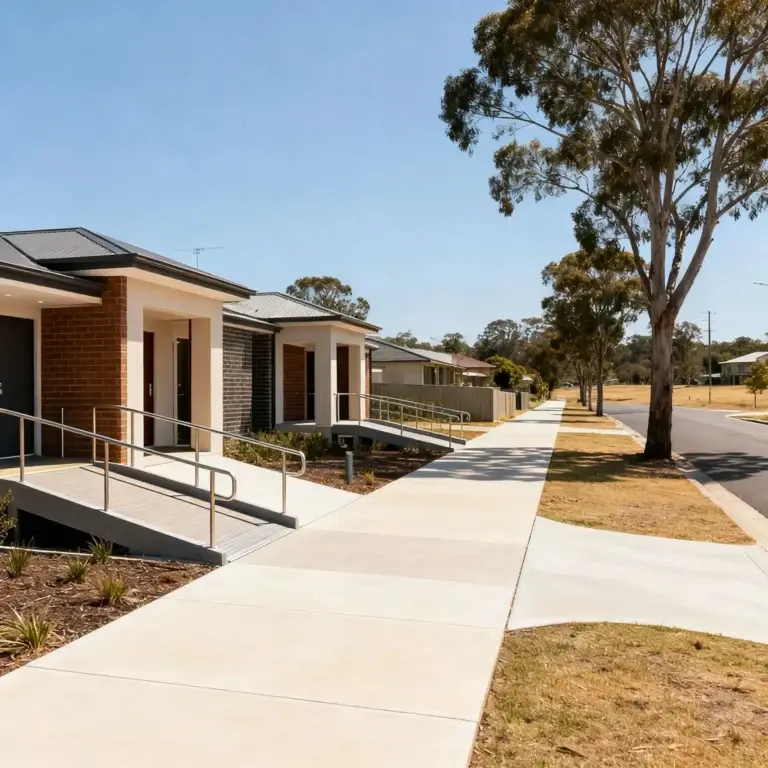
Aged care at home South West Sydney from Guia. Reliable support workers who show up consistently and become part of your family’s everyday routine.
NDIS allied health support sydney from Guia. Reliable support workers who show up consistently and become part of your family’s circle. Peace of mind fo…