


New NDIS plan: your first 30 days, in order
A new plan arrives and nothing tells you what to do first. Here is the order we work through with families in South West Sydney, and the two mistakes that cost the most.

ARE YOUR NDIS SUPPORTS WORKING FOR YOU?
GET A FREE NDIS PLAN MANAGEMENT REVIEW
Support coordination is the part of your plan that turns a document into services that actually turn up. It is the difference between having funding for something and having the thing. In Bankstown that gap is wider than most places, for two reasons that have nothing to do with the NDIS.
The first is language. At the 2021 Census, only 18.0 per cent of Bankstown households spoke English at home — Vietnamese was 20.3 per cent and Arabic 19.3 per cent. Bankstown is one of the few suburbs in Sydney where English is not the most common language at home. Coordination is almost entirely phone calls, forms and negotiation with strangers, so a coordinator who cannot have those conversations in your language is a coordinator who does them badly on your behalf.
The second is that Bankstown has had no train since September 2024. The T3 line between Sydenham and Bankstown closed for conversion to metro, with free Southwest Link replacement buses ever since. Metro services are due in the second half of 2026 — now — and when they arrive every station will have lifts, level access and minimal gaps between platform and train. For a lot of participants that will be the first genuinely step-free rail access they have had. Any coordination plan written in Bankstown right now that ignores that is out of date within months.
We are a registered NDIS provider working across South West Sydney, in the same council area as Bankstown. Our team works across English, Arabic, Vietnamese, Spanish and Auslan, and brings in accredited interpreters where we do not hold the language in-house. We do not ask your son to interpret a conversation about your own supports.
Support coordination is the part of your plan that turns a document into services that actually turn up. It is the difference between having funding for something and having the thing. In Bankstown that gap is wider than most places, for two reasons that have nothing to do with the NDIS.
The first is language. At the 2021 Census, only 18.0 per cent of Bankstown households spoke English at home — Vietnamese was 20.3 per cent and Arabic 19.3 per cent. Bankstown is one of the few suburbs in Sydney where English is not the most common language at home. Coordination is almost entirely phone calls, forms and negotiation with strangers, so a coordinator who cannot have those conversations in your language is a coordinator who does them badly on your behalf.
The second is that Bankstown has had no train since September 2024. The T3 line between Sydenham and Bankstown closed for conversion to metro, with free Southwest Link replacement buses ever since. Metro services are due in the second half of 2026 — now — and when they arrive every station will have lifts, level access and minimal gaps between platform and train. For a lot of participants that will be the first genuinely step-free rail access they have had. Any coordination plan written in Bankstown right now that ignores that is out of date within months.
We are a registered NDIS provider working across South West Sydney, in the same council area as Bankstown. Our team works across English, Arabic, Vietnamese, Spanish and Auslan, and brings in accredited interpreters where we do not hold the language in-house. We do not ask your son to interpret a conversation about your own supports.
Guia Is Trusted By NDIS Participants, Families And Support Coordinators
Imagine a life designed to empower you!
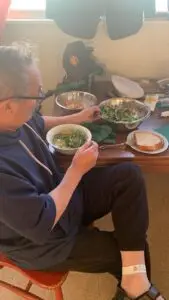




Coordination is not case management and it is not a friendly voice checking in. It is the practical work of converting funding into services, and most of it is unglamorous.
Finding providers who genuinely have capacity, rather than the ones who say yes and then cannot roster it. Reading service agreements before you sign them. Working out which budget line a support comes from, so one does not run dry in April while another sits untouched. Chasing the provider who has stopped turning up. Getting the paperwork into the right hands before a reassessment rather than after it.
The measure of whether it is working is simple and nobody asks it: are the supports in your plan actually happening? Not booked, not agreed in principle, not “we are waiting to hear back” — happening. A coordinator who has been involved for six months and cannot point at services that exist because of them has not done the job, however pleasant the meetings were.
There are three levels in the scheme and the difference matters. Support connection is short and light — help to get started. Support coordination is the standard level and what most people mean. Specialist support coordination is for situations with genuine complexity, usually where several systems are failing at once. Being placed in the wrong one is common, and it usually shows up as either paying for more help than the situation needs or being given a fraction of what it does.
We will not put dollar figures on this page. Coordination is subject to the NDIS Pricing Arrangements and Price Limits, those limits are revised, and a number here would eventually be wrong and read as a quote. Ask us and we will work it out against your actual plan.
Bankstown is one of the few suburbs in Sydney where English is not the most common language spoken at home. At the 2021 Census it was third — 18.0 per cent, behind Vietnamese at 20.3 and Arabic at 19.3.
Coordination is almost entirely conversation with strangers: providers, plan managers, the agency, allied health, a school, sometimes a hospital. Every one of those is a call where a coordinator who cannot speak your language does the talking for you and reports back a summary. That is not coordination, it is a filter, and things get lost in it that nobody ever finds out about.
Our team works across English, Arabic, Vietnamese, Spanish and Auslan. Where we do not hold a language in-house we bring in an accredited interpreter rather than making do. We do not use a family member as the interpreter for a conversation about that family member’s supports, and we do not use children at all. In coordination that rule matters because the conversations are about money, capability and risk — the things a relative will most want to soften.
What we do about NDIS language itself is explain the mechanic rather than translate the phrase. There is no clean Arabic equivalent for “reasonable and necessary” and “capacity building” lands oddly in Vietnamese. So instead we say: this is money for learning something so that later you need less help, and it is supposed to stop. That is understandable in any language and more accurate than the term.
The cultural half matters too. Bankstown’s largest religious affiliation is Islam at 31.1 per cent, with Buddhism at 11.0 per cent reflecting the Vietnamese community. Rostering that ignores Friday prayers, Ramadan or Tết does not get argued about — it gets quietly declined, and it gets recorded as a participant being difficult to engage. We ask, we write it down, and we build it into the service agreements.
Bankstown has been without a train since September 2024. That is not a minor inconvenience for a disability community — it has shaped two years of what people could realistically do.
The T3 Bankstown Line between Sydenham and Bankstown closed in September 2024 for conversion to metro, with free Southwest Link replacement buses running for the entire conversion period. Sydney Metro states services are due in the second half of 2026, and that all stations will be fully accessible — lifts, level access between train and platform, and minimal gaps.
Read that last part again if you use a wheelchair. Level boarding with minimal gaps is not a nicer version of what was there before; for a lot of people it is the difference between rail being usable independently and not. Participants who have needed a support worker for every trip may not need one for the same trip next year.
What that means for coordination right now is concrete. Plans being written or reassessed in the next few months will set support hours based on how things work today — replacement buses, longer journeys, more assistance needed. If those hours are locked in against a transport situation that is about to change, you get a plan built for last year. Equally, cutting travel support in anticipation of a metro that has not opened yet is a gamble with somebody’s independence.
Our position is to plan for both, explicitly, and write it down: what the support looks like now, what it should look like once the metro is running, and what evidence will show which. That is the kind of thing a coordinator should be doing and most will not, because it requires knowing what is happening in the suburb rather than only what is in the plan.
The published changes reduce budget allocations for social, civic and community participation supports by 50 per cent and capacity building daily activity allocations by 10 per cent, applied as plans are reassessed or renewed across a twelve-month period. Budgets for critical supports — in-home assistance, home modifications, mobility equipment, specialist disability accommodation — are not being reset.
The practical consequence for Bankstown is that getting out of the house is the budget being halved, in a suburb that has had no train for two years. Those two facts compound, and they compound hardest for the people already most isolated.
What a coordinator should be doing about it, starting now rather than after the letter arrives: building the evidence. Not inflating anything — recording what actually happens. Which supports were used, what they made possible, what stopped when they were not there. A reassessment weighs specifics. “He goes out on Thursdays” is weak. “Thursday support is what has kept him in a Vietnamese-speaking social group he has attended for three years, and the two months it lapsed he did not leave the house” is not.
What we do not know, and will not pretend to, is how the reduction lands on any individual plan. The published material gives the mechanism and the percentages. It does not say how a delegate weighs evidence of need against the new allocation. Anyone offering certainty there is going beyond what has been published, and when the operational guidance appears we will read it and tell participants what it says.
From 1 October 2026 the reductions begin, and coordination is the support most able to change how they land on you.
The published changes reduce budget allocations for social, civic and community participation supports by 50 per cent and capacity building daily activity allocations by 10 per cent, applied as plans are reassessed or renewed across a twelve-month period. Budgets for critical supports — in-home assistance, home modifications, mobility equipment, specialist disability accommodation — are not being reset.
The practical consequence for Bankstown is that getting out of the house is the budget being halved, in a suburb that has had no train for two years. Those two facts compound, and they compound hardest for the people already most isolated.
What a coordinator should be doing about it, starting now rather than after the letter arrives: building the evidence. Not inflating anything — recording what actually happens. Which supports were used, what they made possible, what stopped when they were not there. A reassessment weighs specifics. “He goes out on Thursdays” is weak. “Thursday support is what has kept him in a Vietnamese-speaking social group he has attended for three years, and the two months it lapsed he did not leave the house” is not.
What we do not know, and will not pretend to, is how the reduction lands on any individual plan. The published material gives the mechanism and the percentages. It does not say how a delegate weighs evidence of need against the new allocation. Anyone offering certainty there is going beyond what has been published, and when the operational guidance appears we will read it and tell participants what it says.
Coordination is the easiest support to bill and the hardest to judge, because the deliverable is other people’s work.
Four questions. First: how many hours do I get and what happens when they run out? Coordination hours are finite and a coordinator who burns them in the first quarter leaves you unsupported for the reassessment, which is when you most need them. Second: will you tell me when a provider is not working out? A coordinator with cosy relationships across a handful of providers is not neutral, and you will never be told.
Third: are you also providing my other supports? There is a real conflict where the same organisation coordinates your plan and delivers the services in it. It is legal and it is common and you should know when it is happening. We are honest about where we sit on that in any given arrangement rather than leaving you to work it out.
Fourth: what happens between meetings? Coordination that consists of a monthly catch-up is a subscription to a conversation. The work happens in the chasing, and the chasing is invisible unless somebody tells you it happened.
On accountability: we are a registered NDIS provider, every worker holds an NDIS Worker Screening Check, and complaints run to the NDIS Quality and Safeguards Commission, not just to us. A provider who presents their internal process as the only route is not describing the system accurately.
Multigenerational households are common here, and they produce the situation the scheme handles worst: an older parent in aged care and an adult child on the NDIS, in the same home, with neither system aware of the other.
Two assessments. Two sets of paperwork. Two plan cycles that never align. Two rosters of workers coming to the same address, sometimes on the same morning. And an unpaid family member — usually a daughter, usually working — acting as the integration layer between them because nobody else will.
Coordination is the only funded role that can carry any of that, and it is chronically under-requested by families who think asking for it is asking for something extra. It is not extra. It is the difference between a plan that works and a plan that technically exists.
What it looks like in practice is unglamorous. One place where all the dates live — plan reassessments, aged care reviews, equipment renewals — because the most common failure is a deadline arriving unseen. One person who knows both stories, so the family is not repeating a decade of history to every new worker. And a deliberate look at overlap: two services doing the same thing on different days, or two providers each assuming the other handles transport.
We are honest about the limit. We coordinate the NDIS side properly and we can help you navigate the aged care side, but we are not an aged care provider and we will not bill you as though we are. Where the answer is My Aged Care, we say so.
No onboarding pack, no goals workshop. The first ninety days are about getting things that were not happening to happen.
Week one is a conversation, in your language, about what is in the plan and what is actually running. Those two lists are almost never the same, and the gap between them is the work. We also establish the boring facts nobody records: who else is involved, when the plan ends, what has already been tried and failed and why.
Then we go after the gaps in order of what is costing you most. Usually that is not the biggest line in the plan — it is the support that would change a week, sitting unused because one provider never called back. We contact providers with actual capacity rather than the ones at the top of a list, and we read the service agreements before you sign them.
By ninety days there should be things happening that were not happening before, and a written record of what changed. If there are not, that is a conversation we start rather than one you have to raise.
Throughout, we write things down as they happen, because the reassessment is coming and it weighs evidence. With community participation allocations halving from October, a coordinator who arrives at your plan meeting with a folder of specifics is worth considerably more than one who arrives with an opinion.
Until the metro opens, the practical reality is buses — and the practical reality of buses is that they are not the timetable.
Free Southwest Link replacement buses have run between Sydenham and Bankstown since the line closed, and they will continue for the whole conversion period. They work, and they are slower and less predictable than rail, and for someone whose day depends on arriving somewhere at a set time that difference is not small.
Bankstown itself remains a major bus interchange, and the suburbs around it — Yagoona, Bass Hill, Punchbowl, Greenacre, Condell Park, Chester Hill — are reachable on the network. What has been lost for two years is the fast, predictable spine into the city and the inner west, and with it a lot of appointments, courses and jobs that were realistic in 2023 and quietly stopped being.
Where transport is the actual barrier rather than the support, the honest answer is often travel training with an end date, not more support hours. That is capacity building, it should be designed to stop, and once the metro opens with level boarding it will open up considerably more than it does today. A coordinator who understands that sequence can time it properly instead of paying for a worker to accompany every trip indefinitely.
We will tell you how the routes behave, because we use them. We will not tell you what a taxi or rideshare will cost on a given morning, and we will not put a figure in writing that we would have to walk back.
What support coordination in Bankstown is actually for.
Community Access
Getting out of the house. This is the budget halving from October, in a suburb that has had no train for two years — the two facts compound, and hardest for whoever is already most isolated.
In-Home Daily Living
Help at home with the ordinary parts of the day. On the Government’s list of critical supports not being reset in October, so it is the steadier part of a plan right now.
Employment Support
Finding and keeping work. DES no longer exists — Inclusive Employment Australia replaced it and the eight-hour eligibility floor is gone, which matters to a lot of people told years ago they did not qualify.
Allied Health
Therapy that changes something. Worth knowing that therapy travel has been claimable at only half rate since July 2025, which is why fewer therapists will come to you than a year ago.
Home Modifications
Changes to the house so it works for you. An occupational therapist must assess it, and if you rent your landlord must agree in writing before anything else happens.
Aged Care
For people over 65 and households running both systems. Home Care Packages ended — Support at Home replaced them on 1 November 2025.
What support coordination in Bankstown is actually for.
The measure is whether what is in your plan is happening. We work the gap between the document and reality.
English, Arabic, Vietnamese, Spanish and Auslan, with accredited interpreters and never a child interpreting.
What support looks like now on replacement buses, and what it should look like once level boarding arrives.
Specifics written down through the year, so your reassessment rests on what happened rather than on how last month looked.
An older parent in aged care and an adult child on the NDIS is two plan cycles that never align. Somebody has to hold the dates.
Coordination hours are finite. Burning them in the first quarter leaves you unsupported at the reassessment, which is when they matter most.
Six reasons Bankstown families stay with us, none of which are awards.
No rail since September 2024 and metro due in the second half of 2026. We plan for both, explicitly, instead of writing hours against a network that is about to change.
English is the third language spoken at home here, behind Vietnamese and Arabic. We work across English, Arabic, Vietnamese, Spanish and Auslan, with accredited interpreters where we do not hold the language.
Community participation allocations halve from 1 October 2026 as plans are reassessed. We build the evidence before the letter arrives, not in the fortnight after it.
The measure is whether the supports in your plan are happening. Not booked, not agreed in principle — happening. We work the gap between the plan and reality.
We are a registered NDIS provider. Every worker holds an NDIS Worker Screening Check and complaints run to the NDIS Quality and Safeguards Commission, not just to us.
Some plans are simple enough that coordination is money better spent on the support itself. Saying so costs us the ongoing hours and saves you a year.
The NDIS Family Decision Guide
What to ask before you pick a support coordinator in Bankstown.
Here's What You'll Learn:
The questions that separate coordinators
What is changing in your plan from October
How to build a record that survives a reassessment
Finance Manager
Operations Manager
Community Outreach Coordinator
Support connection is short and light — help to get started and then you carry on. Support coordination is the standard level and what most people mean: finding providers, reading agreements, chasing the ones who stop turning up, keeping budget lines from colliding. Specialist support coordination is for genuine complexity, usually where several systems are failing at once. Being placed in the wrong level is common. It shows up either as paying for more help than the situation needs, or as being given a fraction of what it does.
One question answers it: are the supports in your plan actually happening? Not booked, not agreed in principle, not “waiting to hear back” — happening. A coordinator involved for six months who cannot point at services that exist because of them has not done the job, however pleasant the meetings were. Most of the real work is invisible — the chasing — so a coordinator should be telling you what they chased and what came of it, not just checking in monthly.
Yes. Our team works across English, Arabic, Vietnamese, Spanish and Auslan, and where we do not hold a language in-house we bring in an accredited interpreter. This matters more in Bankstown than almost anywhere in Sydney — at the 2021 Census English was the third most common language at home, at 18.0 per cent, behind Vietnamese at 20.3 and Arabic at 19.3. We do not use a family member to interpret a conversation about their own relative’s supports, and never children.
Sydney Metro states services are due in the second half of 2026. The T3 line closed in September 2024 and free Southwest Link replacement buses have run since. It matters because every station will be fully accessible — lifts, level access between train and platform, and minimal gaps. For a lot of participants that is the first genuinely step-free rail access they have had, and trips that currently need a support worker may not next year. A plan written now that locks in travel hours against replacement buses will be a plan built for last year.
Budget allocations for social, civic and community participation supports reduce by 50 per cent and capacity building daily activity allocations by 10 per cent, applied as plans are reassessed or renewed across twelve months. In-home assistance, home modifications, mobility equipment and specialist disability accommodation are not being reset. That is the Department of Health, Disability and Ageing’s own wording. What is not published is how the reduction lands on any individual plan, and anyone confident about that is going beyond what exists.
Yes, it is legal and it is common, and there is a real conflict in it — the person choosing your providers has an interest in choosing themselves. You should be told when that is the arrangement rather than left to work it out. We are straight about where we sit in any given case. The practical test is whether your coordinator has ever recommended a provider that is not them, and whether they have ever told you a support was not working.
You are on your own until the plan is reassessed, which is exactly when coordination is most useful. That is why pacing matters more than it sounds: a coordinator who burns the hours in the first quarter leaves you unsupported at the meeting that sets the next twelve months. We plan the hours across the plan deliberately and tell you where we are up to, rather than letting you find out when the answer is nothing left.
We can coordinate the NDIS side properly and help you navigate the aged care side, but we are not an aged care provider and we will not bill you as though we are. What coordination can genuinely carry is the integration: one place where all the dates live, one person who knows both stories so you are not repeating a decade of history to every new worker, and a look at where two services are duplicating each other. Households running both systems are the ones who most need that and least often get offered it.
We will not put a figure on this page. Coordination is subject to the NDIS Pricing Arrangements and Price Limits, those limits are revised, and a number written here would eventually be wrong and read as a quote. We will work it out with you against your actual plan and the current published arrangements — including telling you if your plan is simple enough that the money is better spent on the support itself.
Four things. List what you actually used this year with dates — the real list, not a summary. For each one, write what it made possible and what stopped when it was not there; that is the part delegates weigh and the part families leave out. Gather anything written by someone other than you or your provider — a therapist’s note, a school report, a letter from a coach or an imam — because independent evidence carries further. And say what you want the next twelve months to look like in one sentence you can repeat, because reassessments move fast.
With community participation allocations halving from October, and Bankstown’s transport about to change again, this is a year where the specifics matter more than usual. We build that record through the year rather than in the fortnight before the meeting.
Reach out for a non-obligation NDIS Plan Management Assessment
We also provide this support in the nearby suburbs below, or see Support Coordination South West Sydney for the full service area.
A new plan arrives and nothing tells you what to do first. Here is the order we work through with families in South West Sydney, and the two mistakes that cost the most.
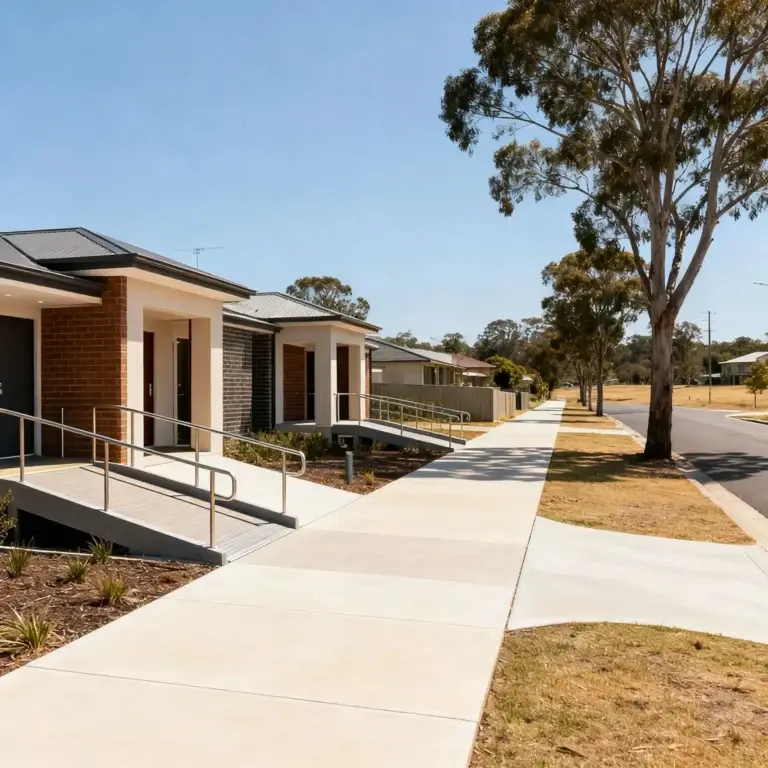
Aged care at home South West Sydney from Guia. Reliable support workers who show up consistently and become part of your family’s everyday routine.
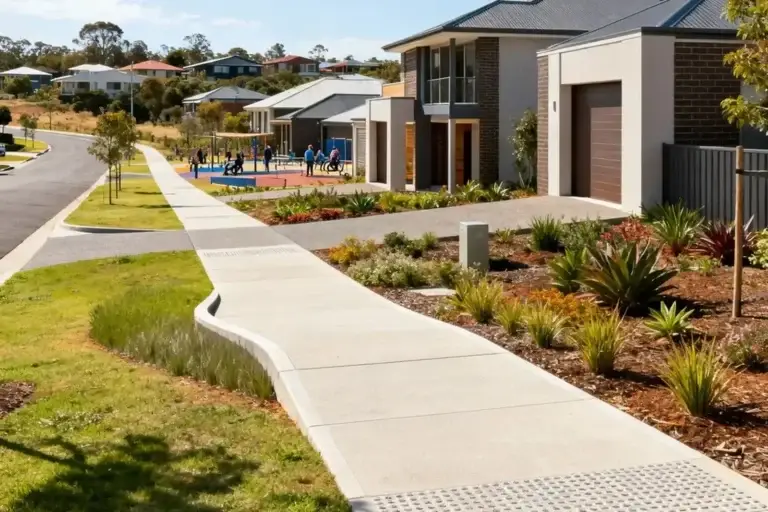
NDIS allied health support sydney from Guia. Reliable support workers who show up consistently and become part of your family’s circle. Peace of mind fo…