


New NDIS plan: your first 30 days, in order
A new plan arrives and nothing tells you what to do first. Here is the order we work through with families in South West Sydney, and the two mistakes that cost the most.

ARE YOUR NDIS SUPPORTS WORKING FOR YOU?
GET A FREE NDIS PLAN MANAGEMENT REVIEW
Getting an NDIS plan approved and getting it working are two different jobs. The plan arrives as a document full of budget categories and item numbers, and nobody sits down with you afterwards to explain which providers near Bass Hill have room, what a service agreement should say, or what happens if the funding runs out in March. That gap is the job support coordination was created to fill.
Guia provides Support Coordination Bass Hill families can use straight away. We work through the plan with you line by line, find providers who genuinely have capacity in Canterbury-Bankstown rather than a waitlist, get the agreements signed, and stay involved while the supports bed in. If something stops working, we deal with it rather than leaving you to make the phone calls.
Bass Hill sits 23 kilometres south-west of the Sydney CBD, on the Hume Highway, in the City of Canterbury-Bankstown. At the 2021 Census only a third of residents spoke English only at home, while Arabic was spoken by 30.5 per cent and Vietnamese by 10.1 per cent. A support coordinator who cannot work in those languages, or who has never had to explain a plan review to a family through an interpreter, is going to be slower and less useful here than one who can.
You can read the official description of the support on the NDIS website. What follows is how it actually runs in this suburb.
We work across Bass Hill and the suburbs that share its services: Yagoona, Georges Hall, Chester Hill, Villawood, Condell Park and Bankstown. That catchment is deliberate. Restricting a provider search to a single suburb name is the most common way families conclude there is no capacity when there is, because the boundary that matters is the one a support worker can reach reliably on a weekday, not the one printed on the postcode.
Getting an NDIS plan approved and getting it working are two different jobs. The plan arrives as a document full of budget categories and item numbers, and nobody sits down with you afterwards to explain which providers near Bass Hill have room, what a service agreement should say, or what happens if the funding runs out in March. That gap is the job support coordination was created to fill.
Guia provides Support Coordination Bass Hill families can use straight away. We work through the plan with you line by line, find providers who genuinely have capacity in Canterbury-Bankstown rather than a waitlist, get the agreements signed, and stay involved while the supports bed in. If something stops working, we deal with it rather than leaving you to make the phone calls.
Bass Hill sits 23 kilometres south-west of the Sydney CBD, on the Hume Highway, in the City of Canterbury-Bankstown. At the 2021 Census only a third of residents spoke English only at home, while Arabic was spoken by 30.5 per cent and Vietnamese by 10.1 per cent. A support coordinator who cannot work in those languages, or who has never had to explain a plan review to a family through an interpreter, is going to be slower and less useful here than one who can.
You can read the official description of the support on the NDIS website. What follows is how it actually runs in this suburb.
We work across Bass Hill and the suburbs that share its services: Yagoona, Georges Hall, Chester Hill, Villawood, Condell Park and Bankstown. That catchment is deliberate. Restricting a provider search to a single suburb name is the most common way families conclude there is no capacity when there is, because the boundary that matters is the one a support worker can reach reliably on a weekday, not the one printed on the postcode.
Guia Is Trusted By NDIS Participants, Families And Support Coordinators
Imagine a life designed to empower you!
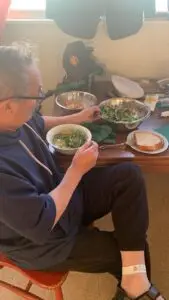




The most common thing families tell us in a first call is that they have had the plan for a while and have not started. Not because they are disorganised, but because there is no obvious first move. The plan lists budgets, not providers. It tells you there is money for community participation and says nothing about who in Bass Hill provides it, whether they have space, or what you should be paying. So the plan sits, the funding period runs down, and the first genuine conversation about it happens at the review, when someone asks why so little was used.
Ninety days is enough to change that completely. Not because support coordination is complicated, but because the work is sequential and somebody has to hold the sequence.
The first fortnight is reading. We go through the plan properly: every budget, what is stated versus flexible, the funding dates, and the goals as they are actually worded, because the wording is what your next plan will be measured against. We also look for the things that are missing. A plan with therapy funding and no support coordination to arrange it, or transport funding that does not survive contact with a suburb where the nearest stations are Yagoona and Birrong, will cause problems in month four. Better to know in week one.
Weeks three to six are the market. This is the part families cannot easily do themselves, because availability is not published anywhere. We contact providers, ask what their real start date is rather than their advertised one, and check whether the worker they would allocate is a fit. In Canterbury-Bankstown some support categories have genuine choice and others have two viable options, and you deserve to be told which situation you are in before you get attached to a preference.
Weeks six to ten are agreements and starts. Service agreements are contracts, and most of the disputes we get called about later trace back to a clause nobody read: notice periods, cancellation terms, what counts as billable travel. We go through the agreement with you before you sign it, in plain language, and we push back on terms that are unreasonable. Then the supports start, and we are present for the first shift or the first session if you want us to be.
Weeks ten to thirteen are the honest review. Something will not be working. It is usually the roster or the personality match rather than the provider. This is the point where families who are coordinating alone either accept a poor fit or start again from scratch, and it is the single clearest place a coordinator earns their funding. We make the change, and the supports keep running while we do it.
Underneath all of it is a record. Every conversation, every quote, every provider who said no and why. That record is what makes your next plan review a presentation of evidence rather than an argument from memory, and it is the reason we start keeping it in week one rather than assembling it in a panic eleven months later.
Two things we do not do in the first ninety days are worth stating, because they are common. We do not sign you to every provider who has capacity in order to show early progress. A plan with six services running badly is harder to fix than one with two running well, and the budget disappears either way. And we do not put a plan into action that we think is wrong without saying so first. If your plan is missing funding you clearly need, the honest move is to say that in week one and start assembling the case, not to spend eleven months quietly working around the gap.
By the end of the first plan period you should need us less than you did at the start. That is the actual design of the support: capacity building means building your capacity, and a coordinator whose participants are exactly as dependent in year three as in year one has not done the job. Some people will always need a coordinator and that is legitimate. Many will need considerably less than they were funded for, and we will tell you when we think you have reached that point.
Almost nobody is told how many hours of support coordination they have. The plan shows a dollar figure sitting in Capacity Building, under Support Coordination, and that is where the explanation stops. Families reasonably assume the amount is generous, because it looks like a lot of money. Then it runs out in February and nobody can say quite where it went.
The arithmetic is simple once someone shows it to you, and knowing it changes how you use us. A coordinator you understand the cost of is a coordinator you will actually call, because you can see what a phone call is worth and what it buys.
Support coordination is billed by the hour against a maximum rate set in the NDIS Pricing Arrangements and Price Limits, the document the NDIA updates each year. Your budget divided by that hourly limit is, near enough, the number of hours you have for the whole plan period. We will not quote a figure here, because the rate changes annually and a number in a web page ages badly. We will do the sum with you on a call, against the version of the pricing arrangements current on the day, and you will leave knowing your number.
What surprises people is how the hours distribute. A first plan is front-loaded: establishing supports takes far more time than maintaining them, so a year’s funding is often half spent by month four. That is not waste, it is the shape of the work. The problem is only when nobody warned you, and you assumed a steady monthly allowance. When we take on a new plan we set out the expected curve at the start, so month four is a milestone rather than a shock.
The second thing worth knowing is what is not billable. General questions, a quick call to confirm something, checking in after a bad week: we do not run a meter on those, and any coordinator who does will end up with a participant who stops ringing. Billable time is the work with an output attached, and the outputs should be visible to you.
Then there is the level in your plan, which determines the rate. Level 2 Coordination of Supports is the common one. Level 3 Specialist Support Coordination is for situations with genuine complexity, is delivered by a more senior practitioner, and is priced accordingly, which means the same dollar figure buys fewer hours. If your plan holds Level 3 funding, understanding that trade is important, because spending it on tasks a Level 2 coordinator could have done is expensive.
Finally, unspent coordination funding is not carried forward and it is not neutral at review. A budget that went unused reads to the NDIA as a budget that was not needed. If you are near the end of a plan period with money sitting in that category, that is a conversation to have now, not in the last fortnight.
It is worth knowing what a coordination hour is spent on, because the categories are unglamorous and it helps to see them. Provider research and phone calls. Reading and negotiating service agreements. Attending a first meeting with you. Writing to the NDIA. Preparing for your reassessment. Chasing a provider who has stopped responding. Resolving a billing error against the wrong budget line. Almost none of this is visible to you as it happens, which is exactly why the hours should be.
We send a plain summary of where the hours have gone, in ordinary language rather than item codes. Not because anyone requires it, but because support coordination is one of the few supports a participant cannot observe directly, and a support you cannot observe is one you have to take on trust. Making it visible is cheaper than asking for trust.
Provider availability is the part of the NDIS that no website tells the truth about. Every provider’s site says they are taking new participants, because that is what a website is for. The actual answer, when you ring, is often a waitlist, a start date two months out, or a yes that quietly becomes a no once they see where you live and how many hours you need.
This is where a local coordinator is worth more than a good one somewhere else. Knowing which Bass Hill providers are genuinely open this month is not knowledge you can look up. It comes from ringing them repeatedly and remembering what happened.
Geography matters here more than it should. Bass Hill is well connected by road, sitting on the Hume Highway, but it has no railway station of its own. Support workers travelling from further out are relying on the same buses or on their own car, and a provider whose staff are concentrated around Liverpool or Parramatta will quietly deprioritise a Bass Hill roster when they are short. The provider will not say this. It shows up as cancellations clustering on the same weekday.
So we ask different questions. Not “are you taking new participants” but “where do the workers you would roster for this live, and what is your cancellation rate on this side of Canterbury-Bankstown”. Not “when can you start” but “what is the start date you would be comfortable putting in the service agreement”. Those two questions eliminate a surprising proportion of the shortlist before you have wasted a fortnight on them.
We also keep the neighbouring suburbs in play deliberately. Yagoona, Georges Hall, Chester Hill, Villawood, Condell Park and Bankstown itself are all close enough that a provider based in any of them is realistically servicing Bass Hill, and restricting a search to one suburb name is how families end up believing there is no capacity when there is. The catchment that matters is the one a worker can reach reliably, not the one on the postcode.
For thinly supplied categories, and there are a few, the honest answer is sometimes that the good options are full. When that happens we tell you, rather than placing you with whoever is available and letting you discover the reason they had space. We will hold a place on a waitlist and run an interim arrangement, or we will look at whether the support can be delivered differently. What we will not do is present a poor provider as a find.
The other half of this is remembering. We keep a record of who was responsive, who overpromised, who handled a complaint well and who went quiet. Over time that record is the single most useful thing a local coordinator owns, and it is why the second and third providers we find you are usually better than the first.
There is one more filter worth applying, and it is the one families rarely think to ask about: staff turnover. A provider with genuine capacity and a high churn rate will give you a fast start and three different workers by Christmas, which for many participants is worse than waiting six weeks for a stable placement. Consistency is not a nice-to-have in daily supports. It is frequently the whole point, particularly where routine and familiarity are doing real work for the person.
We ask providers directly how long their current Bass Hill workers have been with them. Some answer, some deflect, and the deflection is informative. Where we have placed participants before we already know, which is why our shortlist for the second family is shorter and more accurate than it was for the first.
The practical difference shows up in the details. NDIS language is difficult in English and worse in translation: there is no clean Arabic equivalent for “reasonable and necessary”, and “capacity building” translates into something that sounds like construction. A coordinator working through an interpreter has to know which terms will not survive the crossing and explain the concept instead of the phrase. That is a skill, and it is not the interpreter’s job.
Family structure matters too. In a lot of households around Bass Hill the person with the plan, the person who does the day-to-day care, and the person who makes the decisions are three different people, and two of them work. A coordinator who insists on speaking only to the participant misses the household. One who bypasses the participant and speaks only to a relative has taken away the choice and control the plan exists to protect. Getting that balance right is judgement, and it takes practice in this specific community.
There is also what does not get said. Disability carries different weight in different communities, and in some the instinct is to manage privately rather than accept outside help. Families in that position often present as uninterested in supports when what is actually happening is that nobody has framed the supports in a way that feels acceptable. Pushing harder does not work. Understanding why the hesitation is there does.
Guia’s team works across English, Arabic, Spanish and Auslan, and we bring in accredited interpreters where we do not have the language in-house, including Vietnamese. We do not use a family member as the interpreter for anything that matters, particularly not a child. That is a firm rule, and the reason is simple: it puts the family member in the position of delivering bad news about their own relative, and it makes it very hard for the participant to disagree.
The test of whether this is working is not whether we can greet you in your language. It is whether, six months in, you are still asking us questions. Families who did not fully understand the first conversation tend to go quiet, and quiet reads as satisfied right up until the plan lapses unused.
One practical consequence worth naming: documents. Plans, service agreements and NDIA correspondence arrive in English, and a family who has had the meeting in Arabic still has a folder of English paperwork to act on. We go through the documents that carry obligations, particularly service agreements and anything with a deadline, rather than assuming the verbal explanation covered it. A signature on a contract nobody read is a problem regardless of what language the conversation happened in.
The other consequence is time. Meetings run through an interpreter take longer, and any coordinator budgeting the same hour for them is going to rush the family or run over. We plan for it. It is one of the reasons we are honest early about how the coordination hours will be spent, because a household that needs interpreted meetings uses the budget differently and should know that from the start rather than finding out in month eight.
At the 2021 Census, 33.6 per cent of Bass Hill residents spoke only English at home. Arabic was spoken by 30.5 per cent and Vietnamese by 10.1 per cent, and more than half the suburb’s population was born overseas. Those are not diversity statistics to put in a brochure. They are an operational fact about how support coordination has to be delivered here.
A plan meeting conducted in a language the family is not fluent in does not produce a worse conversation. It produces a different conversation, in which the family agrees to things to move the meeting along, and the coordinator leaves believing there was consent.
The practical difference shows up in the details. NDIS language is difficult in English and worse in translation: there is no clean Arabic equivalent for “reasonable and necessary”, and “capacity building” translates into something that sounds like construction. A coordinator working through an interpreter has to know which terms will not survive the crossing and explain the concept instead of the phrase. That is a skill, and it is not the interpreter’s job.
Family structure matters too. In a lot of households around Bass Hill the person with the plan, the person who does the day-to-day care, and the person who makes the decisions are three different people, and two of them work. A coordinator who insists on speaking only to the participant misses the household. One who bypasses the participant and speaks only to a relative has taken away the choice and control the plan exists to protect. Getting that balance right is judgement, and it takes practice in this specific community.
There is also what does not get said. Disability carries different weight in different communities, and in some the instinct is to manage privately rather than accept outside help. Families in that position often present as uninterested in supports when what is actually happening is that nobody has framed the supports in a way that feels acceptable. Pushing harder does not work. Understanding why the hesitation is there does.
Guia’s team works across English, Arabic, Spanish and Auslan, and we bring in accredited interpreters where we do not have the language in-house, including Vietnamese. We do not use a family member as the interpreter for anything that matters, particularly not a child. That is a firm rule, and the reason is simple: it puts the family member in the position of delivering bad news about their own relative, and it makes it very hard for the participant to disagree.
The test of whether this is working is not whether we can greet you in your language. It is whether, six months in, you are still asking us questions. Families who did not fully understand the first conversation tend to go quiet, and quiet reads as satisfied right up until the plan lapses unused.
One practical consequence worth naming: documents. Plans, service agreements and NDIA correspondence arrive in English, and a family who has had the meeting in Arabic still has a folder of English paperwork to act on. We go through the documents that carry obligations, particularly service agreements and anything with a deadline, rather than assuming the verbal explanation covered it. A signature on a contract nobody read is a problem regardless of what language the conversation happened in.
The other consequence is time. Meetings run through an interpreter take longer, and any coordinator budgeting the same hour for them is going to rush the family or run over. We plan for it. It is one of the reasons we are honest early about how the coordination hours will be spent, because a household that needs interpreted meetings uses the budget differently and should know that from the start rather than finding out in month eight.
Bass Hill has George Bass School, a purpose-built school for students whose primary disability is intellectual, taking them from the early years through to the end of high school. Placement is through a regional panel, and for a lot of local families it is the most stable institution in their lives for a decade or more.
Then it ends. School leaving is the single largest transition most participants and families will go through, and it is the one the NDIS handles least gracefully, because the structure that organised the week simply stops and something has to be built to replace it.
The timing problem is the whole problem. Families reasonably start thinking about post-school supports in the final year. By then it is late. Providers running day programs and school leaver supports fill their intakes well ahead, funding for the transition has to be in an approved plan before it can be spent, and getting it into a plan requires evidence gathered before the plan meeting, which is itself months earlier. Working backwards, the useful conversation happens roughly two years out, and almost nobody has it then.
We start that conversation early and we make it concrete. Not “what does he want to do after school”, which is an impossible question for most seventeen-year-olds, but a narrower set: how many days a week need structure, what is the travel radius that is genuinely workable given there is no station in Bass Hill, does the family need the same hours covered that school covered, and what happens to the parent’s employment if it is not. That last one is asked far too rarely and it decides more than anything else on the list.
From there it becomes a sequence. Evidence and reports from the school and allied health while the student is still enrolled and the professionals still know them, because getting a report six months after leaving is much harder. A plan review timed so the new funding exists before the last day of school rather than after it. Provider conversations early enough to hold a place. Then a staged start, ideally overlapping the final term, so the young person meets the new setting while the old one still exists.
The other thing we do is slow families down on the day program question. It is the default answer and for some people it is the right one, but the honest alternatives are worth mapping first: supported employment, a mix of community access and skill building, a genuine attempt at open employment with support. The reason to look at these before deciding is that plan funding tends to follow whatever is written into the goals, and a goal written as attendance is very hard to convert into a goal about work two years later.
We also stay involved through the first six months, which is when transitions actually fail. The new arrangement usually looks fine for a fortnight and then a pattern emerges. Having someone whose job it is to notice that pattern, and who has the standing to change the arrangement, is the difference between a rough term and a young person who stops leaving the house.
A word about expectations, because this transition is emotionally heavier than the paperwork suggests. School provides structure, transport, peers and a set of adults who know the young person well, all at once and at no cost to the plan. Nothing in the adult system replaces all four. Families who go in expecting an equivalent are disappointed by arrangements that are objectively reasonable, and young people pick up that disappointment. Naming this early, and deciding which of the four matters most, produces better decisions than trying to reconstruct school.
It also changes what you should ask providers. Rather than what activities are offered, ask who the consistent adult will be and how long they have been there. Rather than what the program covers, ask what a Wednesday actually looks like from arrival to pickup. The answers to those two questions predict how a placement goes far better than a brochure does.
Plans are written at a moment in time and lives move. A carer’s health changes, a housemate leaves, someone loses the driver who was doing the school run, a condition progresses faster than the last assessment assumed. The plan does not adjust itself, and the default behaviour is to keep stretching the existing funding until it visibly fails.
Most families wait for the scheduled review. Often that is the wrong call, and the reason is straightforward: the review will be assessed on evidence that mostly gets created while things are going wrong, and nobody is collecting it.
There are two routes. You can wait for the plan reassessment at the end of the plan period, or you can ask for a change earlier when your circumstances have genuinely changed. The second route exists precisely for situations that could not have been foreseen when the plan was written, and it is under-used because families assume asking will look like complaining, or will put the existing funding at risk. In our experience the more common risk runs the other way: a plan that has visibly not met someone’s needs for eight months, with no record explaining why, is a weaker starting position than a documented change request made in month three.
What decides these is evidence, and evidence has a shelf life. A therapy report written this quarter about the current situation carries weight. A recollection at a meeting does not. So when something shifts, the first thing we do is not lodge anything. It is to work out what the shift means in support hours, get the relevant professional to document it while it is current, and only then decide whether this is a change request now or material for the scheduled review.
Some changes are worth acting on immediately. A primary carer becoming unwell is the clearest, because the informal support the plan silently assumed has been withdrawn and no amount of stretching covers it. Housing changes are another, particularly moving into or out of a household where someone else was doing unpaid care. So is any change that makes the current supports unsafe rather than merely insufficient.
Others are better saved. A modest increase in need, a goal that has been achieved and should be replaced, a provider that is not working out: these are review conversations, and bundling them into one well-evidenced reassessment is more effective than a series of small requests that each get considered in isolation.
The judgement about which is which is a large part of what you are paying a coordinator for, and it is not a judgement you can make well from inside the situation. We keep the running record through the plan year specifically so that when this question arrives, the answer is a matter of looking rather than remembering.
There is a version of this that families put off for the wrong reason, which is not wanting to appear ungrateful. It comes up often, and it comes up most in households where the plan felt hard to get in the first place. It is worth saying plainly: a plan is an assessment of need at a point in time, and asking for it to reflect a changed situation is the process working as designed, not an imposition. Nobody at the NDIA reads a well-evidenced change request as ingratitude.
What does cause harm is the pattern underneath the hesitation, where the family absorbs the gap with unpaid work until something breaks. By the time that happens the request is being made in a crisis, the evidence is thin because nobody was collecting it, and the household has usually lost income or health in the meantime. The earlier conversation is easier in every respect.
Three different supports get called support coordination in ordinary conversation, they are funded differently, and which one is in your plan changes both what you should expect and how far the money goes. Plans rarely explain the distinction, and participants are often told they have one when they are funded for another.
It is worth ten minutes of your attention, because being funded for Level 3 and using it for Level 2 work is expensive, and being funded for Level 2 while genuinely needing specialist coordination is worse.
Level 2, Coordination of Supports, is the common one and it is what most people mean. The work is connecting you to providers, getting agreements in place, building your ability to manage the supports yourself over time, and resolving the ordinary problems that come up. It assumes your situation is complicated in the way any plan is complicated, but not in crisis.
Level 3, Specialist Support Coordination, is for genuine complexity: multiple services that have to be held together, risks that need active management, situations where a breakdown in one support cascades into the others. It is delivered by a more senior practitioner, it is time-limited by design, and it is priced higher, which means the same budget buys materially fewer hours. If it is in your plan there was a reason, and spending it on routine provider-finding wastes it.
Psychosocial recovery coaching is a different thing wearing a similar coat. It is for participants whose disability is psychosocial, the relationship is built around recovery goals rather than around plan administration, and it explicitly expects the intensity to move with how you are going. It is not a cheaper coordinator and it is not a substitute for one. Some people are funded for both, and that combination works well when the two are actually talking to each other.
Where families get caught is the assumption that a higher level is better. It is not, it is different, and asking for Level 3 without the circumstances that justify it tends to be declined and costs you credibility for the requests that matter. The more common real problem is the opposite: a plan with a Level 2 budget covering a situation that is unmistakably specialist, held together by a family member doing unpaid case management.
If you are unsure what you have, the plan document says so, and we will read it with you. If we think the level is wrong for your situation we will tell you plainly, explain what evidence would be needed to change it, and be honest about whether we think a request would succeed. We would rather say no to a request that will fail than bill you for making it.
One further distinction that causes confusion: support coordination is not plan management, though participants are routinely told they have one when they have the other. Plan management is a financial service. It pays your invoices, tracks your budgets and keeps you compliant. It does not find you providers, negotiate your agreements, or intervene when a support fails. The two are funded separately and most participants who have one would benefit from understanding whether they also have the other.
You can hold both, and many people do. Where a plan includes plan management but no support coordination, the practical effect is that the money is well administered and the supports are still yours to arrange. If that describes your plan and the arranging is not happening, that is a specific and fixable gap, and it is worth raising at your next reassessment with evidence of what has gone unspent.
If you have heard that support coordination is being replaced, you have heard something real but not yet finished. The NDIA has been designing a Navigator model intended to change how participants are connected to supports, and it has been through co-design working groups and public consultation.
What that means for a family in Bass Hill deciding whether to engage a coordinator this month is a narrower question than the headline suggests, and it deserves a straight answer rather than either reassurance or alarm.
Here is what we can state accurately as at September 2026. The Navigator model has been in co-design, with working groups and targeted engagement running through 2025 and into 2026. Material published by the NDIA describes the model as still being designed, and participants in the consultation have argued for pilots before any national rollout. You can follow the work on the NDIS Engage Navigator project page, which is where the agency publishes its updates.
What we have not seen is a confirmed national start date, or published detail on how existing support coordination arrangements would transition. If a provider tells you they know exactly when this happens and precisely what it means for your plan, treat that with caution. We do not know, and we are not going to guess in writing on a page you might read in six months.
What has not changed is the practical situation today. Support coordination continues to be funded in plans, coordinators continue to work, and a plan sitting unused this year is unused regardless of what replaces the support later. The worst version of this is a family who delays getting started because a change might be coming, and reaches their reassessment having spent almost nothing.
The sensible position is to be well organised rather than to wait. A participant whose supports are established, whose service agreements are in order and whose plan use is properly documented is in a better position under any model than one who is starting from a blank page. Every piece of that work carries over.
We will keep this page current as the position changes, and we will tell you directly rather than through a website if something lands that affects your plan. If you want to talk it through before committing to anything, that conversation is free and we will not use it to sell you a longer engagement than you need.
It is also worth being clear about what we would expect to change and what we would not, on the reasoning available. Whatever the connecting function is called, someone still has to know which providers near Bass Hill have capacity, still has to read a service agreement before a participant signs it, and still has to act when a support fails on a Tuesday. Models can move that work between roles. They do not remove it.
So the question worth asking a coordinator now is not whether they will survive a reform. It is whether the work they are doing for you produces something durable: supports that are running, agreements that are sound, a record that stands up at your next reassessment. If the answer is yes, you are covered either way. If the answer is that you have been paying for phone calls that left no trace, that is a problem today and not a problem the NDIA is going to solve for you.
Support coordination is easy to describe and hard to judge from the outside, because the work happens in phone calls you never see. These are the six outcomes we think are fair to hold us to in the first year of working together in Bass Hill.
In-Home Daily Living
Personal care, meals, laundry and household routines are usually the first supports a new plan needs working, and the ones families most often try to arrange themselves. We map the hours in your Core budget against the days you actually need cover, shortlist providers with real availability around Bass Hill, and sit in on the first meeting if you want us there. If the match does not work in week three, changing it is our job, not yours.
Community Access
Getting out of the house in Bass Hill is a transport question before it is a support question. There is no railway station in the suburb, so the nearest are Yagoona and Birrong, and most local travel runs on buses along the Hume Highway. We build that reality into the plan: which supports can be reached independently, which need a worker with a vehicle, and where travel time is quietly eating hours you thought were for the activity itself.
Employment Support
Work goals sit in Capacity Building and are the easiest funding in a plan to leave unspent, because nobody is chasing them. We treat an employment goal as a sequence rather than a wish: what needs to be true before an interview is realistic, who provides that step, and how it is funded. For school leavers around Bass Hill that sequence usually starts a year earlier than families expect.
Allied Health
Occupational therapy, speech pathology, physiotherapy and psychology are where plan funding runs out fastest and where the reports that justify your next plan come from. We keep the two facts connected: booking assessments early enough that the evidence exists before your review, and watching the therapy budget so you are not told in May that there is nothing left until July.
Home Modifications
Modifications are slow, and the delay is almost never the builder. It is the OT assessment, the quotes, the landlord consent and the NDIA decision, in that order, each waiting on the last. Much of Bass Hill’s housing is detached and owner-occupied, which helps, but rental approvals still add months. We start the chain at the beginning and keep every party moving rather than discovering in month five that a signature was never obtained.
Aged Care Support
Turning 65 on an NDIS plan does not force you off it, but the boundary between NDIS and aged care is one of the least well explained parts of the system and one of the easiest to be given wrong information about. We set out what actually applies to you, what stays funded, and what an ageing parent who is also a primary carer should be putting in place now rather than during a crisis.
Support coordination is easy to describe and hard to judge from the outside, because the work happens in phone calls you never see. These are the six outcomes we think are fair to hold us to in the first year of working together in Bass Hill.
Funding that sits unused reads at review as funding that was not needed. Within the first quarter you should be able to see supports running and a budget moving, not a document waiting for a decision.
You will leave our first working session knowing roughly how many coordination hours your plan holds, when in the year they are likely to be used, and which categories are stated rather than flexible. No more guessing.
Service agreements are contracts. We read the notice periods, cancellation terms and travel billing with you before you sign, and we push back on terms that are unreasonable rather than after they bite.
When a match does not work, and one usually will not, you tell us once. We handle the exit, the replacement and the overlap so supports keep running while it happens.
We keep the record through the year: what was tried, what worked, which providers declined and why. Your review becomes a presentation of evidence rather than an argument from memory eleven months later.
Meetings run in a language you are fluent in, with accredited interpreters where needed, and concepts explained rather than terms translated. Agreement should mean you agreed, not that the meeting moved along.
The NDIS Family Decision Guide
Helping Australian families make confident NDIS decisions for the person they care about — without the jargon, the runaround, or the regret.
Here's What You'll Learn:
The 5 questions every family should ask before signing with any NDIS provider — so you don't end up changing again in 6 months.
How to read between the lines of an NDIS plan to find what's actually fundable — and what providers might be missing.
The cultural-fit checks that separate good support from support that actually works for your loved one's daily life.
Finance Manager
Operations Manager
Community Outreach Coordinator
A support coordinator turns an approved NDIS plan into working supports. In practice that means reading the plan with you properly, finding providers around Bass Hill and Canterbury-Bankstown who genuinely have capacity, negotiating and checking service agreements before you sign, getting the supports started, and staying involved while they settle. When something fails, and something usually does in the first three months, the coordinator handles the change so your supports keep running. It also means keeping a record across the year so your next plan reassessment is based on documented evidence rather than recollection.
Your Support Coordination budget sits in Capacity Building as a dollar figure. Divide it by the hourly price limit in the current NDIS Pricing Arrangements and Price Limits and you have, near enough, your hours for the plan period. We deliberately do not publish a rate here because the NDIA updates it annually and a number on a web page ages badly. We will do the sum with you on a call against the version current that day. Expect the hours to be front-loaded: setting supports up takes far more time than maintaining them, so a year’s funding is often half used by month four.
Yes. How your plan is financially managed and whether you have support coordination are two separate things. Plan management handles the invoices and the budget tracking; support coordination is about finding and holding together the actual supports. Self-managed participants can also use a coordinator, and often benefit from one, because self-management increases the administrative load rather than reducing the need for provider knowledge. What matters is whether Support Coordination funding appears in the Capacity Building section of your plan. If you are not sure, we will read the plan with you and tell you.
The NDIA has been designing a Navigator model through co-design working groups and public consultation running across 2025 and into 2026. As at September 2026 we have not seen a confirmed national start date or published detail on how existing support coordination arrangements would transition, and the agency’s own material describes the model as still in design. Support coordination continues to be funded in plans and coordinators continue to work. Any provider claiming to know the exact timing is guessing. The practical advice is not to delay getting your supports established, because that work carries over under any model.
Level 2, Coordination of Supports, is the common one: connecting you to providers, getting agreements in place, resolving ordinary problems, and building your ability to manage supports over time. Level 3, Specialist Support Coordination, is for genuine complexity where multiple services have to be held together and a breakdown in one cascades into others. It is delivered by a more senior practitioner, is time-limited by design, and is priced higher, so the same dollar figure buys fewer hours. A higher level is not better, it is different. Your plan document states which one you are funded for.
We can usually have a first working session within a week of you getting in touch, and that session is where the plan gets read properly and the sequence is set. Getting actual supports started depends on the category. Some have real choice around Bass Hill and can be running inside a month. Others have two viable providers and a genuine waitlist, and we will tell you that at the start rather than letting you discover it. We would rather set a realistic date and meet it than quote a fast one and explain later why it slipped.
Our team works across English, Arabic, Spanish and Auslan. Where we do not hold a language in-house, including Vietnamese, we bring in accredited interpreters rather than making do. We do not use a family member as the interpreter for anything consequential, and never a child, because it puts them in the position of delivering difficult news about their own relative and makes it very hard for the participant to disagree. At the 2021 Census only a third of Bass Hill spoke English only at home, so this is an operational necessity here rather than an extra.
Not necessarily. You can ask for a change earlier when your circumstances have genuinely changed, and that route exists for situations that could not have been foreseen when the plan was written. A primary carer becoming unwell is the clearest case, because informal support the plan silently assumed has been withdrawn. Housing changes are another, as is anything that makes current supports unsafe rather than merely insufficient. The decision turns on evidence, and evidence has a shelf life, so the first step is documenting the change while it is current, not lodging something immediately.
Roughly two years before the last day, which is considerably earlier than most families expect. Working backwards explains why: providers running post-school supports fill their intakes ahead of time, the funding has to be in an approved plan before it can be spent, and getting it into a plan needs evidence gathered before the plan meeting. For families with a student at George Bass School in Bass Hill, the reports you will need are much easier to obtain while the student is still enrolled and the staff who know them are still involved. Starting in the final year is possible but tight.
You change them, and you do not need a reason that would satisfy anybody. Support coordination is a support like any other in your plan, and choice and control applies to it. If it is us you want to leave, we will hand over properly: the record of what has been tried, the provider contacts, the agreements and where each one sits. We would rather do a clean handover than keep a participant who is not getting value, because the alternative is a relationship where you stop ringing and the plan quietly goes unused.
Reach out for a non-obligation NDIS Plan Management Assessment
We also provide this support in the nearby suburbs below, or see Support Coordination South West Sydney for the full service area.
A new plan arrives and nothing tells you what to do first. Here is the order we work through with families in South West Sydney, and the two mistakes that cost the most.

Aged care at home South West Sydney from Guia. Reliable support workers who show up consistently and become part of your family’s everyday routine.

NDIS allied health support sydney from Guia. Reliable support workers who show up consistently and become part of your family’s circle. Peace of mind fo…