


New NDIS plan: your first 30 days, in order
A new plan arrives and nothing tells you what to do first. Here is the order we work through with families in South West Sydney, and the two mistakes that cost the most.
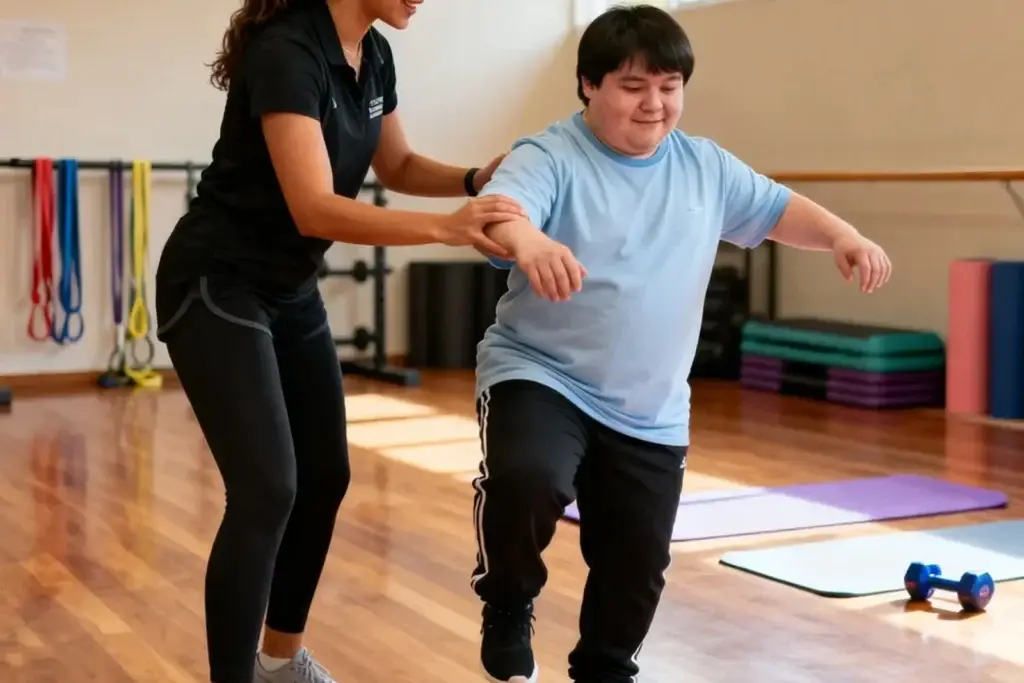
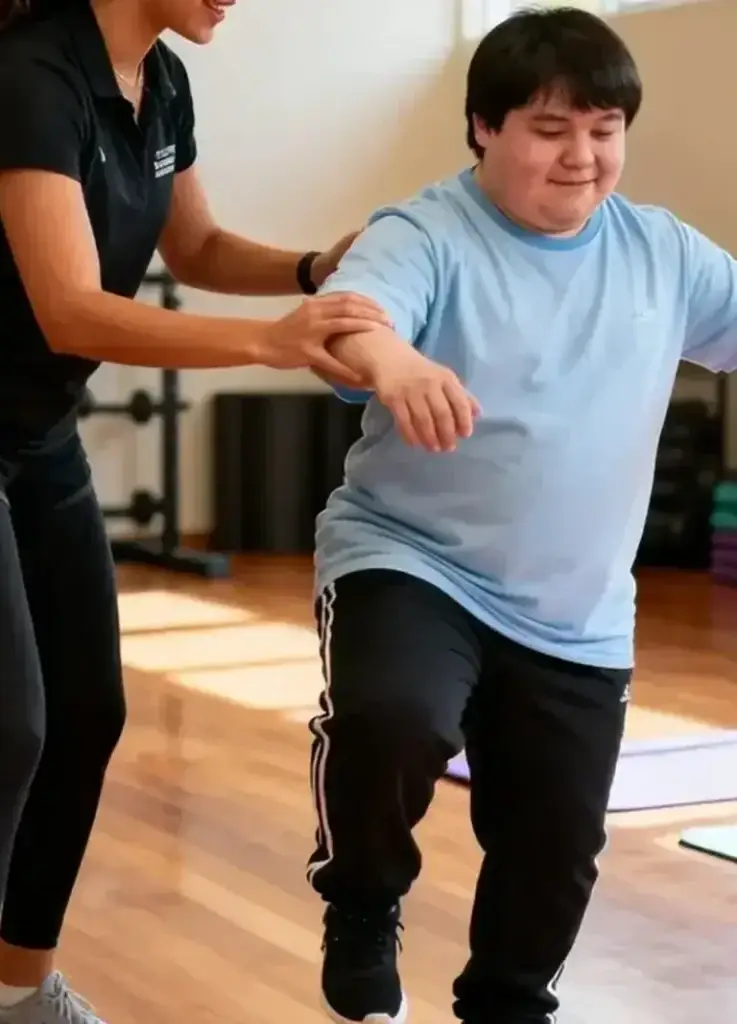
NDIS mental health support sits at the intersection of two separate worlds for most families: your NDIS plan, and the allied health services you’re trying to access within it. The tension is real. You’re managing a participant’s wellbeing, coordinating appointments, and worrying whether the support worker will actually show up on the day you’ve both counted on. That consistency matters more than any single session. It builds trust. It lets your family member relax into the routine instead of bracing for cancellation.
Exercise physiology and wellness support work through a mechanism most families don’t expect: they build capacity over time, not through crisis intervention. A trained exercise physiologist designs movement tailored to your family member’s body and goals. They show up the same day each week. They notice what’s working and adjust. That regularity becomes the scaffold. Your family member gains confidence. Physical activity itself lifts mood and reduces anxiety. The support worker becomes someone they know and trust, not a stranger arriving with a clipboard.
Here’s what that looks like in practice. You book a Tuesday afternoon session at 2 p. m. The same worker arrives within your window, every week. They know your family member’s preferences, routines, and sensory needs. If your family speaks Spanish or Arabic, we match a worker who does. Over months, you stop holding your breath before each appointment. Your family member starts asking when their support worker is coming. That’s when you know the provider has become part of your extended team, not just a service on the plan.
NDIS mental health support means different things depending on supporting. Maybe your family member is managing anxiety or depression and struggling to stay active. Maybe they’ve withdrawn from things they used to enjoy. Maybe they’re dealing with the stress of change—a new living situation, leaving school, or navigating relationships. Whatever’s happening, you’re probably wondering: what actually counts as support, and how do I find someone we can trust?
Here’s what matters most. Allied Health & Wellness through the NDIS isn’t about therapy or diagnosis. It’s about movement, fitness, and wellbeing tailored to what your family member actually needs and wants to do. That might be working with an accredited exercise physiologist on building strength and confidence. It might be personal training that fits their body and their routine. It might be structured support that helps them get back into community activities they’ve stepped away from.
The real question families ask us is: will this provider show up consistently, treat my family member with respect, and actually listen to what they’re trying to achieve? We hear that worry a lot. You’ve probably had experiences where support workers cancel last-minute or don’t quite get your family member’s needs. That’s not acceptable, and it shouldn’t be normal.
What we know from working across South West Sydney is that cultural and linguistic fit matters too. If your family member speaks Spanish or Arabic at home, or uses Auslan, that connection with their support worker changes everything. They relax. They’re more honest about what they actually want to work on. The support becomes real.
If you’re looking for NDIS mental health support that’s reliable, respectful, and genuinely tailored to your family member’s life, that’s where we start the conversation. No pressure, no jargon—just clarity about what’s possible and what happens next.
Here’s what that looks like in practice. Your family member has NDIS mental health support budgeted as part of their Allied Health & Wellness plan. On a Tuesday afternoon at 2pm, a support worker arrives—someone who’s been matched to them because they speak the same language, understand their routines, and show up consistently. That reliability matters more than you might think.
The first hour might be a walk through the local park. Not a forced fitness session, but a genuine outing where the support worker notices what your family member enjoys—the quiet corner by the water, the café where they feel comfortable, the pace that works for their body. They’re building connection and movement together, not ticking a box. The support worker takes mental notes about what helps them feel calmer, more present, more like themselves.
Back at home, they might spend time on something practical: sorting through a drawer that’s been causing stress, or sitting with a cup of tea while talking through a worry that’s been building up. The support worker listens without judgment. They’re not a counsellor—that’s a different role—but they’re trained to recognise when someone’s struggling and to respond with genuine care. They leave behind a home that feels a little lighter, and a person who felt heard.
This happens every week. Same day, same time, same person; your family member knows what to expect. They’re not wondering if someone will cancel last-minute. They’re building trust and routine, which for many people with disability is foundational to managing their mental health and wellbeing.
If that sounds like the kind of support you’re after, we’re here to help. Enquire about support and we’ll talk through what NDIS mental health support could look like for your family member.
Many families think NDIS mental health support means seeing a psychologist or counsellor; that’s understandable—when we hear “mental health,” we often picture a therapy session. But Allied Health & Wellness covers something broader and more practical. It’s about building the everyday habits, movement, and routines that help your family member feel steadier and more in control.
Here’s what that looks like in practice. Exercise Physiology—delivered by accredited professionals—uses movement tailored to your family member’s goals and body, not a fitness class. Personal training and wellbeing support focus on what actually works for them: maybe it’s a weekly walk that clears their head, or structured activity that gives their week shape and rhythm. These aren’t substitutes for counselling if that’s needed. They’re the scaffolding that helps mental wellbeing stick.
What we hear from families is that consistency matters most. A support worker who shows up the same day, same time, every week—someone your family member knows and trusts—becomes part of their routine. That reliability itself is grounding. When movement and activity are paired with a person who’s genuinely present, the benefits compound over time. Your family member builds confidence, feels more capable in their body, and often sleeps better and has clearer thinking.
The NDIS funds this under Allied Health & Wellness because it’s about capacity and wellbeing, not clinical diagnosis. Your family member doesn’t need to “prove” anxiety or depression—they just need to show how movement, fitness, or structured activity would help them feel more in control of their day. That’s the conversation worth having with a support coordinator or provider who listens first.
If that sounds like the kind of support you’re after, we’re here to talk through what might work for your family member. Enquire about support and let’s explore the options together.
Allied Health & Wellness through NDIS mental health support means professional movement, fitness, and wellbeing services designed specifically for your family member’s goals. It’s not counselling or psychology. It’s practical, body-focused support that helps build strength, confidence, and everyday capacity.
Here’s what that includes in practice. Exercise Physiology — sessions with an accredited exercise physiologist who designs movement programs tailored to your family member’s body, preferences, and what they’re working toward. Personal training focused on NDIS participants’ specific needs. Health and wellbeing support that might include fitness coaching, movement classes, or one-to-one sessions at home or in the community. All delivered by qualified, worker-screened staff who understand disability and show up consistently.
What it does NOT include: medical diagnosis or treatment, psychological counselling, mental health crisis intervention, or therapy that requires clinical qualifications. If your family member needs counselling or psychology, that’s a different NDIS support category — and your support coordinator or the NDIS official site can point you toward those options.
The real value sits here: when anxiety, low mood, or isolation makes it hard to move or connect, Allied Health & Wellness gives your family member a reliable, respectful adult who meets them where they are. No pressure. No judgment. Just consistent support that helps them feel stronger in their body and more in control of their day.
At Guia, we match support workers with real care for cultural and linguistic fit. If your family member speaks Arabic, Spanish, or uses Auslan, we can arrange that. We’ve been NDIS-registered for two years and work across South West Sydney — Cumberland and Canterbury. When you’re ready to explore whether this fits your family member’s plan and goals, we’re here to talk it through.
NDIS mental health support sits within your funding in a few distinct ways, and understanding how works best for your family member matters. The scheme sorts support into categories: Core Supports (everyday essentials), Capacity Building (skills and independence), and Supports in Shared Living. Allied Health & Wellness—including exercise physiology and wellbeing support—typically sits within Capacity Building, though the exact fit depends on your plan.
Your family member (or you, if you’re the plan holder) chooses which providers deliver that support. That choice is genuinely yours. The NDIS funds the support category; you decide who delivers it and how often. If your plan includes exercise physiology or personal training, you’re not locked into one provider. You can change, adjust frequency, or try a different approach if the first one isn’t working.
Here’s what that looks like in practice: Your plan might allocate funding for “Capacity Building—Exercise Physiology” across the year. Guia’s accredited exercise physiologists design movement support tailored to your family member’s goals and body. Sessions might happen weekly, fortnightly, or as needed. You’re not spending against a shrinking pot—you’re using allocated funding for support that builds confidence and wellbeing over time.
What we hear from families is that the confusion isn’t about the funding itself. It’s about whether the provider will show up reliably, match your family member’s cultural or language needs, and actually listen to what matters to them. That’s where consistency counts. We’ve been supporting people across South West Sydney for two years, all staff are qualified and worker-screened, and our multilingual team speaks English, Spanish, and Arabic.
If you’d like to understand how NDIS mental health support could work for your family member, or you’re ready to explore options, we’re here to talk through it plainly. No pressure, no jargon.
When you’re exploring NDIS mental health support, it helps to know exactly what you’re choosing and what sits outside the support’s scope. This clarity means you and your family member stay in control of decisions that matter.
What’s your call:
Allied Health & Wellness support through the NDIS sits in the recovery and capacity-building space. That means the focus is on what your family member can do, build on, and feel stronger about over time. It’s not about clinical diagnosis or treatment — that’s medical territory.
What’s outside this support:
At Guia, we match support workers with care to how your family member communicates and what matters to them. We show up consistently, respect routines, and focus on building confidence and independence over time. When you’re ready to explore what NDIS mental health support could look like for your family, we’re here to talk through the options at your pace.
Enquire about support and let’s work out what works for your family.
Allied Health & Wellness support sits in your NDIS plan under the “Assistance with Daily Personal Activities” category. It’s worth check-ing whether your current plan already includes funding for exercise physiology, personal training, or health and wellbeing support. Many families find this category is there but hasn’t been used yet.
You might benefit from this support if your family member mentions feeling stuck in routines that don’t include movement, or if they’ve said they’d like to get fitter but don’t know where to start. An accredited exercise physiologist can design movement that suits their body and goals — not a one-size-fits-all gym class. This is especially relevant for autistic adults or people with psychosocial disability, where sensory comfort and predictability matter as much as the exercise itself.
Another signal is if your family member’s mental health or confidence seems tied to physical activity. Sometimes a consistent support worker who meets them twice a week for a walk, a swim, or home-based fitness makes the difference between isolation and connection. That reliability — the same person, same time, same place — builds trust over time.
If your family member uses a wheelchair or has mobility support needs, Allied Health & Wellness can also mean personal training adapted to their setup, or exercise physiology that works with their equipment and body safely. This isn’t about “fixing” anything — it’s about building strength, confidence, and choice about what their body can do.
Check your NDIS plan letter or login to see what’s allocated to Daily Personal Activities. If there’s funding sitting there unused, or if you’re not sure what counts, that’s exactly the right time to reach out. When you’re ready to explore whether this fits, we can walk through what’s in your plan and what’s possible next.
Enquire about Allied Health & Wellness support — no pressure, just a conversation about what might work for your family.
A psychosocial disability participant in South West Sydney was managing anxiety that made routine outings feel overwhelming. Their family noticed the pattern: good weeks at home, then withdrawal when they tried to leave the house. The participant wanted to reconnect with community but didn’t know where to start.
Their support coordinator flagged NDIS mental health support as a funding option, and the family began exploring what that actually meant. They weren’t looking for therapy or diagnosis—they needed practical help building confidence back into daily life. That’s where Allied Health & Wellness fit the picture.
Guia matched them with an exercise physiologist who understood anxiety as a bodily experience, not just a thought problem. The physiologist designed movement sessions at home first: gentle, predictable, no pressure. After six weeks of Tuesday morning sessions, the participant felt steadier. The family noticed they were sleeping better and talking about the sessions with genuine interest.
Here’s what mattered most: the support worker showed up the same time every Tuesday. No cancellations. The participant knew what to expect, which made anxiety quieter; slowly, sessions moved from the lounge room to a local park. By month three, they were walking to the community centre for a group fitness class—something that felt impossible six months earlier.
The family wasn’t asked to become therapists or to “fix” anything. Their role shifted to noticing small changes and reinforcing the routine. That’s the difference NDIS mental health support made: it gave everyone—participant and family—a clearer path forward, and someone reliable walking it alongside them.
If your family member is managing mental health and disability, and you’re unsure what support could look like in practice, enquire about how Allied Health & Wellness might fit your situation.
NDIS mental health support through Allied Health & Wellness sits in your plan’s Core Supports or Capacity Building categories, depending on what you’re funding. Core Supports cover day-to-day wellbeing needs—things like Exercise Physiology sessions or personal training that help you stay active and manage your mental health. Capacity Building funds supports that build skills and independence over time.
Here’s how the funding actually works. The NDIS uses a price guide that sets maximum hourly rates for different support types. When you and your support coordinator agree on Allied Health & Wellness activities, those costs come from your plan’s allocated budget for that category. Your plan might say something like “$3,000 for Capacity Building supports” or “$2,500 for Core Supports”—the exact amount depends on your individual plan.
The key thing to know is that you’re not paying the provider directly. Your NDIS plan covers the cost up to the price guide rate. If a support worker charges within that rate, there’s no gap. Some families find they need more support than their plan allows, and they choose to pay the difference themselves—that’s a real conversation to have with your support coordinator when you’re planning.
What we hear from families is that clarity matters more than the numbers. You need to understand what your plan covers, what your support coordinator recommends, and how much choice you have in picking your provider. That’s where we come in. Our team can explain your plan’s Allied Health & Wellness budget in plain language and help you match that funding to the actual support that fits your life.
When you’re ready to explore how your NDIS plan can fund mental health support, enquire about support and we’ll walk you through the next step.
When someone you care for is managing their mental health, knowing there’s a solid safety plan in place makes a real difference. NDIS mental health support that includes crisis response planning means you’re not starting from scratch when things get tough. It means having a clear, agreed process everyone understands.
Here’s what that looks like in practice. You’ll start with a conversation about what triggers concern, what’s worked before, and what your family member needs in a crisis moment. That might be a quiet space, a particular person to call, or specific grounding techniques. We work with you to write it down clearly—not clinical language, just practical steps anyone can follow.
Your support worker learns the plan before the first visit. They know who to contact, what to do, and when to step back. That consistency matters. When your family member knows their support worker has read the safety plan and understands it, trust builds faster. There’s no scrambling or confusion when stress is high.
We also connect the safety plan to everyday support. If anxiety peaks on certain days or in certain settings, your support worker notices patterns and helps your family member build confidence around those moments. That’s prevention as much as crisis response. Over time, many people find they’re managing better because the support is predictable and tailored to them.
If you’d like to talk through what a safety plan might look like for your family member, or you’re not sure whether NDIS mental health support is the right fit, we’re here to walk through it. No pressure, no jargon—just a straightforward chat about what your family actually needs.
Enquire about support and let us know what’s on your mind. We’ll get back to you within one business day.
Choosing the right allied health and wellness provider means asking the right questions upfront. You’re not just looking for someone qualified—you’re looking for someone reliable, respectful, and genuinely matched to your family member’s needs and values.
At Guia, we believe consistency and respect matter. We match support workers carefully, show up on time every time, and treat every participant as a capable adult deserving dignity. If you’d like to talk through how NDIS mental health support could work for your situation, enquire about support today.
When you’re looking for NDIS mental health support through allied health services, knowing what to watch for helps protect your family member and your plan. Not every provider treats participants with the same care and consistency.
At Guia, we match support workers carefully to each participant’s needs, language, and preferences. Our team stays trained, shows up on time, and builds real relationships. If you’d like to discuss what genuine allied health support looks like for your family member, enquire about support today.
When NDIS mental health support is working well, you’ll notice the small things first. The same support worker shows up on the same day each week—no last-minute changes or cancellations that throw your family member off balance. That consistency builds trust. Over time, your family member relaxes because they know what to expect.
You’ll also see regular, honest communication from the support team. They check in with you about how things are going, not just ticking boxes. They ask what matters most to your family member right now—whether that’s building confidence for a social outing, managing stress around a life change, or simply having someone to talk to who listens without judgment. Their priorities shape the support, not the other way around.
Another sign is that your family member starts making more choices about their own support. They might suggest a different activity, ask to try something new, or speak up when something isn’t working. That’s empowerment in action. They’re building confidence because the support worker treats them as capable, not as someone who needs fixing.
You’ll also notice real changes in their day-to-day wellbeing. They sleep better. They’re calmer. They talk about looking forward to their support sessions. They mention friends they’ve made or activities they enjoy. These aren’t dramatic transformations—they’re the quiet, steady improvements that come from reliable, respectful support over time.
If that sounds like the kind of support you’re after, Guia can help. We match participants with support workers who show up consistently and treat them with genuine care. When you’re ready to explore NDIS mental health support that fits your family’s needs, enquire about support and we’ll talk through what matters most to you.
When you’re navigating NDIS mental health support, it’s important to know that you’re not locked into any single arrangement. If the Allied Health & Wellness support you’ve chosen isn’t working the way you hoped, you have clear options—and using them is a sign of good decision-making, not failure.
The most common starting point is talking directly with your support worker or the provider. Many mismatches come down to small things: timing that doesn’t suit the family routine, a communication style that doesn’t click, or goals that need reshaping. A conversation often fixes these quickly; if that doesn’t feel safe or comfortable, ask to speak with a manager at the provider. That’s their job.
You can also request a different support worker from the same provider. This isn’t unusual. A good provider will take that seriously and find someone whose approach fits better with your family member’s needs and your family’s culture and communication style.
If the provider itself isn’t meeting your expectations—missed appointments, poor reliability, or a lack of respect—you have the right to change providers. Your support coordinator can help you explore other registered NDIS providers in South West Sydney who offer the same service. There’s no penalty for switching.
For serious concerns about quality, safety, or Code of Conduct breaches, the NDIS Quality and Safeguards Commission handles complaints and investigations. This is a formal process, but it exists to protect you and hold providers accountable.
The point is simple: you’re in control of who supports your family member and how. If something isn’t working, that’s information. When you’re ready to explore what better support might look like, we’re here to help.
If you’ve been researching NDIS mental health support, you’ve probably noticed how much depends on finding the right fit. The provider who shows up on time matters. It support worker who listens without judgment matters. The person who remembers what you said last week and builds on it matters.
At Guia, we match participants with allied health and wellness support tailored to what actually helps. That might be exercise physiology sessions that build confidence through movement. It might be personal training that fits around your routine. It might be wellbeing support designed by someone who understands your goals, not a programme.
We’ve been supporting people across South West Sydney for two years. Our team is NDIS-registered and qualified, with support workers who speak English, Arabic, and Spanish. We know the Cumberland and Canterbury areas. We understand that cultural fit and language matter—not as nice extras, but as part of real support.
What we hear from families is straightforward: they want consistency, dignity, and someone who treats their family member as a capable adult. They want to feel confident that their support worker will follow through. They want choice and control over how their NDIS plan is used, not pressure to spend in ways that don’t fit.
If that sounds like the kind of NDIS mental health support you’re after, there’s no pressure to decide today. Enquire about support and we can have a conversation about what your family member needs and how we might help. Whenever you’re ready.
A new plan arrives and nothing tells you what to do first. Here is the order we work through with families in South West Sydney, and the two mistakes that cost the most.
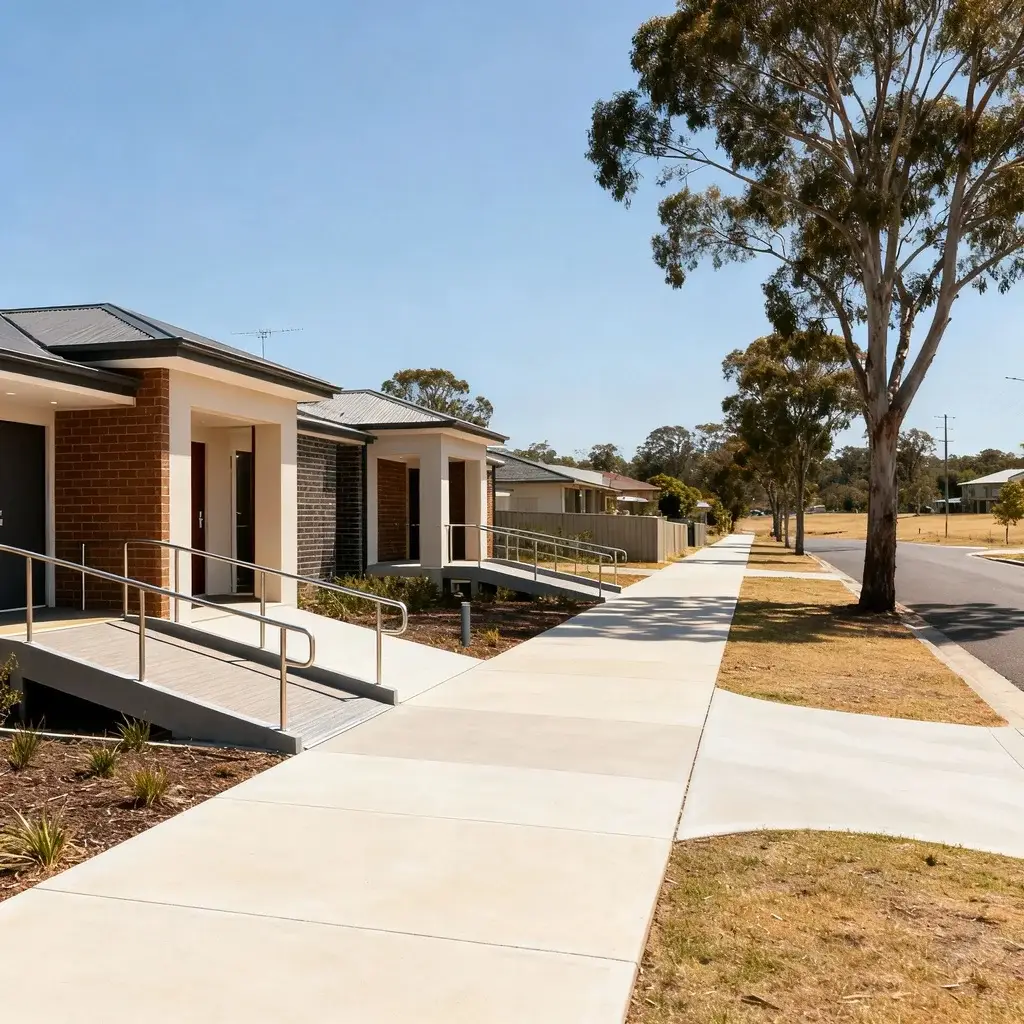
Aged care at home South West Sydney from Guia. Reliable support workers who show up consistently and become part of your family’s everyday routine.

NDIS allied health support sydney from Guia. Reliable support workers who show up consistently and become part of your family’s circle. Peace of mind fo…
The Allied Health and NDIS Decision Guide
How NDIS-funded exercise physiology and allied health builds long-term wellbeing — and how to know if it's the right call for your plan.
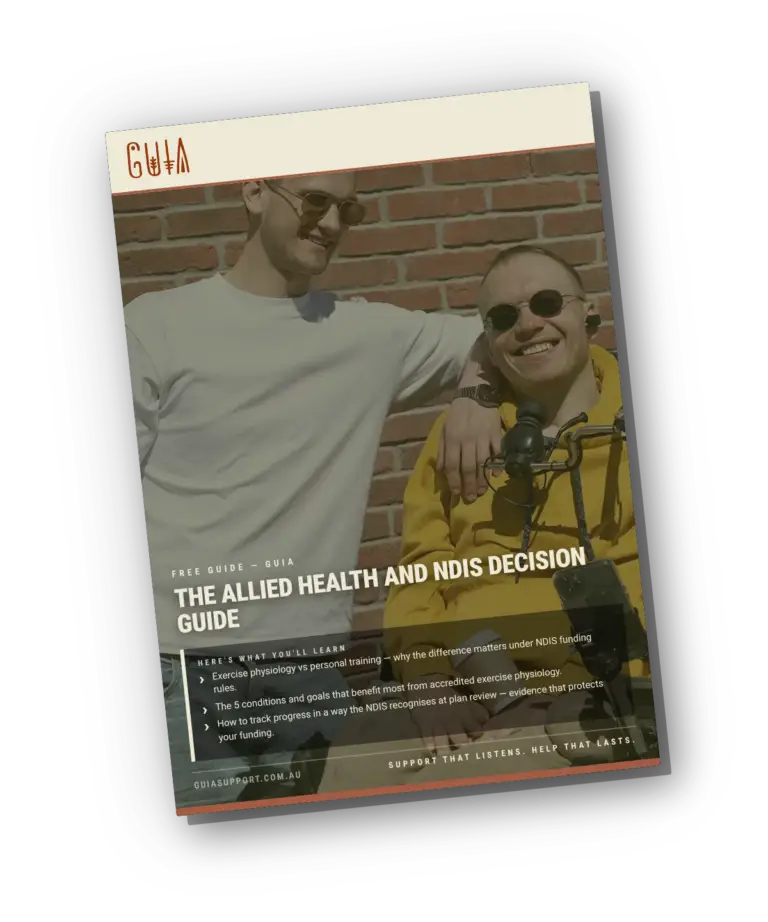
Here's What You'll Learn:
Exercise physiology vs personal training — why the difference matters under NDIS funding rules.
The 5 conditions and goals that benefit most from accredited exercise physiology.
How to track progress in a way the NDIS recognises at plan review — evidence that protects your funding.
ARE YOUR NDIS SUPPORTS WORKING FOR YOU?
GET A FREE NDIS PLAN MANAGEMENT REVIEW