


New NDIS plan: your first 30 days, in order
A new plan arrives and nothing tells you what to do first. Here is the order we work through with families in South West Sydney, and the two mistakes that cost the most.

ARE YOUR NDIS SUPPORTS WORKING FOR YOU?
GET A FREE NDIS PLAN MANAGEMENT REVIEW
Home Care Packages no longer exist. Support at Home replaced them, and the Short-Term Restorative Care Programme, on 1 November 2025. If you were already receiving a package before that, the important thing to know is that a no worse off principle applies to people who were receiving or approved for a Home Care Package on or before 12 September 2024. This page explains what changed, what that protection actually guarantees, and how aged care and the NDIS sit next to each other in a household. Aged care Bankstown is also, quietly, a local industry: residential aged care was the third largest single industry of employment for Bankstown residents at the 2021 Census.
Home Care Packages no longer exist. Support at Home replaced them, and the Short-Term Restorative Care Programme, on 1 November 2025. If you were already receiving a package before that, the important thing to know is that a no worse off principle applies to people who were receiving or approved for a Home Care Package on or before 12 September 2024. This page explains what changed, what that protection actually guarantees, and how aged care and the NDIS sit next to each other in a household. Aged care Bankstown is also, quietly, a local industry: residential aged care was the third largest single industry of employment for Bankstown residents at the 2021 Census.
Guia Is Trusted By NDIS Participants, Families And Support Coordinators
Imagine a life designed to empower you!



Support at Home commenced on 1 November 2025. It replaced the Home Care Packages Program and the Short-Term Restorative Care Programme. The Commonwealth Home Support Programme continues separately, and is not due to transition before 1 July 2027.
Two years of announcements preceded this and the date moved more than once, which is part of why families are still unsure what applies to them. The short version: if someone in your household had a Home Care Package, they are now in Support at Home. There was no need to reapply, and no gap.
What changed in shape is that Support at Home organises services differently, with a defined list of services and a schedule of contributions that varies by service type rather than a single package level. That is a real change for new entrants.
What did not change for a lot of Bankstown households is what actually happens on a Tuesday morning, which is a support worker arriving to help someone shower and get their day started. If a provider has told you that everything is different now and that you need to sign something new urgently, slow down and ask which part of the change requires it.
The reform is administered by the Department of Health, Disability and Ageing, and the participant-facing information sits on My Aged Care, which is also where assessments are arranged. Those two sites are the ones to check anything against, including anything on this page.
This is the most useful thing on this page, and it is published rather than reassuring. A no worse off principle applies to people who were receiving, or approved for, a Home Care Package on or before 12 September 2024.
If you previously paid an income-tested care fee, you will pay the same or less under Support at Home.
If you previously paid nothing, you will never be asked to pay contributions under Support at Home. Not a reduced amount. Nothing.
Your lifetime cap stays at the Home Care Package figure. As at 1 November 2025 that was $84,571.66, against a Support at Home cap of $135,318.69 for people who came in afterwards. These are indexed amounts, so check the current figures on My Aged Care rather than trusting a number on any web page, including this one.
The date that matters is 12 September 2024, not 1 November 2025. If someone in the household was approved on or before that date, the protection applies. If they were approved after it, they are under the Support at Home arrangements, and it is worth understanding the contribution schedule before agreeing to a service mix.
What the published material does not spell out is how the principle applies to people who were on the national priority system but not yet approved before that date. We have looked and cannot find that stated plainly. If that is your household, ask My Aged Care directly rather than accepting a provider interpretation, including ours.
A lot of Bankstown households are running both systems at once, usually because a parent is in aged care and an adult child is an NDIS participant, or because a participant is approaching 65. The rules at that boundary are worth knowing before they matter.
You must be younger than 65 on the day you apply for the NDIS. That is the published rule, and it is absolute. Someone who acquires a disability at 66 does not enter the NDIS; they go through the aged care system. For a household that has spent years learning how the NDIS works, that is a hard conversation, and it is better had early.
Turning 65 while already a participant is a different question, and the public eligibility page does not settle it. It sets out the rule for applying, not what happens to an existing participant at 65. If that is where your household is, ask the NDIA directly and get the answer in writing. We are not going to tell you what we think happens.
The two systems do not fund the same thing twice. Where a support could sit in either, one of them pays, and which one depends on why the support is needed rather than on who is providing it. This is where a support coordinator earns their fee, and where households without one most often end up with a gap.
The practical overlap is in the house. Grab rails, a level access shower, a ramp: whether they are funded as an NDIS home modification or through aged care depends on whose need they meet. In a multigenerational Bankstown household where an older parent and a participant live under one roof, that question is genuinely difficult and worth getting right before a builder is called.
Apartments change what is possible. Anything touching common property, the building entry, a lift lobby or a plumbing stack needs the owners corporation, not just the resident. A ramp at the front of the building is a strata decision on a strata calendar. Inside the lot is easier, but it still needs the owner consent if the home is rented.
Renting changes who signs. Half of Bankstown households rent, and a modification to a rented home needs written approval from the owner. The practical shortcut, which an occupational therapist can advise on, is often equipment rather than modification: a shower stool, a bath board, a raised toilet seat, a portable ramp. None of those need anyone permission.
A young median age means family are usually nearby. In a lot of Bankstown households the care is already happening, done by an adult child or a daughter-in-law, unpaid and unrecognised. Formal aged care in this setting is not there to replace the family. It is there to take the two or three tasks that are wearing them out, and to be reliable about it.
Lifts, stairs and the walk to the shops. An older person in a walk-up unit is one bad week away from not leaving the building. That is worth planning for before it happens, not after.
Aged care advice usually assumes a retired couple in a paid-off house. At the 2021 Census, 58.5 per cent of occupied dwellings in Bankstown were flats or apartments, 50.4 per cent were rented, and the median age was 34. This is not that suburb.
Apartments change what is possible. Anything touching common property, the building entry, a lift lobby or a plumbing stack needs the owners corporation, not just the resident. A ramp at the front of the building is a strata decision on a strata calendar. Inside the lot is easier, but it still needs the owner consent if the home is rented.
Renting changes who signs. Half of Bankstown households rent, and a modification to a rented home needs written approval from the owner. The practical shortcut, which an occupational therapist can advise on, is often equipment rather than modification: a shower stool, a bath board, a raised toilet seat, a portable ramp. None of those need anyone permission.
A young median age means family are usually nearby. In a lot of Bankstown households the care is already happening, done by an adult child or a daughter-in-law, unpaid and unrecognised. Formal aged care in this setting is not there to replace the family. It is there to take the two or three tasks that are wearing them out, and to be reliable about it.
Lifts, stairs and the walk to the shops. An older person in a walk-up unit is one bad week away from not leaving the building. That is worth planning for before it happens, not after.
At the 2021 Census the most common language spoken at home in Bankstown was Vietnamese at 20.3 per cent, then Arabic at 19.3 per cent, with English third at 18.0 per cent. An aged care assessment is a conversation, and a conversation the person cannot fully follow produces a plan that does not fit them.
The assessment decides what services someone is approved for. If it is conducted in English with an adult child interpreting on the spot, two predictable things go wrong. The person understates what they are struggling with, because saying it out loud in front of family is hard. And the family member answers as themselves rather than translating, because that is what anyone would do under pressure.
Ask for an interpreter when you book, through My Aged Care, not on the day. It is a normal request and it is free. Then let the family member be a family member during the assessment rather than the translator.
Two more practical points. Ask for the outcome in writing, so the household can read it properly afterwards rather than reconstructing it from memory. And be specific about food, prayer, washing and modesty, because these are the things that decide whether someone accepts a service at all, and they are much easier to arrange at the start than to renegotiate later.
This matters commercially too, and we will be blunt about it: a service that ignores how a household actually lives gets cancelled after three visits, and the person goes without. Getting this right is not a courtesy, it is the difference between care that continues and care that stops.
The single event that most often ends independent living is a fall, and the second is a hospital admission that goes on longer than expected. Both are more preventable than most families are told.
Physiotherapy aimed at balance, strength and safe transfers is the highest-return thing available, and it works best before there has been a fall rather than after one. Grab rails, better lighting, removing the rug everyone has tripped on, and a shower that does not require stepping over a bath edge do the rest. None of it is dramatic and all of it is cheaper than a hip.
Bankstown families should also know what is happening locally. The new Bankstown Hospital is in early works, with site fencing installed and demolition due to begin in mid 2026 on the former TAFE car park site on Chapel Road. Parking and access around the health precinct will be disrupted for years. If regular appointments are part of the routine, build the extra time in.
Transport matters more as people age. The T3 Bankstown line closed in September 2024 with free replacement buses in its place, and Sydney Metro Southwest is expected to open in the second half of 2026 with every converted station fully accessible: lifts to every platform, level access to the train, minimal gaps. For an older person who has stopped travelling because the interchange is too hard, that is a genuine change worth planning around.
What we will not tell you is when the new hospital opens or which services move when. That has not been published.
In most Bankstown households the aged care system arrives to find that someone is already doing the work, usually an adult child, usually unpaid, often while holding a job. That person is not assessed, not funded, and is generally the reason the arrangement is holding together.
Two things are worth saying to them directly. The first is that using formal services is not a failure or an abandonment. Bringing in help with the two or three heaviest tasks is what keeps the family able to keep doing the rest, for longer.
The second is that respite is not a luxury item to be justified. It is what prevents the crisis where a carer becomes unwell and two people need care instead of one. Ask about it at the assessment rather than waiting until it is urgent, because arranging it in a hurry rarely produces something anyone is comfortable with.
There is a practical Bankstown angle here too. Residential aged care was the third largest single industry of employment for Bankstown residents at the 2021 Census, at 2.5 per cent, behind hospitals and supermarkets. A lot of local families both work in this sector and use it. That cuts both ways: people here often know more about how care actually runs than a provider assumes, and they are harder to fob off. Providers should treat that as an asset rather than an inconvenience.
If a carer in the household has left work to provide care, employment support is worth a conversation for them as well. It is a separate system and it is free, and most people never think to ask.
Guia is a disability and community support provider working across south west Sydney, and a lot of the households we work in have an older person in them. What follows is what we actually do, stated so you can hold us to it.
We check your protections first. Whether someone was approved on or before 12 September 2024 changes what they can be asked to contribute. We establish that before any conversation about services, because it changes the whole picture.
We arrange the language. Interpreter at booking, outcome in writing, and family free to be family during an assessment rather than acting as translator.
We work around the family already doing the care. We take the tasks that are wearing people out rather than reorganising a household that is functioning.
We plan for the building, not just the person. Apartment, walk-up, rented, strata: it changes what is possible and what needs consent, and we work that out early.
We say when it is not us. If the honest answer is that My Aged Care or a specialist aged care provider is the right door, we will say so. See the NDIS Quality and Safeguards Commission for what to expect from any registered provider and how to complain about one.
You get the same people. Older people in particular pay a real price for a rotating roster, because trust is most of the service.
If any of that stops being true, tell us. It is easier to fix a small complaint than to replace a provider.
What aged care support in Bankstown gets you, in practical terms.
Support Coordination
If a household is running an NDIS plan and an aged care package at the same time, a coordinator is what stops the two systems duplicating each other or leaving a gap between them.
In-Home Daily Living
The daily work is the same whichever system funds it: getting up, washing, dressing, meals and medication prompts, delivered by people the household knows.
Employment Support
Carers are often the ones who have left work. Employment support is worth knowing about for the family member as well as the participant.
Allied Health
Occupational therapy and physiotherapy do more to prevent a fall than anything else available, and a fall is what most often ends independent living.
Home Modifications
Grab rails, a level access shower and lever taps keep people at home for years. In a rented Bankstown apartment they need the owner written consent first.
Community Access
Isolation does as much damage as anything physical. Getting out of the house on a regular schedule is a health intervention, not a nice extra.
What aged care support in Bankstown gets you, in practical terms.
The 12 September 2024 question answered before anyone asks you to pay anything.
Interpreter arranged at booking, outcome in writing, and food, prayer and modesty covered.
Balance and transfer work, rails, lighting, and a shower that does not need stepping over.
Modifications or equipment, whichever your tenancy and your building actually allow.
Respite raised at the assessment rather than arranged in a hurry during a crisis.
Aged care and an NDIS plan in one household, coordinated so neither leaves a hole.
Six reasons Bankstown families stay with us, none of which are awards.
The NDIS Family Decision Guide
What to ask before you agree to an aged care service in Bankstown.
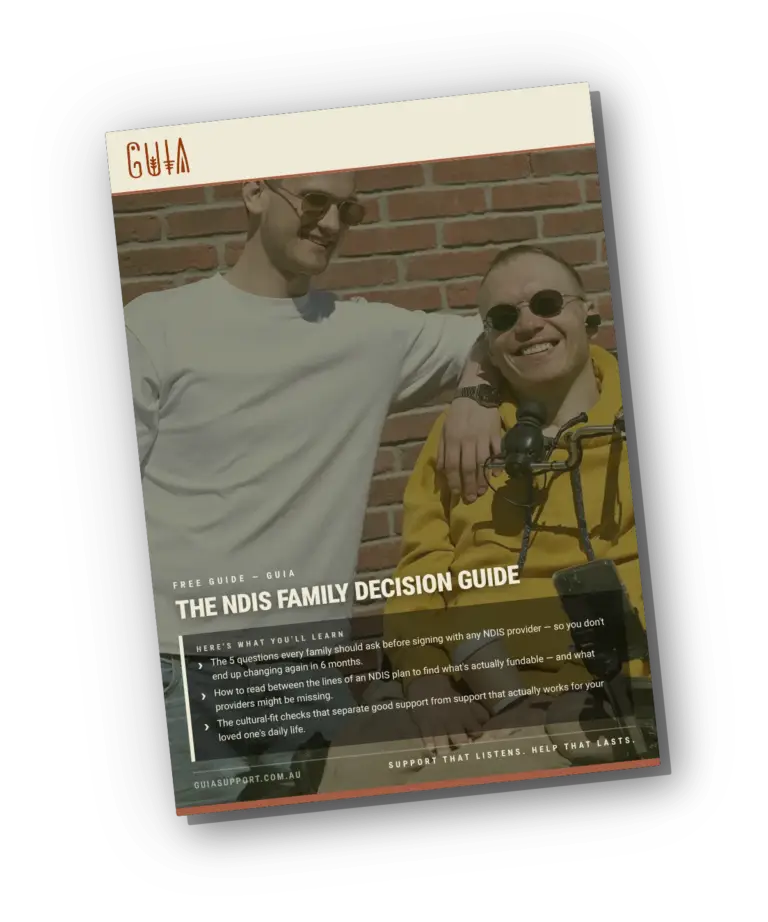
Here's What You'll Learn:
The date that decides what you can be asked to pay
What to ask for before an assessment, not after
When equipment beats a modification in a rental
Finance Manager
Operations Manager
Community Outreach Coordinator
They ended. Support at Home commenced on 1 November 2025 and replaced both the Home Care Packages Program and the Short-Term Restorative Care Programme. Nobody had to reapply and there was no gap in service. The Commonwealth Home Support Programme is separate and is not due to transition before 1 July 2027. If a provider has told you that you must sign something new urgently because of the change, slow down and ask which part of the change requires it.
Not if the no worse off principle applies to you. It covers people who were receiving, or approved for, a Home Care Package on or before 12 September 2024. If you previously paid an income-tested care fee you will pay the same or less. If you previously paid nothing, you will never be asked to pay contributions under Support at Home. The date that matters is 12 September 2024, not the 1 November 2025 start date.
People covered by the no worse off principle keep the Home Care Package lifetime cap rather than the Support at Home one. As at 1 November 2025 those figures were $84,571.66 and $135,318.69 respectively. Both are indexed, so check the current amounts on My Aged Care rather than relying on a number published on any provider website, including this one.
We do not know, and we are not going to guess. The published material sets out the principle for people receiving or approved for a package on or before 12 September 2024, and it does not clearly address people who were on the national priority system without approval by that date. Ask My Aged Care directly and get the answer in writing, rather than accepting any provider interpretation.
No. You must be younger than 65 on the day you make an NDIS application. Someone who acquires a disability at 66 goes through the aged care system rather than the NDIS. If you are an existing NDIS participant approaching 65, that is a different question and the public eligibility page does not settle it, so ask the NDIA directly and get the answer in writing.
Often yes, with more approvals. In Bankstown 58.5 per cent of dwellings are flats or apartments and 50.4 per cent are rented, so this is the usual case. Work inside the lot needs the owner written consent if the home is rented; anything touching common property, the entry, a lift lobby or a plumbing stack needs the owners corporation as well. Equipment such as a shower stool, bath board, raised toilet seat or portable ramp needs no permission at all and often achieves most of the same outcome.
Ask, because in this suburb it is a reasonable request. Vietnamese was the most common language spoken at home in Bankstown at the 2021 Census at 20.3 per cent, followed by Arabic at 19.3 per cent, with English third at 18.0 per cent. Separately, ask for an interpreter for the assessment itself when you book through My Aged Care rather than on the day, and let the family member be family during the appointment instead of translating.
More than most families are told. Physiotherapy aimed at balance, strength and safe transfers is the highest-return support available, and it works best before a fall rather than after one. Then the unglamorous things: grab rails, better lighting, removing the rug everyone trips on, and a shower that does not require stepping over a bath edge. A fall is the event that most often ends independent living, and almost all of the prevention is cheap.
Yes, and it is worth asking at the assessment rather than when you are exhausted. Respite is not a luxury to be justified; it prevents the situation where a carer becomes unwell and two people need care instead of one. If you have left work to provide care, employment support is a separate and free system worth a conversation of its own. In this suburb a lot of families both work in aged care and use it, and they usually know more about how it runs than providers assume.
Start with two facts: whether the person was receiving or approved for a Home Care Package on or before 12 September 2024, and whether the home is owned, rented or in strata. Those two answers determine most of what follows. Assessments are arranged through My Aged Care. If the right door is a specialist aged care provider rather than us, we will tell you. Call 0478 905 550 or book a free discovery call.
Reach out for a non-obligation NDIS Plan Management Assessment
We also provide this support in the nearby suburbs below, or see Aged Care Support South West Sydney for the full service area.
A new plan arrives and nothing tells you what to do first. Here is the order we work through with families in South West Sydney, and the two mistakes that cost the most.
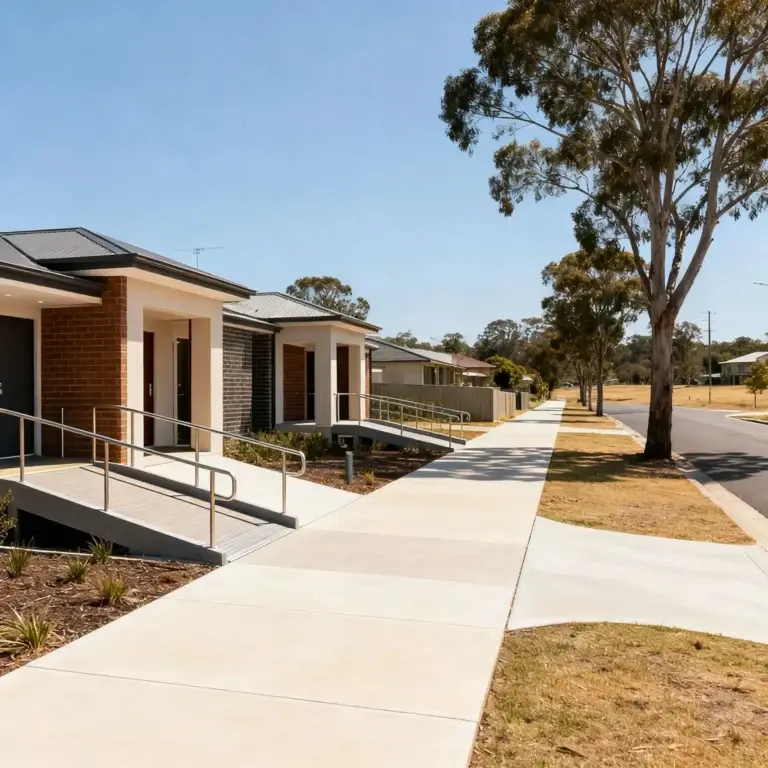
Aged care at home South West Sydney from Guia. Reliable support workers who show up consistently and become part of your family’s everyday routine.

NDIS allied health support sydney from Guia. Reliable support workers who show up consistently and become part of your family’s circle. Peace of mind fo…