


New NDIS plan: your first 30 days, in order
A new plan arrives and nothing tells you what to do first. Here is the order we work through with families in South West Sydney, and the two mistakes that cost the most.


Multilingual aged care in South West Sydney means matching your older family member with support workers who speak their language and understand their cultural background. When someone’s spent a lifetime speaking Arabic at home, or Spanish with their community, asking them to navigate personal care in English alone strips away dignity and creates barriers to honest conversation about what they actually need. This is where consistency matters most—the same trusted worker showing up week after week builds the relationship where your mum or dad feels safe asking for help.
The mechanism is straightforward: when a support worker shares your family member’s language, they communicate directly without translation delays or misunderstandings about preferences, routines, and health concerns. Our team includes Spanish-speaking and Arabic-speaking support workers across South West Sydney. This means we can match someone who speaks your language with someone trained in aged care support under NDIS—National Disability Insurance Scheme frameworks. The worker isn’t learning your family member’s needs through an interpreter; they’re building real rapport from the first visit.
Here’s what that looks like in practice: your parent has the same support worker on Tuesday and Friday mornings, someone they can joke with in their own language, someone who remembers how they like their tea and which tasks matter most to them that week. That consistency—the same face, the same trust—is what transforms support from a task list into a relationship. It’s the difference between feeling managed and feeling genuinely cared for.
Multilingual aged care in South West Sydney means finding support workers who speak your language and understand your family’s way of doing things. If your mum or dad needs help at home but speaks Arabic, Spanish, or another language at home, that cultural fit matters more than most providers admit.
Here’s what we hear from families: you’re worried the support worker won’t show up consistently, won’t understand what your parent actually needs, or won’t treat them with the dignity they deserve. You’re also navigating My Aged Care paperwork, trying to work out what’s covered, and wondering if the provider you choose will actually listen to what your family values.
The truth is, aged care support at home isn’t one-size-fits-all; your parent might need help with personal care three mornings a week. They might need someone to help with household tasks, prepare meals, or just sit with them for an hour so you can run errands. Some older Australians need all of that, plus someone who speaks their language and knows their routines inside out.
What matters most is consistency and trust. When a support worker arrives every Tuesday at 10 am, knows your parent’s preferences, and treats them as a capable adult—not someone to be managed—everything else becomes easier. Your parent feels safer. You feel less stretched. The support actually works because it’s built on respect and reliability, not just ticking boxes.
If you’re looking for multilingual aged care support that takes cultural fit seriously and shows up the same way every time, it’s worth exploring what’s available in your area. The right provider makes a real difference to how your parent’s week unfolds and how you feel about the care they’re receiving.
When your parent or older family member starts to lose words in their first language, or struggles to follow conversations they once led, it changes how you both feel at home. A multilingual aged care provider understands this isn’t just about translation—it’s about keeping your family member’s identity and dignity intact during a time when so much else feels uncertain.
Here’s what that looks like in practice. Tuesday afternoon, 2 pm. A Spanish-speaking support worker arrives for a two-hour visit; your mum has had a quiet morning, and she’s restless. The support worker sits with her at the kitchen table, not rushing. They talk through what needs doing—the dishes, a load of washing, tidying the lounge—but they do it in Spanish, the language your mum thinks in, the one that still feels like home. Your mum’s shoulders drop. She’s not struggling to understand. She’s not nodding along, pretending.
While they work, the support worker notices small things. Your mum repeats a question three times. The support worker answers it the same way, three times, without frustration or correction. She notices your mum’s hands shake when she reaches for a cup, so she steadies it—not taking over, just steadying. She notices your mum lights up when talking about her grandchildren, so she asks about them again next week, and writes it down so the next visit picks up where this one ended.
Before leaving, the support worker leaves a simple note on the fridge—in Spanish—about what you’ll find in the fridge for dinner, and that she’ll be back next Tuesday at 2 pm. Routine. Reliability. Language that feels safe. This is multilingual aged care that actually works: someone who shows up, speaks your family member’s language, and treats them as the capable adult they still are, even when words are harder to find.
If this sounds like the kind of support you’re after, enquire about support with Guia. We match support workers with care and attention to language, culture, and the small routines that make home feel like home.
Many families think Support at Home under My Aged Care means a provider will simply show up and do whatever tasks need doing that day. In reality, aged care support is built around a plan — one that reflects your older family member’s goals, routines, and the specific help they actually need to stay well and independent at home.
The misconception often comes from thinking of aged care support as reactive — a quick fix when things get urgent. But good support is planned and consistent. It might be Tuesday and Thursday mornings for personal care and light housekeeping. Or a regular Wednesday visit for companionship and help with shopping. The structure matters because it builds trust and lets your family member know exactly when their support worker will arrive.
Here’s what that looks like in practice: if your parent speaks Arabic at home and prefers to communicate in their own language, a multilingual aged care provider matches them with a support worker who speaks Arabic fluently. That’s not a luxury — it’s dignity. It means they can explain what they need without struggling, and their support worker understands their routines and preferences without constant translation. In South West Sydney, where many older Australians speak languages other than English at home, this fit is essential.
Support at Home also isn’t one-size-fits-all. Some older people need help with personal care and mobility. Others need domestic assistance and meal preparation. Some need companionship and help staying connected to their community. Your family member’s plan reflects what matters most to them — and that plan can change as their needs shift.
When you’re ready to explore what Support at Home could look like for your parent or older relative, we’re here to walk through it with you — no pressure, no jargon. Enquire about support and let’s talk about what actually fits your family’s situation.
Many older Australians have religious practices or faith observances that matter deeply to their daily life and wellbeing. Support at Home (Aged Care) through Guia includes help that respects and supports those practices—whether that’s attending worship services, observing prayer times, or maintaining rituals that connect you to your faith community.
Here’s what that looks like in practice. A support worker might help with transport to a mosque, church, synagogue, or temple on days that matter to you. They might assist with preparing for religious observances, help you stay connected to faith leaders or community members, or simply be present while you observe personal prayer or reflection time at home. If you speak Arabic, Spanish, or need Auslan interpretation, our multilingual aged care team can match you with a support worker who understands both your language and your faith context.
This matters because faith isn’t separate from daily life—it’s woven through it. When a support worker respects your religious practices, the support feels less like a service and more like genuine care. You stay connected to what grounds you, and your family can rest easier knowing that part of is being honoured.
Support at Home (Aged Care) does NOT include spiritual counselling, religious instruction, or any form of faith-based therapy. Those sit outside aged care support. What we do is create the practical conditions—transport, time, presence, cultural understanding—that let you live your faith as you choose.
If you’re exploring whether this kind of support fits your situation, start a conversation with us. We’ll listen to what matters most to you and your family, and work out what genuine support actually looks like. When you’re ready, enquire about support and let’s talk through your needs.
Support at Home (Aged Care) funding sits within the NDIS framework, but works differently than disability support. Your older family member’s plan will allocate funding to specific support categories based on their assessed needs—personal care, domestic assistance, companionship, or wellbeing activities. The amount and type of support reflects what they’ve told assessors they need day-to-day, not what you think they should have.
Here’s what that looks like in practice. If your mum needs help with showering and breakfast three mornings a week, that’s personal care funding. If she needs someone to help with groceries and light housework on Thursdays, that’s domestic assistance. If she’d benefit from a regular outing or someone to sit with her while she gardens, that’s wellbeing support. Each category has its own budget line in her plan.
You choose which provider delivers that support and how often. That choice and control is yours—not the NDIS, not the aged care system. If a support worker isn’t reliable, doesn’t speak your family’s language, or doesn’t feel like a good fit, you can change providers. That flexibility matters when you’re looking for someone who’ll show up consistently and treat your family member with dignity.
Funding doesn’t cover everything. Medical care, allied health, or ongoing medication management sit outside aged care support. But personal care, domestic help, and social participation—the day-to-day things that keep your family member safe, connected, and independent at home—are what this funding is designed for.
If you’re unsure whether your family member’s plan includes aged care support, or what categories apply to them, that’s a conversation worth having with their support coordinator or with us. We can walk through what’s in the plan and what support actually looks like in your home. When you’re ready, enquire about support and we’ll help clarify the next step.
When your older Arabic-speaking family member needs multilingual aged care support, it helps to know exactly what you’re choosing—and what stays in your hands. Here’s the clarity you need.
Support at Home (Aged Care) is built around what you decide. You choose the provider. You set how often support visits happen—whether that’s twice a week or five days a week. You pick the support worker, and we’ll match someone who speaks Arabic if that matters to your family. You control the schedule: morning help with breakfast, afternoon companionship, or evening personal care. You decide what tasks the support covers: personal care, domestic help, meal prep, or just being present for conversation and connection. That control stays with you throughout.
What sits outside this support is equally important to name clearly. We don’t provide clinical or medical care—if your family member needs wound dressing, medication management, or health monitoring, that’s a GP or nurse role. We don’t manage your My Aged Care plan or make decisions with the aged care assessor—you and your family do that. We don’t decide what funding you’re eligible for or how much your plan includes. Those decisions live with you, your family, and the My Aged Care team.
Here’s what that means in practice: you’re in the driver’s seat. We’re here to show up reliably, treat your family member with dignity, and do the support work you’ve chosen. The bigger decisions—about care direction, funding, clinical needs—those belong to you.
If you’re ready to explore what multilingual aged care support could look like for your family, we’re here to answer your questions without pressure. Enquire about support and let’s talk through what matters most to you.
Support at Home (Aged Care) is right for you if your parent or older family member needs help with daily tasks at home. This might mean personal care, household assistance, companionship, or a mix of all three. The key signal is: they want to stay at home, and they need reliable hands-on help to do that safely and with dignity.
Look for these practical situations. Your mum or dad struggles with showering, dressing, or toileting some days but not others—and you can’t always be there to help. A support worker visiting twice a week, or three times a week, fills that gap without moving them into residential care. That’s Support at Home in practice.
Another common signal: household tasks pile up faster than your parent can manage them. Laundry, vacuuming, meal prep, shopping. They’re not frail, but they’re tired. A support worker handling domestic assistance means they keep their energy for the things that matter to them—gardening, seeing grandchildren, hobbies. It’s about quality of life, not just survival.
If your parent speaks Arabic, Spanish, or needs Auslan support, multilingual aged care becomes essential. A support worker who shares their language or communication style isn’t a luxury—it’s dignity and safety. Guia’s multilingual team across South West Sydney means you’re not hunting for a match; we can build it into the plan from the start.
It’s worth knowing that many older Australians already have Support at Home in their My Aged Care plan. If your parent does, you don’t need to wait for a review. We can start conversations now about what that support could look like and whether a change of provider makes sense for your family. When you’re ready to explore what fits, contact us to discuss how we match support workers and build reliability into every visit.
A deaf older Australian living in South West Sydney relies on Auslan as their primary language. When their My Aged Care plan was approved, finding a provider who could communicate clearly—and consistently—felt impossible. Most aged care support workers aren’t trained in Auslan. Miscommunication about medication times, appointments, or preferences isn’t just frustrating. It puts dignity and safety at risk.
Guia matched them with a support worker trained in Auslan who visits three times a week. The worker helps with personal care, meal preparation, and household tasks—but the real difference is conversation. No guessing. No writing things down on notepads. Just clear, respectful communication in the language that feels natural. The participant chose the days and times that suited their routine, and the same worker shows up reliably each visit.
Over time, the support worker became someone the participant looked forward to seeing. They’d chat about what was happening in the neighbourhood, help sort through paperwork together, and organise a weekly outing to the local shops. The participant felt more in control of their day-to-day life. Their family, who’d been worried about finding culturally and linguistically matched care, could finally relax knowing their mum or dad was being supported by someone who truly understood them.
This is what multilingual aged care looks like in practice. Not a service. A real person, matched thoughtfully, showing up with the communication skills and respect that older deaf Australians deserve. If you’re looking for aged care support that honours your family member’s language and culture, we’re here to help. Reach out and tell us what matters most.
Support at Home (Aged Care) is funded through My Aged Care, not the NDIS. The way your funding is calculated depends on your assessed care needs and the support categories you’re eligible for. Understanding how this works helps you plan what support you can actually access and when.
My Aged Care assessments look at your daily living needs—things like personal care, domestic help, and companionship. Based on that assessment, you’ll receive a care package with a set budget. The amount isn’t fixed across all older Australians; it reflects your individual circumstances and the level of support you need at home. A support provider like Guia works within that budget to deliver the hours and types of support that matter most to you.
Support workers’ time is costed according to the care category and the complexity of the task. Personal care (showering, dressing, toileting) is typically funded differently from domestic assistance (cleaning, laundry, meal prep) or companionship and social support. When you meet with a provider, they’ll explain how your specific budget breaks down across these categories so you know exactly what you can access each week.
What we hear from families is that clarity matters. You need to know whether your budget covers a two-hour weekly visit, or whether you’ll need to contribute additional funding for extra hours. Guia works with you to map out a support plan that fits your approved budget and your actual needs. If there’s a gap between what you need and what your package covers, we’ll be honest about that upfront rather than leaving you surprised later.
When you’re ready to explore what Support at Home can look like for you, contact us to discuss your circumstances and how your funding might work in practice.
When you call Guia, you’re speaking to someone who understands aged care in South West Sydney. Your first conversation is a quick chat—usually 10 to 15 minutes—where we listen to what your mum, dad, or older family member actually needs day-to-day. Personal care, help around the house, companionship, transport to appointments—we ask the questions that matter, not a checklist.
After that call, we match you with a support worker who fits. If your family speaks Arabic, Spanish, or English at home, we find someone who speaks it too. If routines and consistency matter—and they usually do—we respect that. This isn’t random assignment. It’s a deliberate choice to set both of you up for a relationship that works.
Before the first visit, you’ll meet the team. We walk through what support looks like in practice: the days, the times, what happens during each visit, and how we stay in touch if anything changes. You get to ask questions and say no if it doesn’t feel right. Control stays with you.
The first visit itself is a get-to-know-you session. Your support worker arrives on time, introduces themselves properly, and spends time understanding your family member’s preferences—how they like their tea, what time they prefer to shower, who they like to chat with. We’re building a relationship, not ticking boxes.
Most families tell us they notice the difference in the first week: someone who shows up reliably, remembers details, and treats their mum or dad with genuine respect. That’s what multilingual aged care means to us—support that fits your family’s language, culture, and values. When you’re ready to explore what that looks like for your situation, enquire about support and we’ll take it from there.
Choosing the right support provider means asking the right questions upfront. A good provider will answer clearly and honestly, showing they’ve thought through the details that matter to your family member’s daily life.
Consistency, reliability, and genuine care matter most. At Guia, we match support workers thoughtfully, show up on time every visit, and speak Arabic, Spanish, and English across our South West Sydney team. When you’re ready to explore support that fits your family’s needs, enquire about support.
When you’re looking for multilingual aged care support at home, knowing what to watch for helps you spot a provider who won’t deliver the consistency and respect your family member deserves. Poor fit shows itself early—in how they respond to your calls, how often workers change, and whether they actually listen to what matters to you.
Guia works differently. We match support workers based on language, cultural fit, and your family member’s actual preferences—not just availability. Our team stays with participants long-term, and we’re transparent about screening and qualifications. When you’re ready to explore multilingual aged care that feels like a genuine partnership, enquire about support.
The best sign that multilingual aged care support is working is consistency. Your parent or relative sees the same support worker week after week, who knows their routines, their preferences, and how they like things done. That worker shows up on time, every time. They remember that your mum prefers her tea made a certain way, or that your dad needs extra time in the morning. Trust builds quietly, over weeks and months.
Communication flows both ways. The support worker checks in with you regularly—not just when something goes wrong, but to share what’s working. They tell you about a Tuesday afternoon walk your mum enjoyed, or ask if you’ve noticed any changes they should know about. You feel like part of the team, not kept in the dark. If your family speaks Arabic, Spanish, or another language at home, the worker speaks it too, so conversations feel natural and nothing gets lost in translation.
Your relative’s priorities drive what happens, not the provider’s schedule. If they want to spend time on hobbies, community outings, or simply sitting with family, that’s what the support focuses on. You notice them more engaged, more like themselves. They’re making choices about their day rather than fitting into someone else’s plan. That sense of control matters deeply to older Australians navigating changes in their independence.
Finally, watch for the small dignity markers. The support worker respects your relative’s home as theirs. They knock before entering a room. They ask permission before helping with personal care. They treat your parent as a capable adult, not as a task to complete. When you see that respect reflected in how they interact, you know the support is built on genuine care, not just service delivery.
If these signs resonate with what you’re hoping for, Guia can help. Enquire about support and we’ll talk through what good aged care support looks like for your family.
You have real options if multilingual aged care support from your current provider isn’t working the way you need it to. Choice and control don’t end once you’ve signed up — they’re built into how the system is meant to function. If something isn’t right, you can act.
Start with your provider directly. Most issues resolve fastest when you speak to the support worker or their supervisor about what’s not working. Be specific: “The support worker arrives late on Thursdays” or “We need someone who speaks Arabic, not just English” gives them something concrete to fix. A good provider will listen and adjust.
If feedback to your provider doesn’t lead to change, ask to speak with their manager. You can request a different support worker, a different visit time, or a different approach to how support is delivered. This is your right, not a favour you’re asking for.
If the relationship with your current provider has broken down, you can switch to a different NDIS-registered provider. Your support coordinator or My Aged Care can help you explore other options in South West Sydney. There’s no penalty for changing providers — your plan stays yours.
For serious concerns — safety issues, missed visits, or a provider who isn’t following NDIS rules — you can lodge a formal complaint with the NDIS Quality and Safeguards Commission. They investigate complaints and can take action if a provider has breached the NDIS Code of Conduct. This is a real safeguard, and it exists because your wellbeing matters.
You’re not locked in. If you’d like to explore what better support might look like, or if you want to talk through your options, get in touch. We’re here to help.
Finding the right support at home starts with a conversation that fits your family’s actual needs—not a sales pitch. If you’re exploring multilingual aged care options in South West Sydney, the first step is to talk through what matters most: consistency, cultural fit, the specific help your parent or relative needs, and whether a provider truly understands your household.
What we hear from families is that trust builds slowly. You need to know the same support worker will show up on Tuesday afternoon, speak your language at home, and treat your mum or dad with genuine dignity. That takes time to assess. There’s no rush to decide today.
Here’s what that looks like in practice: a short conversation where you describe your situation—the hours you need, the languages spoken at home, any particular routines or preferences—and we listen. No pressure. No paperwork yet. Just clarity about whether Guia’s approach to multilingual aged care matches what you’re after. We’ve been supporting older Australians across South West Sydney for two years, and we’re NDIS-registered with all staff qualified and worker-screened.
When you’re ready, enquire about support and let us know a bit about your situation. We’ll arrange a time to chat—by phone, video, or in person—whatever suits you best. If it’s the right fit, we’ll walk you through how it works. If it’s not, we’ll be honest about that too.
Your parent or relative deserves support that feels like part of the family, not a transaction. Take the time you need to find that. We’re here whenever you decide to explore further.
A new plan arrives and nothing tells you what to do first. Here is the order we work through with families in South West Sydney, and the two mistakes that cost the most.

Aged care at home South West Sydney from Guia. Reliable support workers who show up consistently and become part of your family’s everyday routine.

NDIS allied health support sydney from Guia. Reliable support workers who show up consistently and become part of your family’s circle. Peace of mind fo…
The My Aged Care Home Support Guide
How to access Australian Government funded home care for an older family member — without losing months to waitlists or guessing at packages.
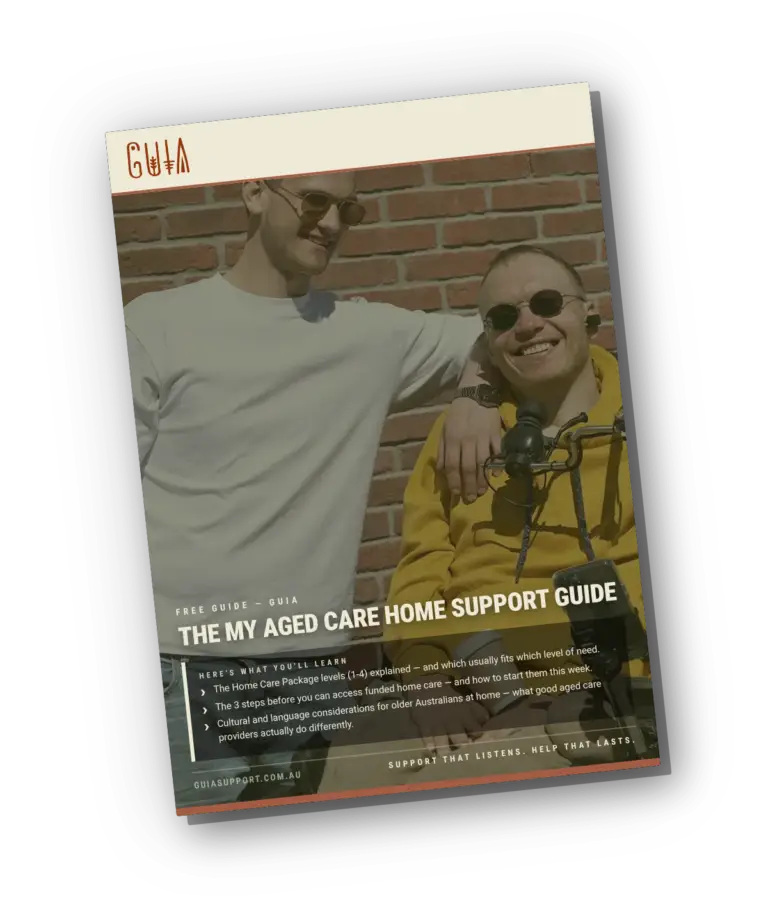
Here's What You'll Learn:
The Home Care Package levels (1-4) explained — and which usually fits which level of need.
The 3 steps before you can access funded home care — and how to start them this week.
Cultural and language considerations for older Australians at home — what good aged care providers actually do differently.
ARE YOUR NDIS SUPPORTS WORKING FOR YOU?
GET A FREE NDIS PLAN MANAGEMENT REVIEW