
NDIS support for Physical Disability South West Sydney
NDIS support for Physical Disability South West Sydney
Reliable NDIS support for physical disability South West Sydney you can trust
NDIS support for Physical Disability South West Sydney
NDIS support for Physical Disability South West Sydney
Reliable NDIS support for physical disability South West Sydney you can trust
ARE YOUR NDIS SUPPORTS WORKING FOR YOU?
GET A FREE NDIS PLAN MANAGEMENT REVIEW
NDIS support for Physical Disability South West Sydney looks different for everyone — because your mobility, strength, or physical needs are unique to you. Whether you’re navigating a recent diagnosis, managing a long-term condition, or supporting a family member through physical changes, the right support means staying independent, connected, and in control of your own decisions. That’s what this page is about: real support that meets you where you are, not where someone else thinks you should be.
We’ve put together a guide to what NDIS support can look like for people with physical disability in South West Sydney — from home modifications and mobility equipment through to daily living assistance and community access. You’ll find information on how to match your needs with the right support, what to expect when you’re ready to start, and how to make decisions that work for your life and your family’s peace of mind. Our team is NDIS-registered, multilingual in English, Spanish, and Arabic, and we’ve been supporting participants across Cumberland and Canterbury since 2022. When you’re ready to explore what’s possible, the NDIS official site has the detail on eligibility and plans — and we’re here to help you make sense of it all.
NDIS support for Physical Disability South West Sydney looks different for everyone — because your mobility, strength, or physical needs are unique to you. Whether you’re navigating a recent diagnosis, managing a long-term condition, or supporting a family member through physical changes, the right support means staying independent, connected, and in control of your own decisions. That’s what this page is about: real support that meets you where you are, not where someone else thinks you should be.
We’ve put together a guide to what NDIS support can look like for people with physical disability in South West Sydney — from home modifications and mobility equipment through to daily living assistance and community access. You’ll find information on how to match your needs with the right support, what to expect when you’re ready to start, and how to make decisions that work for your life and your family’s peace of mind. Our team is NDIS-registered, multilingual in English, Spanish, and Arabic, and we’ve been supporting participants across Cumberland and Canterbury since 2022. When you’re ready to explore what’s possible, the NDIS official site has the detail on eligibility and plans — and we’re here to help you make sense of it all.
The NDIS Family Decision Guide
Helping Australian families make confident NDIS decisions for the person they care about — without the jargon, the runaround, or the regret.
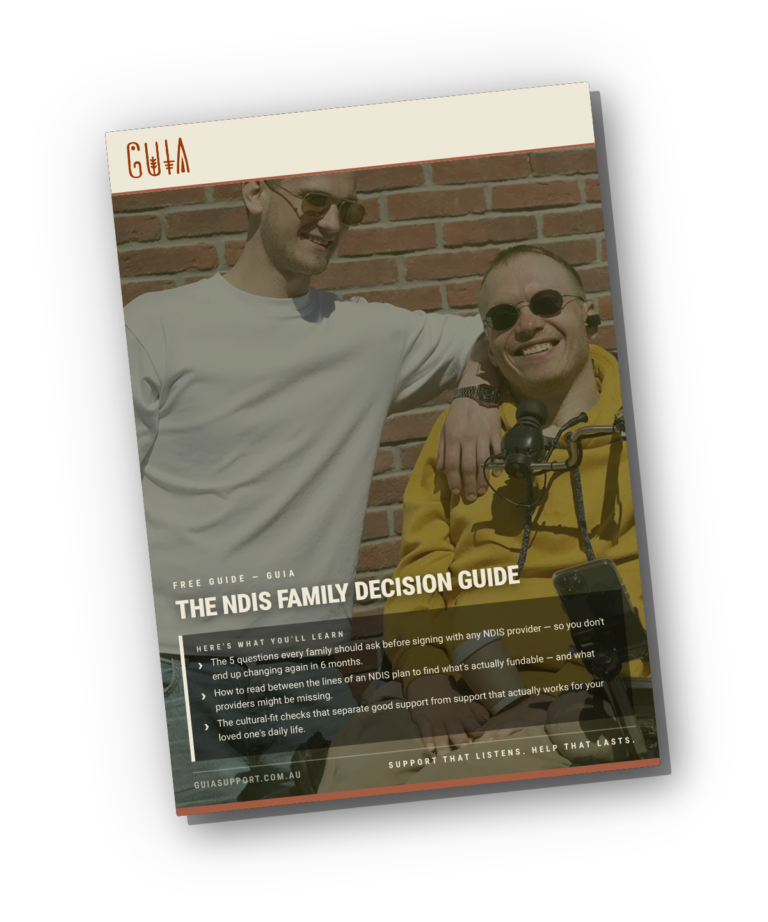
Here's What You'll Learn:
The 5 questions every family should ask before signing with any NDIS provider — so you don't end up changing again in 6 months.
How to read between the lines of an NDIS plan to find what's actually fundable — and what providers might be missing.
The cultural-fit checks that separate good support from support that actually works for your loved one's daily life.
NDIS support for physical disability in South West Sydney
Physical disability support means different things depending on who you are. If you’re the person living with a spinal cord injury, cerebral palsy, or mobility changes, you need support workers who understand how to help you safely without taking over decisions that are yours to make. If you’re the family member, you’re thinking about consistency, training, and whether the people coming into your home actually know what they’re doing.
When both of those needs are met at the same time—when your support worker is trained in safe transfers and manual handling, and when you as the participant still get to direct how your day runs—that’s when real independence starts to build. You’re not managed. You’re supported. And your family can step back knowing the continuity is solid.
Read More - See what consistent support actually feels like
Physical disability means different things for different people. For some, it affects mobility or strength. For others, it shapes how your body manages pain, coordination, or stamina. What matters most is this: support should treat you as the expert on your own body and your own life. When you’re looking for NDIS support for physical disability, you’re not looking for someone to manage you. You’re looking for someone trained, reliable, and respectful enough to work alongside you—and for your family, you’re looking for consistency and safeguards that let your loved one stay in control. The NDIS — National Disability Insurance Scheme funds support that can make this possible.
Safe, skilled transfers and manual handling are foundational. Here’s what that means in practice: a support worker who knows how to move with your body, not against it. They’ve been trained in the mechanics of your specific needs—whether that’s helping you transfer from bed to chair, supporting you during personal care, or assisting with mobility around your home. When a support worker has this training, the everyday moments become safer and more dignified. You’re not worried about injury. Your family isn’t anxious about technique. What changes is the confidence in the room.
Bodily autonomy isn’t a buzzword in good support—it’s the baseline. It means you direct what happens to your body and when. A support worker asks before they help. They listen when you say “that angle doesn’t work for me” or “I need a moment. ” They don’t rush personal care routines or make decisions about your day without check-ing in first. This matters because it’s the difference between feeling supported and feeling managed. Your family sees this too: when a support worker respects your choices, they’re not gatekeeping your independence—they’re protecting it.
Skilled mobility support and personal care go hand in hand with understanding your routine and your preferences. Some people need support with daily living tasks—showering, dressing, meal prep; others need help navigating the community or managing fatigue. The right fit means a support worker who learns what matters to you and shows up consistently. Guia matches participants with support workers trained in high-intensity personal care and daily living assistance. We’re NDIS-registered and all staff are qualified and worker-screened, which means your family knows there’s a system behind the person showing up at your door. Over time, NDIS — Home Modifications and NDIS — Daily Living Supports compound naturally alongside Physical Disability — together they build the daily rhythm and outward connections that make real independence stick.
When you’re ready to explore what good support actually looks like, the conversation starts with your situation—not. We listen to what you need as a participant and what your family needs as well. There’s no pressure, no assumptions. Just a straightforward conversation about what would change if the right support was in place.
What good support looks like for you
Physical disability often means your body needs different kinds of support to do everyday things safely. Whether you need help with transfers, personal care, mobility equipment, or moving around your home, the right support worker makes all the difference—someone trained, reliable, and present.
When you have that consistency, you stay in control of your own decisions. Your family feels confident you’re safe and supported without becoming the manager of every detail. That’s when real independence starts to feel possible again.
Read More - Come talk through what could work for you and your family
Physical disability brings real, practical challenges—moving through your home safely, managing personal care with dignity, staying mobile in the community. If you’re navigating this yourself, you need support that respects your decisions and your body. If you’re supporting a family member, you need consistency, trained hands, and confidence that their independence is being built, not managed. NDIS — National Disability Insurance Scheme funding can cover in-home support, mobility equipment, and exercise physiology tailored to what actually matters in your daily life.
What shifts when support is done well: You’re not waiting for help—you’re directing it. Your family member isn’t a project being managed; they’re a person whose body and choices are treated with respect. A support worker trained in safe transfers and manual handling isn’t just preventing injury; they’re enabling you to shower, dress, and move without fear. That changes everything about how you feel in your own home.
The mechanism is straightforward. Physical disability support works best when the support worker understands your specific needs—your mobility range, your pain points, what transfers feel safe to you, what routines matter. They show up consistently, on time, trained in the techniques that protect your body. Over time, you build confidence in the support itself, which means you can focus on what you actually want to do, not on managing the logistics of getting help.
Here’s what that looks like in practice. You might start with two or three visits a week for personal care and daily living tasks—showering, dressing, preparing meals. A support worker who understands your body and your preferences means these tasks happen with dignity and safety. Over time, you might add mobility support for community outings, or exercise physiology to build strength and flexibility. Many participants also benefit from home modifications or personal mobility equipment—ramps, grab rails, wheelchairs—that reduce the physical demand on both you and your support worker. Over time, NDIS — Home Modifications and NDIS — Daily Living Supports compound naturally alongside Physical Disability — together they build the daily rhythm and outward connections that make real independence stick.
What happens when physical support needs go unmet
Physical disability often means the difference between staying safe at home and avoiding the activities you want to do. When transfers, mobility, or daily movement feel risky—whether you’re managing pain, recovering from injury, or navigating a progressive condition—the support that makes independence possible has to be specific, trained, and there when you need it. That’s not assistance. That’s someone who understands your body, your home, and what safe looks like for you.
When your support worker is trained in safe transfers and manual handling, you stop having to choose between asking for help and staying independent. You can stay in your own home longer. Your family can step back from the physical work that was wearing them down. And you get to direct your own life without worrying whether the person helping you knows how to do it safely. That shift—from managing around your disability to building your life within it—is what makes the difference.
Read More - See what consistent support actually feels like
Physical disability spans a wide range of conditions—spinal cord injury, cerebral palsy, muscular dystrophy, stroke, amputation, and many others. What unites them is the need for support that respects your body’s requirements without treating you as a project to manage. When you’re searching for NDIS — National Disability Insurance Scheme support, you deserve providers who speak to you directly about what you need, while also reassuring your family that safeguards and consistency are built in. That distinction matters more than most providers acknowledge.
The difference between good support and support that just happens to you comes down to one thing: whether your support worker understands transfer techniques and manual handling before they arrive at your home. A worker trained in safe transfers doesn’t just prevent injury—they give you the confidence to move independently within your own space. Your family stops holding their breath every time you need help getting out of bed. You stop having to explain your body’s limits repeatedly. That’s what skilled mobility support actually looks like in practice.
Bodily autonomy isn’t abstract. It means your support worker asks before touching you, respects your preferences about who helps with personal care, and listens when you say a particular transfer method doesn’t work for your body. It means your family sees you directing the support, not being directed by it. This isn’t courtesy—it’s the foundation of dignity. When a provider builds this into their matching process and training, participants stay with them. Families trust them. That consistency is what NDIS support for physical disability should deliver.
The practical starting point is usually a conversation about what daily tasks feel hardest right now. Is it getting washed and dressed? Managing household tasks? Getting out into the community? Once that’s clear, the right combination of in-home personal care, mobility equipment, and exercise physiology support becomes obvious. You’re not fitting into a —the support is being shaped around your actual life. Your family gets a clear picture of what happens each week, who’s coming, and how to raise concerns without disrupting the arrangement. Over time, NDIS — Home Modifications and NDIS — Daily Living Supports compound naturally alongside Physical Disability — together they build the daily rhythm and outward connections that make real independence stick.
We’ve been supporting people with physical disabilities since 2022, and we’re NDIS-registered with all staff qualified and worker-screened. We match support workers based on your preferences and needs, not availability. We show up on time, every time.
How physical disability support actually works
Physical disability often means your body needs different kinds of support — and the people around you need to trust that support is safe, consistent, and dignified. When a support worker hasn’t been trained in safe transfers or manual handling, small tasks become risky for you and stressful for your family. That gap between needing help and having help you can rely on is where anxiety lives.
The right training changes everything. A support worker who knows how to move safely with you — who understands your body, your comfort, and the mechanics of safe transfer — means you can stay at home, stay independent, and stay injury-free. Your family can step back from managing every detail. You get to focus on living, not just being supported.
Read More -Send through a quick enquiry and let’s map out what works for you both
Send through a quick enquiry and let’s map out what works for you both
Physical disability support through the NDIS — National Disability Insurance Scheme means different things depending on what your body needs day-to-day. For you as a participant, it means having a say in who helps you and how. For your family member or carer, it means knowing the person supporting their loved one is trained, reliable, and treats dignity as non-negotiable. The gap between these two needs — your autonomy and their peace of mind — is where good support either works or falls apart.
What makes the difference is support workers trained in safe manual handling and transfers who understand that helping you move or manage personal care isn’t about rushing through a task. It’s about respecting your body’s signals, explaining what’s about to happen, and letting you direct the pace. When a support worker knows how to position themselves and use their body safely, transfers feel controlled and stable rather than frightening. Your family member stops holding their breath during these moments. You feel less like you’re being managed and more like you’re being helped.
Skilled mobility support and personal care go hand-in-hand with something less visible but equally important: consistency. The same support worker, the same time each week, means your routine doesn’t fracture. Your body learns what to expect. Your family member doesn’t spend energy re-explaining your preferences to a rotating roster of strangers. In-home daily living and personal care support, alongside community access assistance when you’re ready to get out, builds a rhythm that lets you focus on living rather than managing logistics.
At Guia, we’ve been supporting people with physical disability across South West Sydney since 2022. Our team is NDIS-registered and trained in high-intensity personal care, home modifications, and personal mobility equipment. We match you with support workers who understand your specific needs — whether that’s transfer assistance, equipment training, or help navigating your home safely. Many families find us through other families or support coordinators who know our track record for showing up on time and treating participants as the capable adults they are. Over time, NDIS — Home Modifications and NDIS — Daily Living Supports compound naturally alongside Physical Disability — together they build the daily rhythm and outward connections that make real independence stick.
When you’re ready to explore what support could look like for you or your loved one, we’re here to listen without pressure. Your questions matter — whether you’re asking about training, safeguards, or how support actually works in practice. Get in touch and let’s talk through what good support looks like in your situation.
What good support looks like in practice
Physical support at home means different things depending on who you are. If you’re the person living with a physical disability, you need someone trained to help with transfers, mobility, and daily tasks without making you feel managed or dependent. If you’re the family member, you need to know that person is safe, that the support worker actually understands their body and needs, and that you can step back without worry.
When a support worker is properly trained in safe handling and manual techniques, something shifts. You regain confidence in your own home. Your family member can focus on what matters to them instead of worrying about falls or injury. That’s the foundation everything else builds on — reliable, dignified support that lets you live the way you choose.
Read More - Get in touch when you're ready to explore what works for your situation
Physical disability often means your body needs support that respects both your autonomy and your safety. When you’re looking for NDIS support for physical disability in South West Sydney, you’re not just seeking help with daily tasks — you’re looking for support workers who understand that dignity and independence go hand in hand. The NDIS — National Disability Insurance Scheme funds this kind of support precisely because it recognises that the right help can expand what you’re able to do, not shrink your choices.
What families often tell us is that they need consistency more than anything else. When a support worker understands your routines, knows how you prefer to be helped, and shows up the same time every week, the whole household settles. You stop worrying about whether today will be a rushed or respectful experience; your family member stops carrying the mental load of training new people every fortnight. That reliability — the same person, the same approach — is what actually builds confidence over time.
Safe transfers and manual handling are technical skills, but they’re also deeply personal. A support worker trained in proper technique protects both your body and your sense of control. They know how to move you in ways that don’t strain their back or compromise your comfort. They understand that being lifted or transferred is vulnerable, and they work to make it feel routine rather than exposing. That training isn’t just about preventing injury — it’s about preserving your dignity in moments when you need physical help most.
In-home personal care and daily living support sit at the centre of what makes independence possible for people with physical disability. We match you with support workers who are qualified and screened, and we listen to what matters to you — whether that’s help with showering and dressing, meal preparation, household tasks, or mobility around your home. Your family gets the reassurance that comes from knowing trained staff are handling personal care safely. You get the space to direct how that support happens, not just receive it. Over time, NDIS — Home Modifications and NDIS — Daily Living Supports compound naturally alongside Physical Disability — together they build the daily rhythm and outward connections that make real independence stick.
When you’re ready to explore what good support actually looks like, we’re here to talk through your situation without pressure. We’ve been supporting people with physical disability across South West Sydney since 2022, and we’re NDIS-registered and Code of Conduct compliant. Whether you have questions about what’s possible, how to structure your plan, or what to expect from a first visit, that conversation starts with you deciding what you need.
How to know your support is making a real difference
Physical support that actually works means knowing exactly how your support worker will help you move safely—whether that’s a steady hand getting out of bed, confidence during a transfer, or someone trained to protect your back while you both stay in control. Right now, you might be wondering whether the person coming to help you truly knows what they’re doing, or whether your family member can trust them with something this personal and physical.
When your support worker is trained in safe transfers and manual handling, everything shifts. You gain independence because you’re not anxious about falling or being hurt. Your family gains peace of mind because the support is genuinely skilled, not just well-meaning. That’s when real dignity enters the room—and when you can focus on living your life instead of managing the worry.
Read More - See how other families in South West Sydney have made this work
Physical disability support means different things depending on who you are. If you’re the person with the disability, you need a support worker who respects your choices and treats you as the decision-maker about your own body and life. If you’re a family member or carer, you need to know the person supporting your loved one is trained, reliable, and genuinely understands what safe, dignified care looks like. The NDIS — National Disability Insurance Scheme funds this kind of support, but finding a provider who gets both sides of that equation is harder than it should be.
Here’s what good looks like in practice: a support worker who arrives on time, knows how to transfer you safely without rushing, and asks before they help instead of assuming. For families, it means consistent staff so your loved one isn’t relearning routines with someone new every week. It means documentation you can trust, and someone you can actually talk to about what’s working and what isn’t. That reliability and respect for bodily autonomy doesn’t happen by accident — it comes from training, from matching the right worker to the right person, and from a provider who treats every visit as part of building genuine independence, not just managing tasks.
The mechanism matters here. Manual handling and transfer techniques are skills that take time to learn properly. A worker trained in safe transfer methods protects both you and themselves from injury. But training alone isn’t enough — the worker also needs to understand that how they approach you, how they communicate, and whether they ask before they touch you is just as important as the technique itself. Your dignity isn’t separate from the physical care. It’s built into every interaction. When that’s in place, you stay safer, you feel more in control, and your family can actually relax knowing the support is solid.
We support participants across South West Sydney who need in-home personal care, daily living assistance, and mobility support tailored to their specific needs and goals. Our team includes staff trained in safe manual handling, personal mobility equipment, and the communication skills that make support feel respectful rather than intrusive. We also offer home modifications and assistive technology to make your space work better for you, reducing the need for intensive hands-on support over time. Every support worker we match is qualified, screened, and trained to treat you as the expert on your own body and your own life. Over time, NDIS — Home Modifications and NDIS — Daily Living Supports compound naturally alongside Physical Disability — together they build the daily rhythm and outward connections that make real independence stick.
Building independence and confidence over time
Physical disability often means managing daily tasks that most people don’t think twice about — getting out of bed safely, showering, dressing, moving around your home. When you’re the participant, you need support that respects your independence and your choices. When you’re the family member, you need to know the person helping you is trained, reliable, and understands what safe, dignified support actually looks like.
That’s where proper training in safe transfers and manual handling changes everything. A support worker who knows how to help you move safely — without strain, without risk, without making you feel managed — gives you back control. Your family gets peace of mind. You get to stay in your home, doing the things that matter, with someone who shows up and does it right.
Read More - Start a conversation about what consistent support looks like for you
Physical disability brings daily realities that NDIS provider websites rarely address directly. You’re managing mobility, personal care, and independence in ways that demand skilled, respectful support—not just someone showing up. Your family is weighing safety, consistency, and your autonomy all at once. The right fit means support workers trained in safe transfers and manual handling, who understand that bodily dignity isn’t negotiable. That’s the foundation. The NDIS — National Disability Insurance Scheme exists to fund exactly this kind of skilled, person-centred help—but only if you know what to ask for.
Here’s what that looks like in practice. A support worker arrives on time for your Tuesday morning personal care visit. They’ve been trained in your specific transfer method and any equipment you use. They ask before they act, respect your preferences about how tasks happen, and treat the work as skilled support—not a favour. For your family, this means predictability: the same person, the same time, the same standard every week. No last-minute cancellations. No improvisation around something as intimate as personal care. That consistency builds confidence for everyone.
Bodily autonomy isn’t abstract—it’s the difference between feeling like an adult in control and feeling like a project being managed. When support workers are properly screened, qualified, and matched to you as a person (not just assigned), they understand the mechanism: respect for your choices about your own body creates dignity, which creates trust, which makes the support itself more effective. You direct what happens, when, and how; your family sees that happening in real time. That’s not just nice—it’s the foundation of good support.
Skilled mobility support and personal care sit at the centre of what we offer. In-home daily living support, high-intensity personal care for complex needs, personal mobility equipment with training and maintenance, home modifications that work with your routines—these aren’t separate boxes. They’re coordinated around what you actually need day to day. If you’re exploring support options, the most common starting point is a conversation about your current routine: what’s working, what’s harder, what safety or independence concerns your family has. From there, we match you with support that fits, not a service . Over time, NDIS — Home Modifications and NDIS — Daily Living Supports compound naturally alongside Physical Disability — together they build the daily rhythm and outward connections that make real independence stick.
When you’re ready to explore what good support looks like for your situation, we’re here to listen. We’ve been supporting people with physical disability since 2022, we’re NDIS-registered and Code of Conduct compliant, and every support worker is qualified and worker-screened. Our team speaks English, Spanish, and Arabic, because the right fit sometimes means language and cultural understanding too.
How to get started with Guia support
When you’re managing a physical disability, the difference between struggling through a task and doing it safely often comes down to one thing: someone who knows how to help without taking over. You need support that respects your choices about your own body and your life, while your family needs the confidence that whoever’s helping you has been trained properly and will show up when they say they will.
Safe transfers, proper handling techniques, and consistent support workers mean you stay in control while building the independence and confidence you’re working toward. That’s when support becomes genuinely useful—not something that happens to you, but something that works alongside what you’re trying to achieve.
Read More - Start a conversation about what steady support could mean for you both
Physical disability support means different things depending on who you are. If you’re the participant, you need a support worker who understands your body, respects your choices, and shows up reliably. If you’re the family member, you need confidence that your loved one is safe, dignified, and building independence—not becoming more dependent. The gap between these two needs is where most NDIS providers fall short. They talk about delivering care without asking what care actually looks and feels like to you. The NDIS — National Disability Insurance Scheme funds support for daily living, mobility, and personal care—but only the right provider makes that funding work for both of you at once.
Here’s what that looks like in practice. A support worker trained in safe transfers doesn’t just know the mechanics of manual handling. They understand that how they help you move—whether it’s from bed to chair, or standing to walking—shapes how you feel about your own body. When a worker respects your bodily autonomy at every step, you’re not being managed. You’re being supported to do what matters to you. For families, this means watching your loved one retain control and dignity instead of becoming passive in their own care. That shift in how support feels changes everything about whether the person using it actually builds capacity or just gets more comfortable depending on someone else.
Skilled mobility support and personal care require more than good intentions. Your support worker needs to understand your specific mobility needs—whether you use a wheelchair, walking aids, or need assistance with transfers. They need training in how your body moves, what positions feel safe, and what your daily routine actually requires. This isn’t care. It’s matched to you. When a support worker knows these details before they arrive, and they’re trained to adapt when things change, you’re not starting from scratch every session. You’re building on consistency. For families, consistency means fewer safety worries and more confidence that your loved one is in capable hands.
The right support also connects you to equipment and home modifications that make independence possible. A wheelchair that fits properly, grab rails in the right places, and a bathroom layout that works for your body aren’t luxuries—they’re the foundation for everything else. Personal care and daily living support works best when your physical environment supports what you’re trying to do. When your support worker and your home modifications work together, you need less hands-on help because you can do more yourself. That’s the goal: not more support, but smarter support that builds your capacity over time. Over time, NDIS — Home Modifications and NDIS — Daily Living Supports compound naturally alongside Physical Disability — together they build the daily rhythm and outward connections that make real independence stick.
If this is the kind of support you’re looking for—where you’re treated as a capable adult making your own decisions, and your family has the consistency and safeguards they need—here’s what happens next. We’ve been supporting people with physical disability across South West Sydney since 2022. Our team is NDIS-registered, worker-screened, and trained in safe mobility and personal care. We match you with a support worker who understands your body and your goals, not just your disability.
Guia Is Trusted By NDIS Participants, Families And Support Coordinators
Imagine a life designed to empower you!


NDIS Participants South West Sydney Choose Guia
When you’re managing a physical disability, you need support that understands your body, respects your independence, and shows up reliably. You’re looking for a provider who listens to what matters to you—not what fits. Guia specialises in physical disability support across South West Sydney because we’ve built our team around people who get the everyday complexity: mobility, pain, fatigue, access, dignity. We match you with support workers trained in your specific needs, coordinate your care so nothing falls through gaps, and help you stay in control of your own decisions. That’s the difference between support that manages you and support that helps you manage your life.
Person-Centred From the First Conversation
When you’re managing a physical disability, consistency matters more than anything. You need the same support worker showing up on time, understanding your body’s needs, and respecting how you want your day to run. We listen first—to what matters to you, your goals, your pace—then build support around that. No rotating faces. No guessing. Just reliable, dignified help shaped by what you actually want from your life.
Reliable Consistency Every Single Visit
When you’re managing complex care at home, consistency matters more than anything else. Your routine, your participant’s comfort, their trust—they all depend on the same face showing up every week. That’s what we do. One support worker, same time, every visit. No last-minute substitutions. No strangers in your home. Families choose us because they can plan their week knowing we’ll be there.
Culturally Diverse, Multilingual Team
When your support worker speaks your language and understands your culture, everything feels less like a transaction. Our team includes Spanish-speaking and Arabic-speaking support workers who get the values and routines that matter to you. That means dignity and respect built into every visit, not added as an afterthought. You get reliable, person-centred support that actually fits your life.
Six Years of South West Sydney Experience
Finding a support team that actually knows your community matters. We’ve worked across South West Sydney since 2022, building real connections with local services, activity groups, and opportunities beyond support hours. Your support worker isn’t new to the area—they understand your neighbourhood, your routines, and how to help you stay connected. That local knowledge means better matches, fewer surprises, and support that fits your life from day one.
NDIS Quality and Safeguards Commission Compliant
When you’re managing complex mobility or health needs, consistency matters. Every support worker on our team holds current NDIS Worker Screening clearance and is registered with the NDIS Quality and Safeguards Commission. That means your dignity, safety, and routine are protected by the same standards that govern the scheme itself. You’re not betting on good intentions—you’re working with accountable, qualified professionals.
Word-of-Mouth Referrals Build Trust
Most families find us through other families. Word-of-mouth from people who’ve experienced our support firsthand builds real trust—not marketing promises. When someone you know has had the same support worker show up reliably, handled complex mobility needs with dignity, and treated their loved one as a capable adult, that recommendation matters. That’s how we’ve built our reputation across South West Sydney since 2022.
READY FOR A FREE PLAN MANAGEMENT REVIEW?
Find Unused Funding
Fix Budget Confusion
Plan Supports Better
FAQs For Physical Disability
What NDIS support can help with physical disability?
NDIS support for physical disability in South West Sydney includes personal care, daily living assistance, home modifications, and mobility equipment. You can access these supports through your NDIS plan as a registered participant. Support is tailored to your specific needs and goals.
Whether you’re directing your own plan or a family member is helping you navigate it, our team works with you to understand what matters most. We provide reliable, dignified support with trained staff who show up consistently. We also help with equipment like wheelchairs and walking aids, plus modifications to make your home work for you.
Enquire about support — find out how Guia can help with physical disability.
Does NDIS funding cover home modifications like ramps and accessible bathrooms?
Yes, the NDIS can fund home modifications like ramps and accessible bathrooms. These are called assistive technology and home modifications. They’re designed to help you move safely and independently at home. NDIS support for physical disability in South West Sydney includes planning and delivering these changes with respect for your routines and preferences.
Here’s what that looks like in practice: a support coordinator or our team works with you and your family to understand what you need. We then help plan the modification, sort the funding, and manage the work; your family stays involved throughout—we know continuity and clear communication matter. When the work’s done, we make sure you know how to use the equipment safely.
Enquire about support — find out how Guia can help with physical disability.
What mobility equipment can my NDIS plan fund?
NDIS funding can cover wheelchairs, walking aids, and transfer equipment tailored to your needs. Personal mobility equipment is funded under NDIS support for physical disability in South West Sydney when it’s essential to your daily independence and community participation. The NDIS official site lists eligible equipment categories.
Here’s what that looks like in practice: you work with us to identify what equipment actually helps you move safely and confidently at home and in your community. We handle the assessment, funding application, and training so you know how to use it properly. Our team stays involved with maintenance and adjustments as your needs change over time.
Enquire about support — find out how Guia can help with physical disability.
What does personal care support look like for someone with physical disability?
Our support workers assist with personal care by providing dignified, practical help with daily tasks tailored to your needs. Whether that’s mobility support, personal hygiene, dressing, or managing health routines, we work at your pace and respect your choices. NDIS support for physical disability in South West Sydney is designed around what matters to you.
Here’s what that looks like in practice: a support worker arrives on time, every time, and helps with the specific tasks you’ve identified in your NDIS plan. You direct the support — we don’t make decisions for you. Families can feel confident knowing our staff are qualified, worker-screened, and trained in safe, respectful personal care. We match you with someone who understands your routines and builds consistency over time.
Enquire about support — find out how Guia can help with physical disability.
Can NDIS support help me live independently with physical disability?
Yes. NDIS support for physical disability in South West Sydney can help you live more independently. The right support—whether that’s personal care, home modifications, mobility equipment, or life skills—works around your goals and abilities. You decide what independence means for you.
Here’s what that looks like in practice. You might have a support worker help with daily tasks at home, freeing time for work or community. Or modifications make your bathroom safer, your bedroom more accessible. Equipment like wheelchairs or walking aids, paired with training, builds your confidence. Families often tell us the consistency matters most—knowing the same trained, screened worker shows up reliably means everyone can plan ahead.
Enquire about support — find out how Guia can help with physical disability.
How does NDIS funding cover vehicle or transport modifications?
The NDIS funds vehicle modifications and accessible transport through your plan’s “Assistive Technology and Equipment” budget. This covers wheelchair lifts, hand controls, accessible seating, and transport to community activities. Your support coordinator helps identify what you need and how funding applies to your goals.
Here’s what that looks like in practice: you work with your coordinator to assess your mobility needs, then we help source equipment, arrange installation, and provide training. Families often appreciate knowing the process is planned around your routine—no rushed decisions. We manage the details so you stay in control of your independence and your choices.
Enquire about support — find out how Guia can help with Physical Disability.
What community participation supports work for adults with physical disability?
Community participation support for adults with physical disability means getting out and doing things that matter to you. We offer group activities, social outings, and transport support tailored to your goals and accessibility needs across South West Sydney. The aim is real connection and confidence, not just filling time.
What we hear from families is that consistency matters most. You need support workers who show up on time, know your routine, and respect your choices about where you go and who you spend time with. We match participants with trained, screened workers who understand physical accessibility and can support both independence and safety in the community.
Enquire about support — find out how Guia can help with Physical Disability.
How do I find a support worker who speaks my language?
Yes, cultural and language matching matters — we build it into how we find your support worker. Our team speaks English, Spanish, and Arabic, and we listen to what you and your family need before we match anyone to your care.
Here’s what that looks like in practice: when you enquire about personal care support in South West Sydney, we ask about language preference, cultural background, and the routines that matter to you. We then match a qualified, screened support worker who fits those needs. You’re never assigned someone randomly — the person who shows up is someone we’ve chosen with you in mind.
Enquire about support — find out how Guia can help with Physical Disability.
Can NDIS support help me find or keep work with a physical disability?
Yes. NDIS support can help you build workplace skills, confidence, and practical strategies specific to your physical disability. In South West Sydney, we offer employment support and capacity building tailored to your goals and what your body needs to work well.
Here’s what that looks like in practice: a support worker might help you prepare for interviews, practice workplace routines, or arrange transport and equipment that makes your role more manageable. Your family can be part of planning this support too — knowing what’s in place helps everyone feel confident about your independence at work.
Enquire about support — find out how Guia can help with physical disability.
How do I get started with an NDIS plan?
Starting an NDIS plan begins with contacting the National Disability Insurance Agency (NDIA) to check your eligibility. Once approved, you’ll work with a planner to outline your goals and support needs. NDIS support for physical disability in South West Sydney covers daily living assistance, mobility equipment, home modifications, and community access — whatever helps you live as independently as you choose.
If you’re managing support for someone else, you’re part of the planning conversation too. The participant leads their own decisions, and your role as a family member or carer is valued and respected throughout. Many families in South West Sydney find it helpful to have a support coordinator guide them through plan setup and provider matching — that’s where clarity and confidence start to build.
Enquire about support — find out how Guia can help with physical disability.
Reach out for a non-obligation NDIS Plan Management Assessment
ARE YOUR NDIS SUPPORTS WORKING FOR YOU?
GET A FREE NDIS PLAN MANAGEMENT REVIEW