


New NDIS plan: your first 30 days, in order
A new plan arrives and nothing tells you what to do first. Here is the order we work through with families in South West Sydney, and the two mistakes that cost the most.

ARE YOUR NDIS SUPPORTS WORKING FOR YOU?
GET A FREE NDIS PLAN MANAGEMENT REVIEW
If you were told you are not eligible for employment help, that advice may now be out of date. Disability Employment Services no longer exists. Inclusive Employment Australia replaced it on 1 November 2025, and three of the rules that shut people out went with it: the two-year time limit, the eight-hour-a-week work capacity floor, and the assumption you had to be on a Centrelink payment. Someone in Bankstown assessed at four hours a week, and politely turned away in 2023, is eligible today. Employment support Bankstown is the NDIS side of that picture. This page sets out what it funds, what it does not, and where the published guidance stops.
If you were told you are not eligible for employment help, that advice may now be out of date. Disability Employment Services no longer exists. Inclusive Employment Australia replaced it on 1 November 2025, and three of the rules that shut people out went with it: the two-year time limit, the eight-hour-a-week work capacity floor, and the assumption you had to be on a Centrelink payment. Someone in Bankstown assessed at four hours a week, and politely turned away in 2023, is eligible today. Employment support Bankstown is the NDIS side of that picture. This page sets out what it funds, what it does not, and where the published guidance stops.
Guia Is Trusted By NDIS Participants, Families And Support Coordinators
Imagine a life designed to empower you!
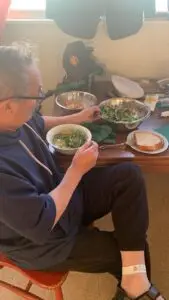




Employment support in an NDIS plan is not a job agency and it is not a wage. It is the funded, disability-specific work that makes holding a job possible: building the skills the job needs, preparing you for interviews and inductions, working with an employer on adjustments, and supporting you on the job once you start. It sits in the capacity building part of your plan, and it is separate from the free government program that finds and matches the job itself.
The distinction matters in Bankstown more than it does in most places, because two systems now overlap here and only one of them costs your plan anything. Inclusive Employment Australia is funded by the Australian Government. It is free to you. It does the job search, the employer relationship, the placement and the post-placement support. Your NDIS plan funds the disability-specific work that program is not built to do: the intensive skill building, the personal support during the working day, the transport help, the assistive technology.
So the first question we ask anyone in Bankstown is not what do you want to do. It is which of these two systems are you already in, and what is each one doing for you right now. A surprising number of people are in neither, because they were assessed under the old rules and never went back.
What NDIS employment support typically pays for: work-readiness skill building; help understanding a contract, a roster or a payslip; support during induction and the first weeks; on-the-job support from a worker who knows you; help with the specific tasks that your disability makes harder; and the conversation with a supervisor that nobody wants to have alone.
What it does not pay for: your wage, or a subsidy to your employer; recruitment; workplace modifications that an employer or the Employment Assistance Fund is responsible for; or duplicating something Inclusive Employment Australia is already delivering free. If a provider is charging your plan for a service the free program offers, ask them to explain the difference in writing. A good provider will not mind the question.
Disability Employment Services closed on 31 October 2025. Inclusive Employment Australia started the next day. This was not a rebrand. Three eligibility barriers came down at once, and each of them had been keeping people in Bankstown out of the system for years.
The eight-hour floor is gone. Under the old program you generally needed an assessed capacity to work eight hours a week or more. People assessed below that were told, correctly at the time, that there was nothing for them. Expanded eligibility now reaches people with an assessed work capacity of less than eight hours a week. If that was the sentence that ended your last conversation with an employment provider, it is no longer true.
The two-year time limit is gone. The old program moved people out after a set period whether or not anything had worked. That cap has been removed. For someone whose condition is episodic, and who needs to stop and restart, this is the single most useful change in the reform.
You no longer have to be on a Centrelink payment. Voluntary participants who are not receiving an income support payment can now take part. In a suburb where a lot of people with disability are supported by family rather than by a payment, that quietly opens the door to a group who were never counted.
None of this is NDIS money. It is a separate reform, funded separately, and it is worth understanding before you spend a dollar of your plan. What it means practically is that the honest answer to are you eligible has changed for a lot of people in Bankstown, and almost nobody has been individually told.
What has not been published, and we will not pretend otherwise: how a particular assessment done under the old rules gets re-read under the new ones. If you were assessed before November 2025, the reliable move is to ask for a fresh conversation rather than assume your old result still stands.
Employment planning goes wrong when it is done against a generic list of occupations. Bankstown has a specific labour market, and it is measurable. At the 2021 Census the suburb of Bankstown had 34,933 residents, and among those in the labour force 44.4 per cent worked full time, 27.1 per cent worked part time and 10.3 per cent were unemployed. That unemployment figure is roughly double the national rate at the same Census. It is the number behind a lot of the discouragement families describe, and it is not a reflection on any individual job seeker.
The same Census data shows what people here are actually employed in. The five largest single industries of employment for Bankstown residents were hospitals other than psychiatric hospitals at 3.2 per cent, supermarkets and grocery stores at 3.1 per cent, residential aged care at 2.5 per cent, cafes and restaurants at 2.4 per cent, and banking at 2.1 per cent.
Read that list again, because it is a plan, not a statistic. Four of those five are shift-based, entry-accessible and hiring locally. Supermarkets and cafes are where a lot of first jobs in this suburb genuinely start, and both have task profiles that can be shaped around a person rather than the other way round. Hospitals and aged care are the largest employers of all and they hire well beyond clinical roles: food services, cleaning, portering, administration, supply.
Two things are being built here that change the size of that market. The new Bankstown Hospital is in early works, with construction fencing up and demolition due to begin in mid 2026 on the former TAFE car park site on Chapel Road. And Western Sydney University now sits in the Bankstown CBD rather than on the edge of it. Neither is a promise of a job. Both mean the hospitality, retail, cleaning and administration demand in the town centre is going up rather than down over the life of your next plan, and that is a reasonable thing to plan towards.
What we will not do is tell you a specific number of jobs is coming. Those figures have not been published for either project, and we would be inventing them.
The replacement buses work, and they are free, but they are buses. They are slower, they are more affected by traffic on Hume Highway and Stacey Street, and for someone using a wheelchair or a walker the boarding experience varies with the vehicle and the stop. For a 6am start in a hospital kitchen or a 5am bakery shift, the honest planning answer through the replacement period has often been that a bus commute is possible but tight, and that the first job should ideally be one you can reach without a transfer.
That changes when the Sydney Metro Southwest opens, which is expected in the second half of 2026. Every station on the converted line is being delivered as fully accessible: lifts to every platform, level access between platform and train, and minimal gaps. That last detail is not a marketing line. For a person who has spent years planning around which stations have a working lift, a line where every station is step-free is a different city.
What that means for an employment plan written now: build it in two stages. Stage one is a job reachable on the current bus network with a margin for delay. Stage two, once the metro is running, opens up shift work along the corridor towards Sydenham and the city that is not realistic today. We would rather write a plan that says that plainly than one that assumes today is permanent.
Transport to and from work can be funded in an NDIS plan where the disability is the reason ordinary transport does not work. It is worth checking what your plan actually holds, because transport is one of the most commonly under-used line items we see in Bankstown, and the current NDIS pricing arrangements set out what a provider may and may not charge for travel.
A job you cannot reliably get to is not a job. In Bankstown that sentence has been literal since September 2024, when the T3 Bankstown line closed for conversion and was replaced by the free Southwest Link replacement buses. Anyone planning employment in this suburb right now is planning around a temporary transport arrangement, and needs to know when it ends.
The replacement buses work, and they are free, but they are buses. They are slower, they are more affected by traffic on Hume Highway and Stacey Street, and for someone using a wheelchair or a walker the boarding experience varies with the vehicle and the stop. For a 6am start in a hospital kitchen or a 5am bakery shift, the honest planning answer through the replacement period has often been that a bus commute is possible but tight, and that the first job should ideally be one you can reach without a transfer.
That changes when the Sydney Metro Southwest opens, which is expected in the second half of 2026. Every station on the converted line is being delivered as fully accessible: lifts to every platform, level access between platform and train, and minimal gaps. That last detail is not a marketing line. For a person who has spent years planning around which stations have a working lift, a line where every station is step-free is a different city.
What that means for an employment plan written now: build it in two stages. Stage one is a job reachable on the current bus network with a margin for delay. Stage two, once the metro is running, opens up shift work along the corridor towards Sydenham and the city that is not realistic today. We would rather write a plan that says that plainly than one that assumes today is permanent.
Transport to and from work can be funded in an NDIS plan where the disability is the reason ordinary transport does not work. It is worth checking what your plan actually holds, because transport is one of the most commonly under-used line items we see in Bankstown, and the current NDIS pricing arrangements set out what a provider may and may not charge for travel.
At the 2021 Census, the most common language spoken at home in Bankstown was Vietnamese at 20.3 per cent, followed by Arabic at 19.3 per cent, with English third at 18.0 per cent. Employment support written for an English-speaking household will fail here in specific, predictable places, and they are all fixable if you name them in advance.
The interview. Most interview coaching assumes the pressure is the questions. In Bankstown it is often the speed. A candidate who understands the question perfectly can still lose the room because the interviewer speaks quickly and the candidate is translating. The practical fix is not more vocabulary, it is teaching one sentence that buys three seconds and does not read as weakness, and practising it until it is automatic.
The induction. This is the one that matters most, because it is a safety issue before it is a comfort issue. Inductions are delivered fast, often in a group, often with a video and a form to sign at the end. Somebody nodding through a chemical handling briefing they did not follow is a workplace injury waiting to happen. We ask for the induction material in advance and go through it beforehand, in the person time, with family if that is how the household works. Employers say yes to this far more often than people expect, because the alternative is their risk too.
The payslip. Award rates, penalty rates, casual loading, superannuation and tax withheld are hard to read in a first language. A worker who cannot check their own payslip cannot tell when they have been underpaid, and cannot raise it if they suspect it. Reading the first three payslips together, line by line, is a small piece of work that prevents a large problem.
The difficult conversation. Asking for a roster change, saying that a task is not working, or reporting something unsafe are all learned skills, and they are harder across a language and a culture gap. Rehearse them before they are needed, not during.
None of this requires a provider to speak your language, although it helps. It requires a provider to plan as though the language difference is a real part of the job, which in Bankstown it usually is.
School Leaver Employment Supports is the NDIS funding designed for the two years after a young person finishes school. It is capacity building, not a job placement service, and the difference is where most families lose time. It buys the runway. It does not buy the landing.
What it is genuinely good for: work experience placements, travel training on the actual route to the actual workplace, money and time-management skills, communication in a workplace setting, and discovering what kind of work suits a person before anyone commits to it. For a young person leaving a Bankstown high school with no work history, that is two years of structured, funded practice at the things a first employer will assume are already there.
What it is not: a wage, a guaranteed placement, or a substitute for the free employment program. A young person can be in SLES and be registered with Inclusive Employment Australia at the same time, and in most cases should be. SLES builds the readiness; the employment program does the matching and the employer relationship.
The mistake we see most often in this area is a family waiting until the school year has actually ended to start. The useful work begins in the final year, while the school, the teacher who knows the student and the transition plan are all still available. Once the student has left, that information is much harder to reassemble.
One thing we will not state confidently: the detail of how SLES funding is claimed has been under revision, and the NDIA has an interim position rather than a settled published rule. If a provider gives you a firm answer about annualised or pro rata SLES claiming, ask them to show you where it is published. We have looked, and at the time of writing the published guidance is not specific enough for us to promise you an outcome.
From 1 October 2026 the NDIS resets a number of plan allocations. It is the change families in Bankstown ask about most, and it is worth being precise, because precision here is unusual and useful.
The reset names two categories directly. Social, civic and community participation allocations reduce by 50 per cent. Capacity building daily activities reduce by 10 per cent. Those two figures are published and we are not softening them.
Employment supports are named in neither list. That is the accurate statement, and it cuts both ways. It does not mean employment funding is protected, and anyone telling you it is safe is going beyond what has been published. It also does not mean it is being cut, and anyone telling you it is going is doing the same thing in the other direction. Not named means not named.
What follows from that is a practical instruction rather than a prediction. Between now and October, build the record. If employment support in your plan is producing something specific in Bankstown, write down what and when: hours worked, tasks mastered, placements attended, the induction completed, the supervisor who will vouch for you. A plan reviewer reading evidence makes a different decision from one reading intentions. This is the single most useful thing a family can do this year and it costs nothing.
What has not been published, and we will not guess at: exactly how the reset lands on any individual plan. The percentages are category-level. How they translate to your line items, your review date and your circumstances is not something the published material answers, and a provider who tells you otherwise is guessing with your money.
We are a small provider working across south west Sydney, and Bankstown is a suburb we work in rather than a postcode on a coverage map. That has consequences for how we run employment support, and they are worth stating so you can hold us to them.
We start with the two-system question. Before we quote you anything, we establish what Inclusive Employment Australia is or should be doing for you, because that part is free and it changes what your plan should be spending on. If the answer is that the free program covers most of what you need, we will say so, even though it means less work for us.
We match the worker to the workplace, not just to the person. A support worker who is calm in a commercial kitchen is not automatically the right person for a retail floor or an office. In a suburb where hospitals, supermarkets, aged care and cafes are the largest employers, that specificity is available and worth insisting on.
We plan the whole week. The shift, the commute, the sleep before it, the meal after it. Employment placements fail more often on the surrounding week than on the work itself.
We write things down. Every session produces a record you can hand to a plan reviewer without translating it first. See the NDIS Quality and Safeguards Commission for what you are entitled to expect from any registered provider, including how to complain about one.
You get consistent people. The most common complaint we hear about employment support in this area is a rotating cast of workers, each of whom has to be taught the job again by the participant. That is exhausting, and it is a scheduling failure rather than an unavoidable fact.
If any of that stops being true, tell us. It is easier to fix a small complaint than to replace a provider.
What employment support in Bankstown gets you, in practical terms.
Support Coordination
A coordinator who understands that employment sits across two systems keeps the NDIS side and the Inclusive Employment Australia side talking to each other, so nobody bills twice and nothing falls between them.
In-Home Daily Living
Work starts before work. Getting up, getting ready and getting out the door on a shift roster is daily living support doing its job, and it is the part most often left out of an employment plan.
Community Access
Community access builds the confidence, the route knowledge and the public-transport practice that a first job in Bankstown quietly assumes you already have.
Allied Health
An occupational therapist assessment is what turns a workplace adjustment from an argument into a document an employer can act on, and it is often what the Employment Assistance Fund wants to see.
Home Modifications
Home modifications and workplace modifications are funded through different doors. Knowing which door you are standing at saves months, and the answer is not always the NDIS.
Aged Care
Support at Home replaced Home Care Packages on 1 November 2025. If an older family member is in your household, the change lands on your week as well as theirs.
What employment support in Bankstown gets you, in practical terms.
Skills built against a real role at a real Bankstown employer, not a generic checklist.
Your NDIS supports and the free government program pointed the same way, with no duplicate billing.
A worker beside you through induction and the first weeks, then stepping back as you take it on.
Interviews, inductions and the first three payslips prepared for, not assumed away.
Written records of hours, tasks and placements that a plan reviewer can read as they are.
Community access and travel practice that builds the routine a first job quietly assumes.
Six reasons Bankstown families stay with us, none of which are awards.
The NDIS Family Decision Guide
What to ask before you agree to an employment support service in Bankstown.
Here's What You'll Learn:
The question that reveals which system is paying
What changed on 1 November 2025 and who it reopens the door for
How to build a record that survives October
Finance Manager
Operations Manager
Community Outreach Coordinator
Both exist and they are different. Inclusive Employment Australia is funded by the Australian Government, is free to you, and does job search, employer matching and post-placement support. NDIS employment support is funded from your plan and covers the disability-specific work the free program is not built for: intensive skill building, on-the-job personal support, and help with the tasks your disability makes harder. If a provider is billing your plan for something the free program already delivers, ask them in writing to explain the difference.
No. That eligibility floor applied under Disability Employment Services, which closed on 31 October 2025. Inclusive Employment Australia started on 1 November 2025 with expanded eligibility that includes people with an assessed work capacity of less than eight hours a week. If that sentence ended your last conversation with an employment provider, the answer has changed. What has not been published is how an assessment done under the old rules is re-read under the new ones, so the reliable move is to ask for a fresh conversation rather than assume.
The two-year time limit that applied under the old program has been removed. That change matters most for people whose condition is episodic, who need to stop and restart rather than run straight through. It does not automatically re-enrol you. It removes the reason you were previously told no, which means the conversation is worth having again.
Not any more. Inclusive Employment Australia accepts voluntary participants who are not receiving an income support payment. In Bankstown, where a lot of people with disability are supported by family rather than by a payment, this opens the program to a group who were previously not counted at all.
At the 2021 Census the five largest industries of employment for Bankstown residents were hospitals at 3.2 per cent, supermarkets and grocery stores at 3.1 per cent, residential aged care at 2.5 per cent, cafes and restaurants at 2.4 per cent, and banking at 2.1 per cent. Four of those five are shift-based and hire locally at entry level. Hospitals and aged care hire well beyond clinical roles: food services, cleaning, portering, supply and administration. The new Bankstown Hospital is in early works and Western Sydney University now sits in the CBD, so town-centre demand is trending up, though no job numbers have been published for either.
The T3 Bankstown line closed in September 2024 for metro conversion and free Southwest Link replacement buses run in its place. They work, but they are slower and more exposed to traffic, so an early shift needs a real margin and ideally no transfer. Sydney Metro Southwest is expected to open in the second half of 2026, with every station on the converted line fully accessible: lifts to every platform, level access to the train and minimal gaps. We suggest planning in two stages, with a locally reachable job first and the corridor jobs opening up once the metro runs.
The published reset names social, civic and community participation, reducing by 50 per cent, and capacity building daily activities, reducing by 10 per cent. Employment supports are named in neither list. That means neither cut nor protected, and anyone confident in either direction is going past what has been published. How the reset lands on an individual plan has also not been published. The useful response is to document what your employment support is actually producing between now and October.
In the final school year, not after it. While the student is still enrolled, the school, the teacher who knows them and the transition planning are all still available and easy to draw on. Once they have left, that information is much harder to reassemble. School Leaver Employment Supports funds the two years after school and covers work experience, travel training on the real route, workplace communication and money skills. It does not find the job, so register with Inclusive Employment Australia in parallel.
It makes specific parts harder, and they are all plannable. In Bankstown the most common language spoken at home is Vietnamese at 20.3 per cent, then Arabic at 19.3 per cent, with English third at 18.0 per cent. The three points that need preparation are the interview, where speed rather than vocabulary is usually the problem, the induction, where a safety briefing that was not followed becomes a real risk, and the payslip, where a worker who cannot check their own pay cannot tell when it is wrong. We ask employers for induction material in advance and read the first three payslips with you.
It is charged against the capacity building part of your plan at the rates set in the current NDIS pricing arrangements, and we will show you which line item it comes from before you agree to anything. The first conversation is free and it is mostly us asking questions. If the honest answer is that the free government program covers what you need, we will tell you that instead of quoting you. Call 0478 905 550 or book a discovery call and we will work out which system should be paying for what.
Reach out for a non-obligation NDIS Plan Management Assessment
We also provide this support in the nearby suburbs below, or see Employment Support South West Sydney for the full service area.
A new plan arrives and nothing tells you what to do first. Here is the order we work through with families in South West Sydney, and the two mistakes that cost the most.
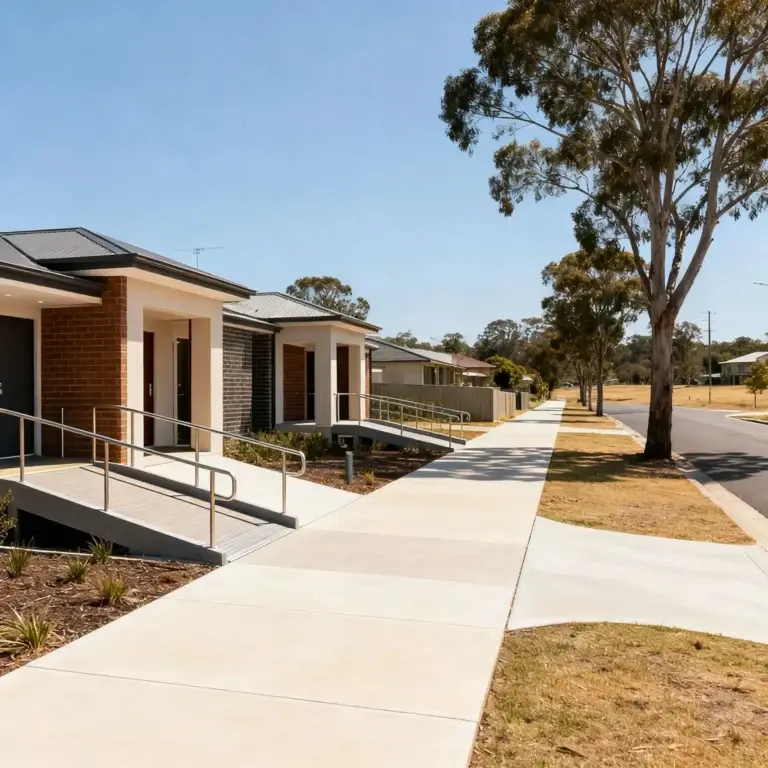
Aged care at home South West Sydney from Guia. Reliable support workers who show up consistently and become part of your family’s everyday routine.

NDIS allied health support sydney from Guia. Reliable support workers who show up consistently and become part of your family’s circle. Peace of mind fo…